What Is a Dry Type Distribution Transformer Features Benefits and Uses
Published: Author: Kampa
If you’re involved in power distribution or electrical system design, you’ve probably heard about dry type distribution transformers—but what exactly are they, and why are they becoming the go-to choice for modern installations? Unlike traditional oil-filled transformers, dry type transformers use air for cooling and solid insulation, making them a safer, eco-friendly solution ideal for indoor and fire-sensitive environments. In this post, you’ll get a clear, concise explanation of what a dry type distribution transformer is, how it works, and why trusted suppliers like Kampa are leading the way with high-quality, customized options that meet today’s demanding standards. Let’s break it down.
What Is a Dry Type Distribution Transformer?
A dry type distribution transformer is an electrical device designed to step down medium voltage to low voltage, making power safe and usable for end consumers. Unlike oil-filled transformers, dry type transformers use air or gas for cooling and rely on solid insulation materials—such as epoxy resin—instead of liquid insulation like oil or other fluids. This makes them inherently safer and more environmentally friendly.
Role in Power Distribution
Dry type transformers are key players in power distribution systems, especially where safety, indoor installation, or environmental concerns matter. Their purpose is simple yet vital: converting medium voltage electricity from the grid down to a lower voltage, suitable for commercial, industrial, or residential use.
Key Components
Core: Usually made of laminated silicon steel, it provides the magnetic path.
Windings: Includes both high-voltage and low-voltage windings, wrapped around the core to transfer electrical energy via electromagnetic induction.
Enclosure: Protects internal components from physical damage, dust, and moisture; often designed to facilitate air cooling.
Cooling System: Uses natural air ventilation or forced air to dissipate heat generated during operation.
Dry type transformers are widely preferred for their safety, clean operation, and flexibility in installation environments, making them an essential part of modern electrical networks.
How Dry Type Distribution Transformers Work
Dry type distribution transformers operate on the basic principle of electromagnetic induction. When alternating current flows through the transformer’s primary winding, it creates a magnetic field in the core. This changing magnetic field induces voltage in the secondary winding, allowing the transformer to step voltage levels up or down as needed, typically from medium to low voltage for safe end-use.
Cooling in dry type transformers is managed without oil. Instead, they rely on air and solid insulation to prevent overheating. There are two main cooling methods:
Natural Air Ventilation (AN): Air circulates freely around the transformer, dissipating heat naturally through convection. This is common in smaller units or those with lower loads.
Forced Air Ventilation (AF): Fans or blowers actively push air over the transformer surfaces, improving cooling efficiency. This method suits larger transformers or those in environments where heat buildup is a concern.
Insulation plays a crucial role in managing temperature rise and ensuring the transformer’s longevity. Dry type transformers use solid insulation materials like epoxy resins or vacuum pressure impregnated (VPI) coatings that withstand heat better and reduce risks of moisture damage. These materials maintain electrical integrity and keep temperature rise within safe limits, which is essential for reliable performance.
Types of Dry Type Distribution Transformers
Dry type transformers come mainly in two types: Vacuum Pressure Impregnated (VPI) and Cast Resin Transformers (CRT). Each has distinct features and ideal uses depending on the application and environment.
Transformer Type
Construction
Key Features
Typical Applications
Vacuum Pressure Impregnated (VPI)
Open-wound coils impregnated with insulating varnish under vacuum pressure
Good thermal performance, lightweight, suitable for indoor/outdoor use
General industrial, commercial buildings, moderate environment
Cast Resin Transformer (CRT)
Epoxy resin encapsulated coils (fully sealed)
Excellent moisture and dust resistance, high safety, fire-retardant
Harsh environments, hospitals, data centers, and indoor areas needing high fire safety
Dry Type vs. Oil-Filled Transformers: Key Differences
Feature
Dry Type Transformer
Oil-Filled Transformer
Cooling Method
Air or gas cooling with solid insulation
Oil immersion cooling with liquid insulation
Insulation
Solid epoxy resin or varnished windings
Mineral or synthetic oil insulation
Fire Safety
Fire-safe, no oil spill risk
Risk of fire or oil leaks
Maintenance
Low maintenance, no oil checks
Requires regular oil testing & servicing
Cost
Higher initial cost
Generally lower upfront cost
Efficiency
Slightly lower efficiency at high loads
Often better cooling for large loads
Installation
Ideal for indoor and sensitive areas
Mainly outdoor or specially designed indoor rooms
Environmental Impact
Eco-friendly, recyclable materials
Oil disposal and leak concerns
Advantages of Dry Type Distribution Transformers
Dry type distribution transformers offer several clear benefits that make them a preferred choice for many applications. One of their biggest advantages is superior fire safety. Since they use air or gas for cooling and solid insulation instead of oil, there’s no risk of oil leaks or spills that could cause fires or environmental hazards. This makes them much safer in indoor settings or areas where fire risk must be minimized.
They are also environmentally friendly and recyclable, as they avoid the use of hazardous oils and toxic liquids. This aligns well with growing global demands for greener industrial solutions. Maintenance requirements are low, since there’s no oil monitoring or replacement, leading to reduced downtime and operational costs. Plus, their long service life ensures reliable performance over many years.
Disadvantages and Limitations of Dry Type Distribution Transformers
Dry type transformers generally come with a higher initial cost compared to oil-filled models. This upfront investment can be significant, especially when selecting cast resin or VPI transformers for specialized applications. Additionally, dry type transformers tend to have a limited capacity for very high-power needs, making them less suitable for heavy industrial loads where oil-filled transformers dominate.
Another challenge is that some dry type designs may produce more noise and heat during operation. Without liquid cooling, managing temperature rise relies heavily on air circulation, which can lead to louder and warmer performance in enclosed or poorly ventilated spaces.
Common Applications of Dry Type Distribution Transformers
Dry type distribution transformers are widely used across various sectors due to their safety, reliability, and eco-friendly features. They are a top choice for commercial buildings such as offices, shopping malls, and hotels, where low maintenance and fire-safe operation are critical.
In healthcare and educational facilities, including hospitals and schools, these transformers provide dependable power with minimal risk of fire or oil leaks, making them ideal for sensitive environments.
They also perform well in industrial sites like chemical plants, data centers, and renewable energy installations. Here, resistance to moisture, dust, and short circuits ensures continuous operation even under demanding conditions.
Key Specifications to Consider
Specification
What to Look For
Why It Matters
Voltage Ratings
Match system voltage (e.g., 11kV/415V)
Ensures compatibility with your power setup
kVA Capacity
Based on load requirement
Determines transformer size and efficiency
Efficiency Standards
Compliance with DOE 2016 or similar
Saves energy and reduces running costs
Insulation Class
Common classes: Class H (180°C), Class F (155°C)
Affects temperature resistance and lifespan
Temperature Rise
Limits (e.g., 115°C max)
Keeps transformer cool and reliable
Impedance
Percentage value (typically 4-6%)
Influences voltage regulation and fault current
Enclosure Types
IP ratings (IP23, IP54 etc.)
Protection against dust, water, and environmental factors
Noise Levels
Measured in dB, lower is better
Important for indoor or noise-sensitive areas
Winding Materials
Copper vs. Aluminum
Copper offers better conductivity; aluminum reduces cost and weight
Installation, Maintenance, and Best Practices for Dry Type Distribution Transformers
Proper installation is key to getting the most out of your dry type distribution transformer. Start by ensuring good ventilation around the unit to prevent overheating. Keep enough clearance on all sides—usually at least a few inches—to allow natural air flow and easy access for maintenance. Mount the transformer on a sturdy, level platform that can support its weight and reduce vibrations.
Routine maintenance is straightforward but important. Regularly check for dust, dirt, and moisture buildup on the enclosure and cooling vents, as these can reduce efficiency and cause overheating. Inspect connections and wiring for any signs of wear or loose fittings. Monitoring temperature rise during operation helps catch overheating issues early.
Pricing, Customization, and Choosing a Supplier
Factor
Impact on Price
Transformer size
Larger capacity means higher cost
Type
Cast resin (CRT) tends to cost more than VPI due to materials
Features
Special enclosures, cooling methods, or insulation classes add cost
Customization
Tailored designs for unique site needs affect pricing
Choosing the right supplier is crucial. Kampa provides high-quality dry type transformers that meet international quality standards. Their products come with reliable delivery schedules and customizable options tailored to your power distribution needs.
Why Choose Kampa Dry-Type Power Transformers
Kampa offers reliable, high-quality dry-type power transformers designed to meet the diverse needs of global customers. Whether you need customized dry type transformers tailored for specific voltage levels, kVA ratings, or environmental conditions, Kampa delivers precision-made solutions.
Feature
Benefit
Customization Options
Voltage, enclosure type, kVA, cooling methods adapted to your needs
Competitive Pricing
Cost-effective without compromising quality
Supplier Support
Responsive service and technical assistance worldwide
Safety Focus
Fire-resistant, eco-friendly, and low-maintenance designs
Efficiency
High operational efficiency with low losses
With a firm commitment to safety, efficiency, and customer satisfaction, Kampa ensures every dry-type power transformer performs reliably, whether installed indoors or in challenging environments. Explore Kampa’s full range of medium and high voltage power solutions for your power needs.
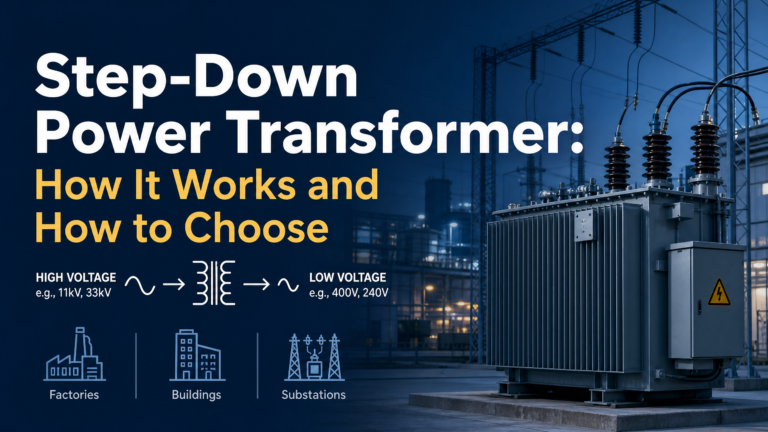
A step down power transformer is a static electrical device that converts a higher input voltage into a lower output voltage for safe distribution and use.
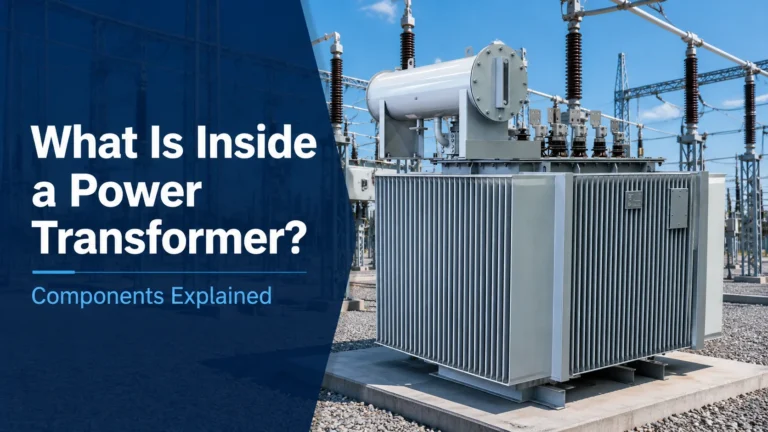
A power transformer is a static electrical device that transfers alternating-current power between two or more circuits at different voltage levels through electromagnetic induction.
Every component serves a specific electrical, magnetic, or thermal function. Together they transfer thousands of kilovolt-amperes from one voltage level to another, silently and continuously, often for decades.