Transformers

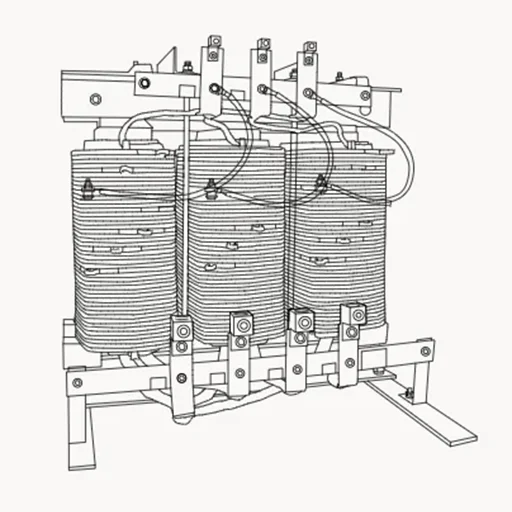
Every transformer on this site is built to order, and the first decision is not capacity or voltage but the insulating medium, because the medium decides where the unit can be installed.
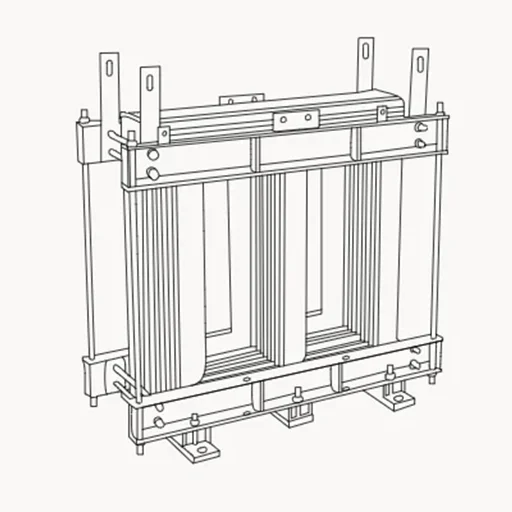
Dry type units use cast resin windings and need no oil. They go inside buildings, tunnels, metro stations and data centres, where a bunded oil room is impossible or the fire authority will not accept it. The dry type range covers 30 to 2,500 kVA at 6 kV, 10 kV, 20 kV and 35 kV.
Oil-immersed units use the oil for both insulation and cooling. They sit outdoors on a plinth or a pole, cost less per kVA, and carry sustained overload better than a dry unit of the same rating. The oil-immersed range covers 25 to 2,500 kVA at 10 kV through 35 kV.
Where the voltage class and the installation position are already fixed, the product pages carry the ratings, losses and connection details. Where the medium is still open, start with the dry type against oil immersed comparison, then come back with the kVA.

Why Choose Kampa

Kampa offers high-performance medium and high-voltage power distribution solutions that combine reliability, efficiency, and competitive pricing. Our products are designed to optimize performance while reducing total cost of ownership, helping your business achieve more for less.

22.8.15Kampa electric co

Industrial Power Distribution Protection Product Catalog

Kampa medium-voltage and high-voltage power transmission and distribution solutions combine advanced technology with reliable performance to meet the power needs of various industries and cities.

Products Advantage

The range splits on insulating medium, and that single decision settles most of what follows: where the unit can be installed, what fire protection it needs, what it costs per kVA, and how it behaves under sustained overload.

Both families are built from 25 or 30 kVA up to 2,500 kVA and cover 6 kV through 35 kV between them, so the voltage class rarely decides the medium. The installation position does, and it is worth settling before the ratings are discussed.

Safe Operation

High Insulation Class

Engineered with high-grade insulation systems and robust structural design, our products ensure stable performance under high voltage and demanding conditions.
Harsh Environments

Harsh Environments

Our equipment is designed for extreme environments such as high temperature, high humidity, and dust, ensuring stable and reliable performance.
Low Maintenance Costs

Low Maintenance Costs

Our products utilize durable components and optimized design, resulting in a longer service life and less wear.
Customization Available

Customization Available

We can provide customized solutions based on voltage level, capacity, and application scenario.
Get in Touch with Our Sales & Technical Team

We are here to support your power distribution projects. Whether you are looking for product details, technical assistance, or a customized solution, our team is ready to help.

Dry type or oil-immersed, where should I start?

Start with where the unit will stand. Inside a building, a tunnel or a basement, the answer is almost always dry type, because an oil unit needs a bunded room and fire separation. Outdoors on a plinth or a pole, oil costs less per kVA and tolerates overload better. Voltage class rarely decides it.

What capacity range is available?

25 kVA to 2,500 kVA across the two families. Dry type starts at 30 kVA, oil-immersed at 25 kVA. A 500 kVA unit is the most frequently ordered single rating on a 10 kV or 11 kV feeder.

Which voltage classes are covered?

Dry type at 6 kV, 10 kV, 20 kV and 35 kV. Oil-immersed at 10 kV, 11 kV, 20 kV, 22 kV, 30 kV, 33 kV and 35 kV. Whatever the system voltage, one of the two families covers it without a special build.

Are these distribution transformers or power transformers?

Distribution transformers. They sit at the end of the chain between the medium voltage feeder and the utilisation voltage, from 25 to 2,500 kVA. A power transformer sits upstream at the substation and transforms between transmission levels; it is a different product with a different quotation.

How is a unit configured and quoted?

From the network data rather than from a catalogue: system voltage, kVA, fault level at the installation point, vector group, tap range, loss class, winding material, enclosure and installation position. Send those and the technical proposal comes back with the price in one round.
+86-13362788157 Phone tony@elexpert.cn E-mail Chat on WhatsApp WhatsApp