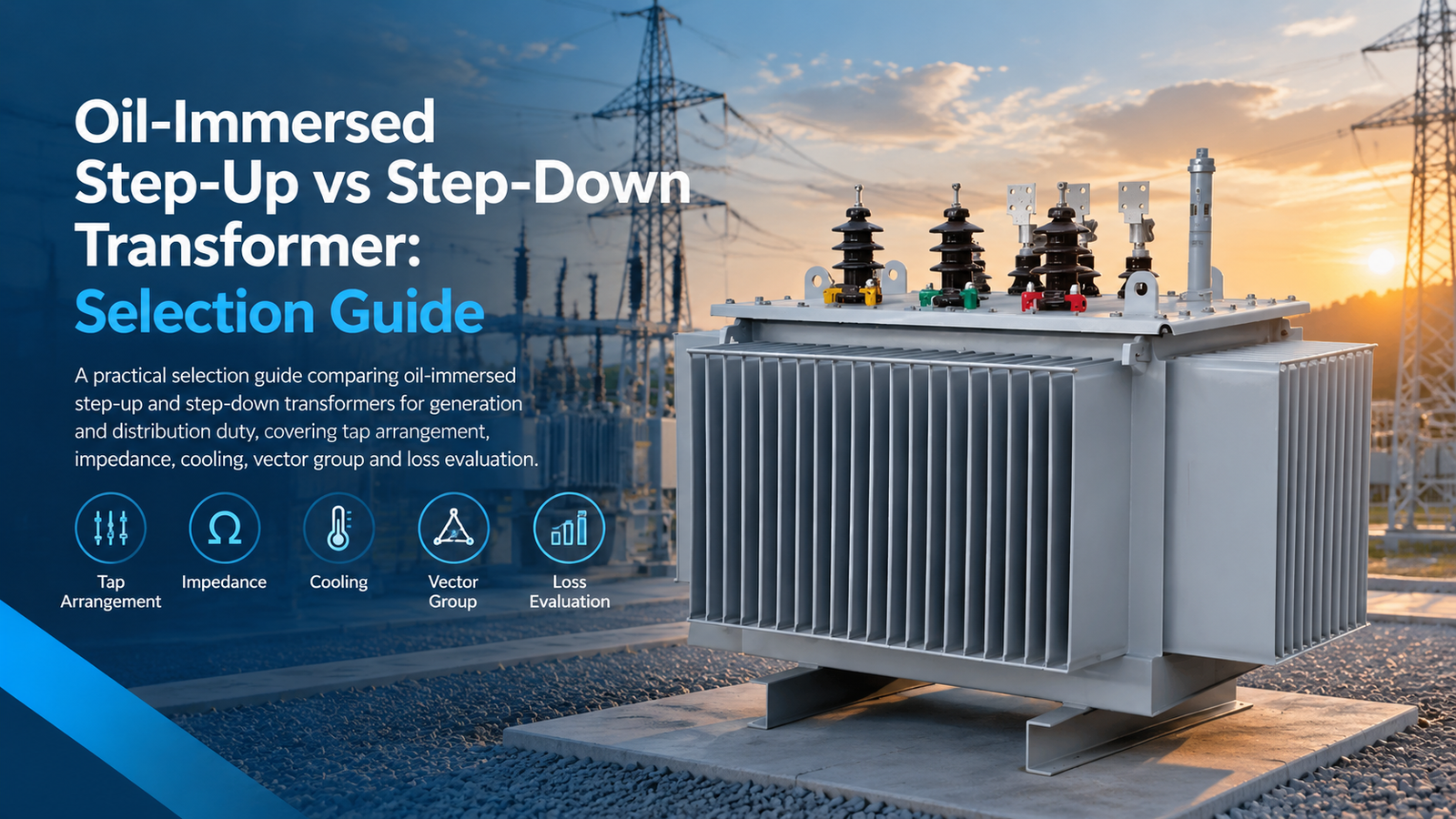
Oil-Immersed Step-Up vs Step-Down Transformer: Selection Guide
Step-up and step-down oil-immersed transformers differ in taps, impedance, cooling and loss weighting. Here is how to specify each duty for generation and distribution.

Step-up and step-down oil-immersed transformers differ in taps, impedance, cooling and loss weighting. Here is how to specify each duty for generation and distribution.
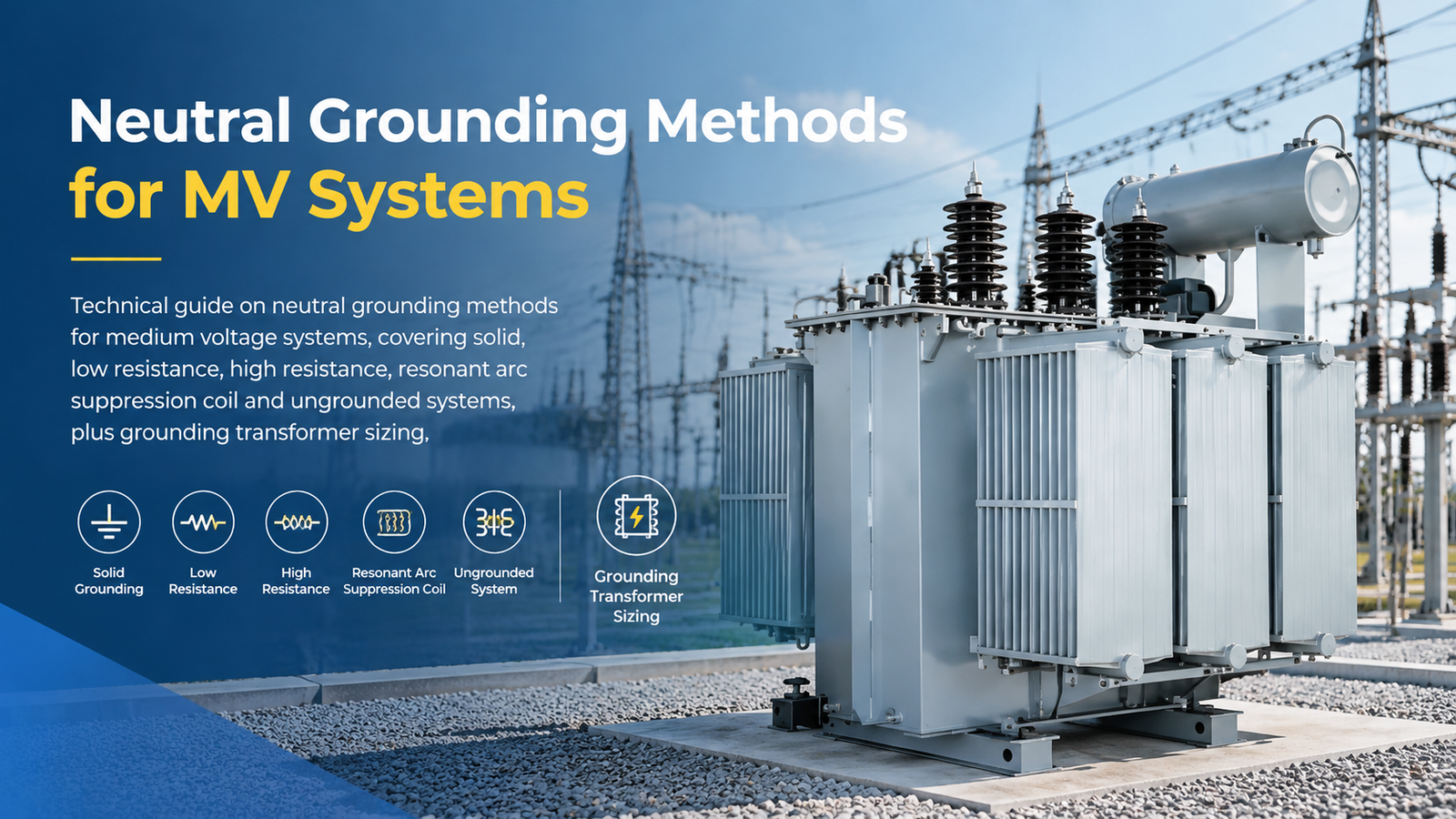
Compare solid, low resistance, high resistance, resonant and ungrounded MV neutrals, and size the grounding transformer and resistor that go with each method.
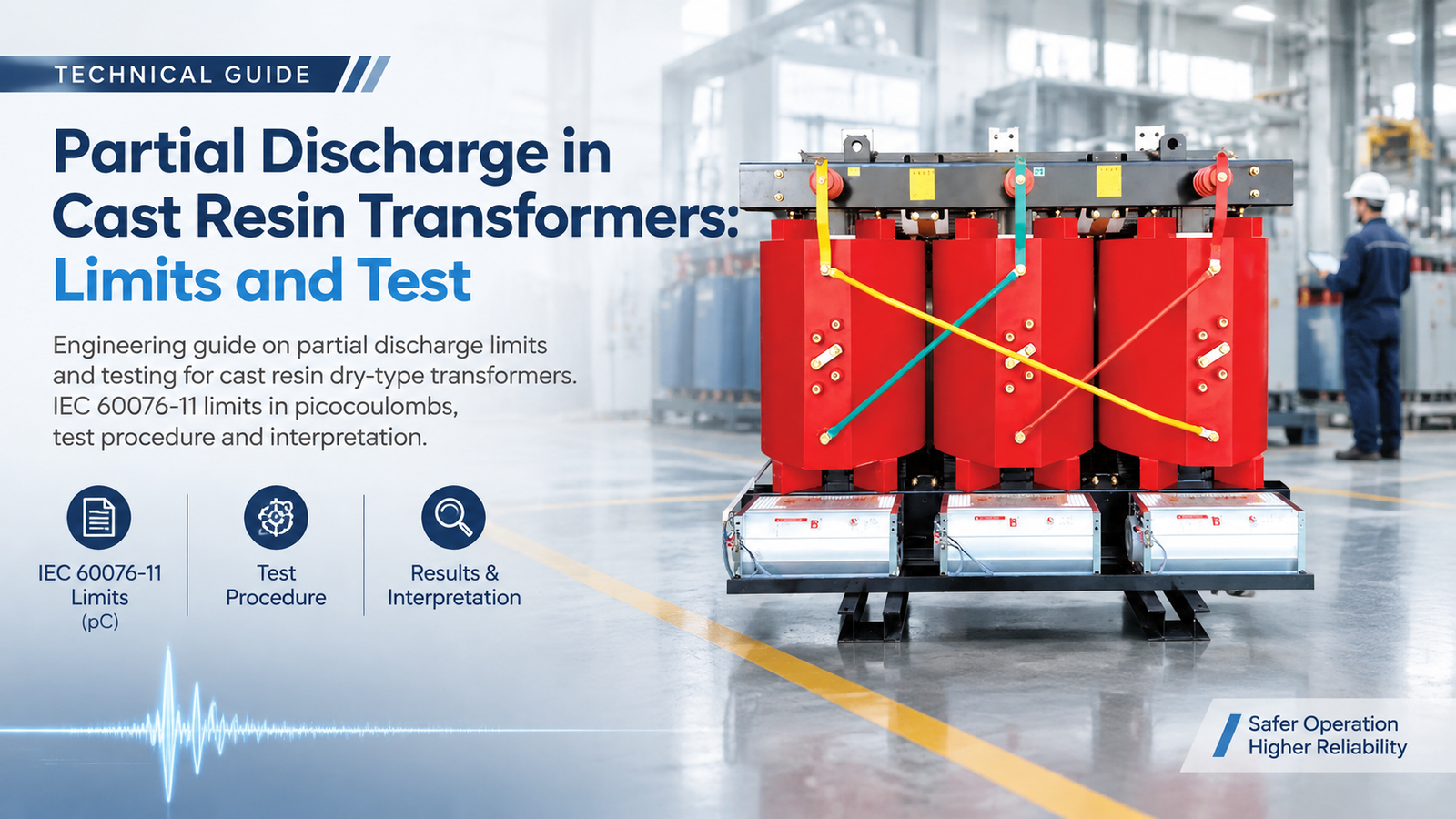
Why partial discharge decides cast resin transformer life: the 10 pC limit, how the IEC 60270 test runs, what the pC reading means, and the casting defects behind it.
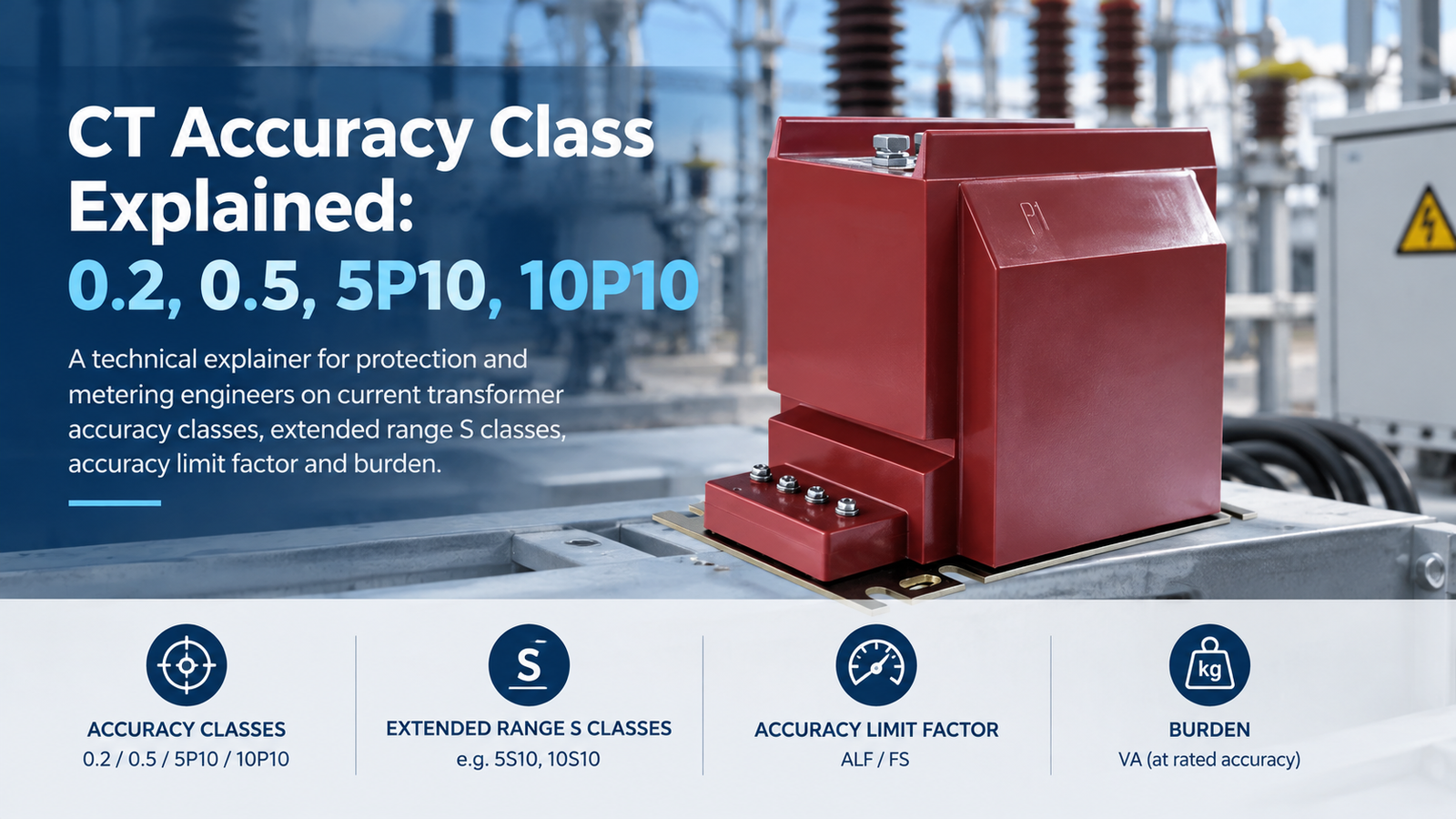
Decode CT accuracy classes: metering classes 0.1 to 3.0, what the S suffix changes, how 5P10 and 10P10 differ, and why burden decides the accuracy you actually get.
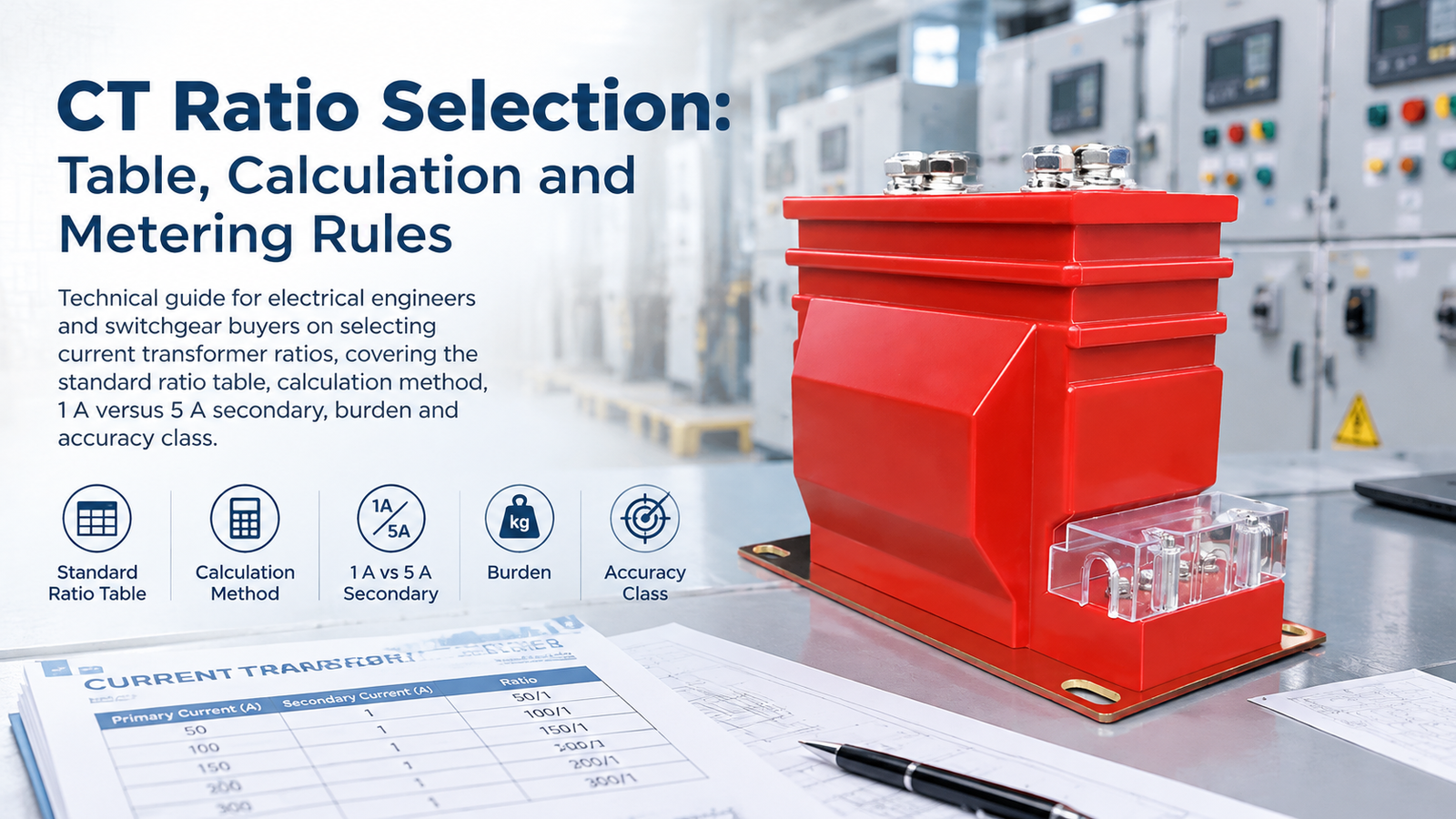
How to select a CT ratio: the standard ratio table, the calculation from load current, 1 A versus 5 A secondaries, and the burden limits that decide whether the meter stays accurate.
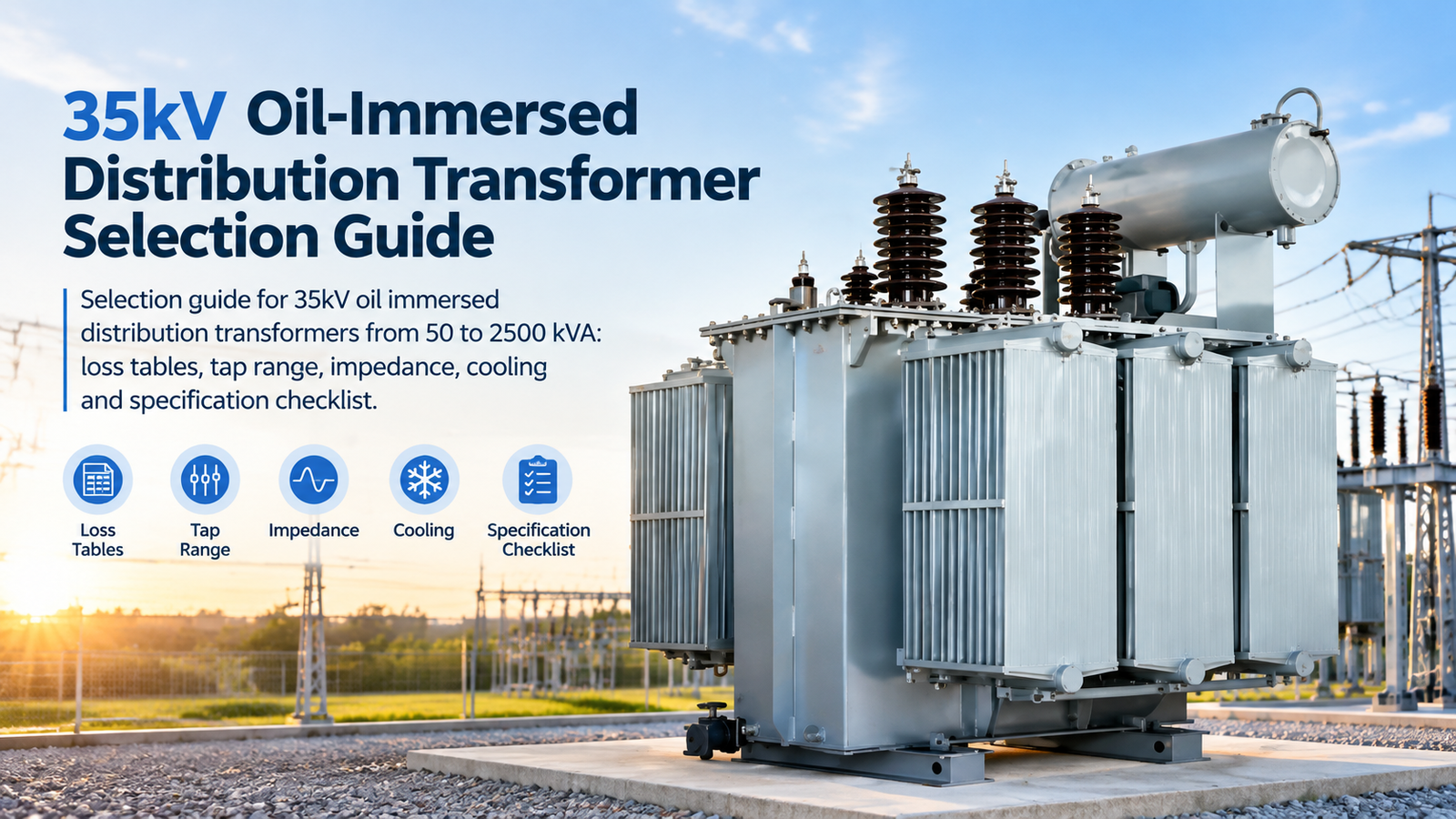
Capacity, ratio, losses, impedance and cooling decide a 35 kV oil-immersed distribution transformer. Selection steps with the published loss table.
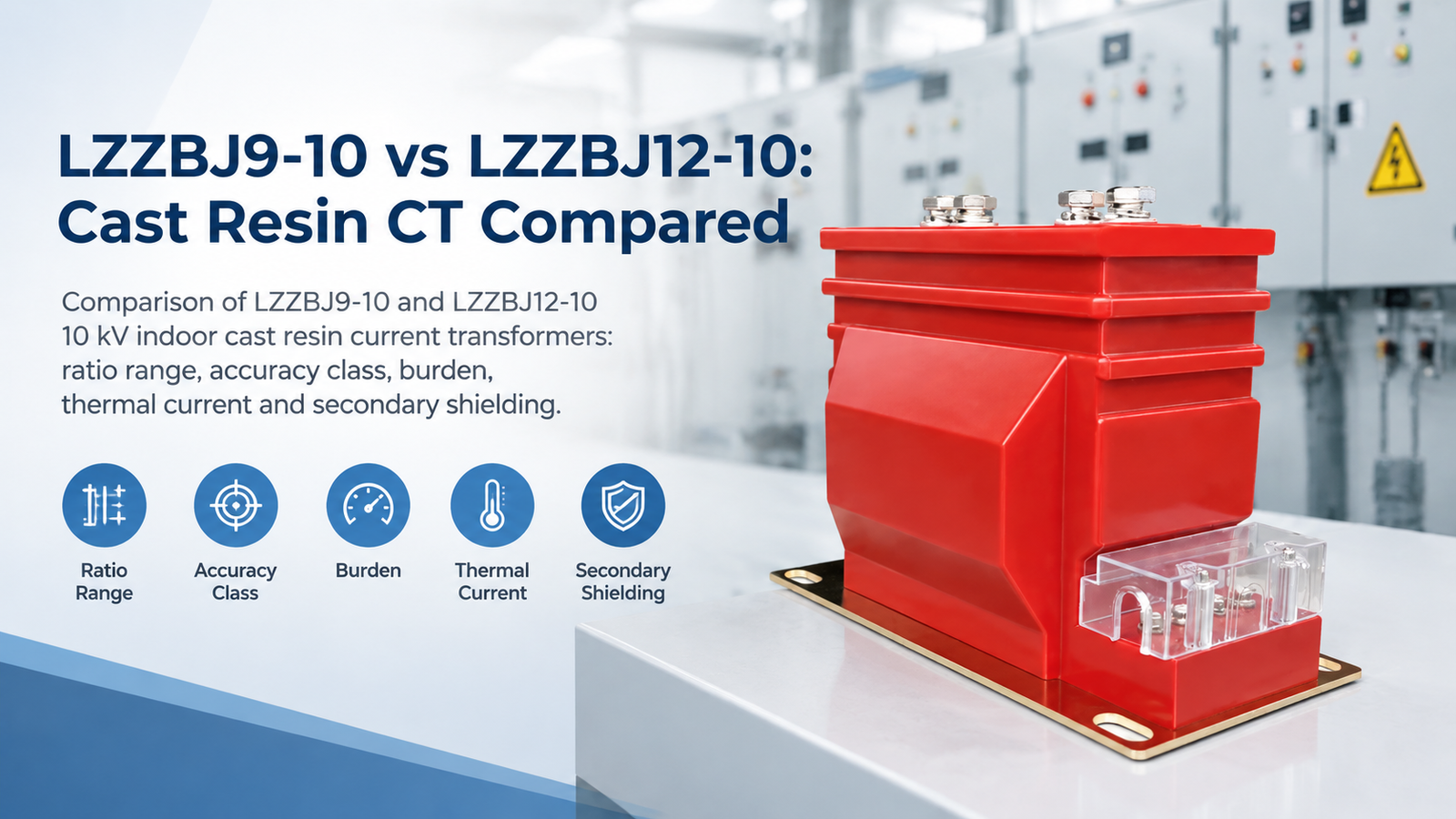
Both are 10 kV cast resin CTs, but LZZBJ9-10 is 50 Hz only while LZZBJ12-10 covers 50/60 Hz with shielded terminals. Compare before ordering.
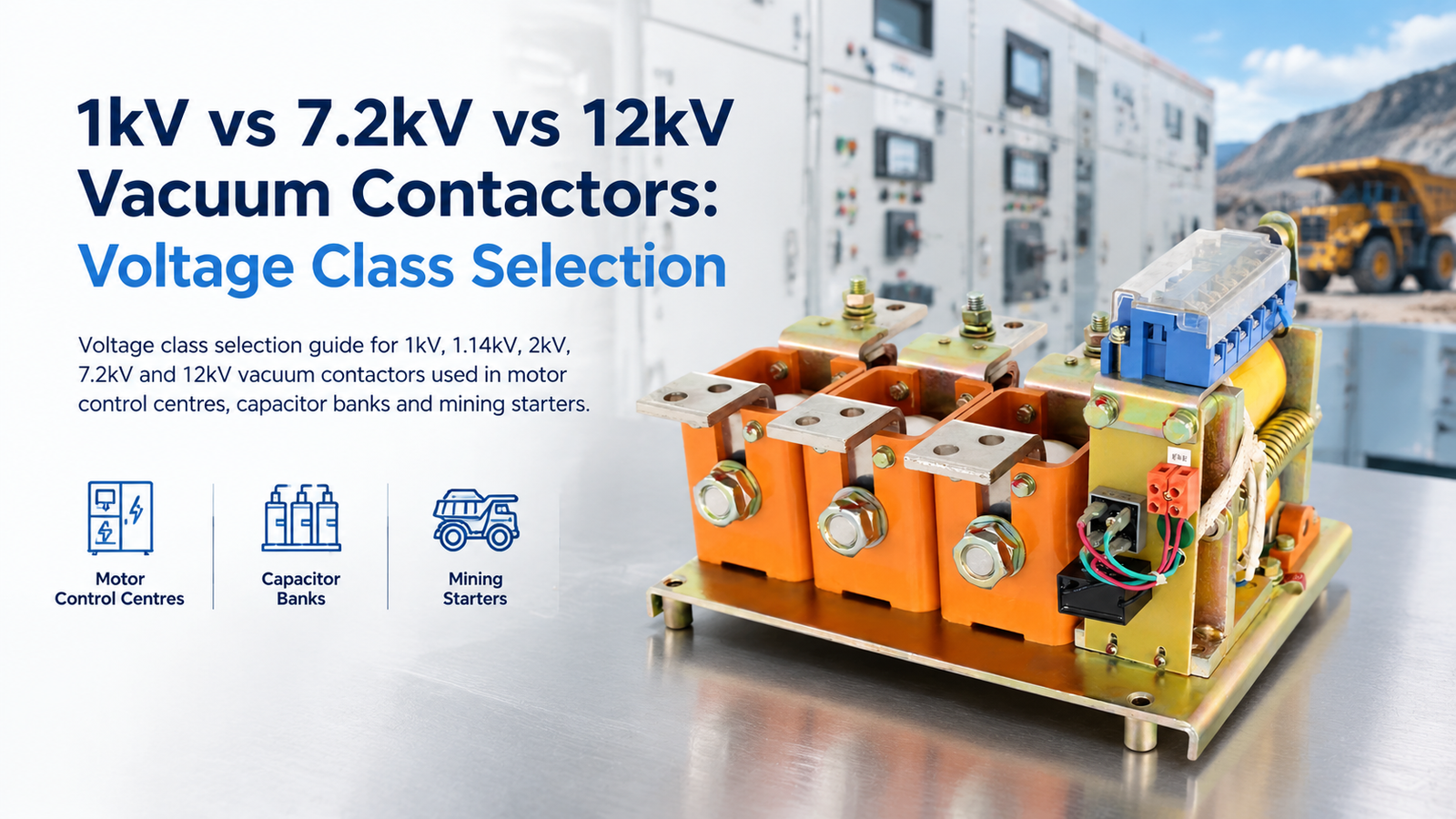
A 1 kV vacuum contactor is really a 1,140 V device. Compare the 1.14 kV, 2 kV, 7.2 kV and 12 kV classes by insulation, current and duty life.
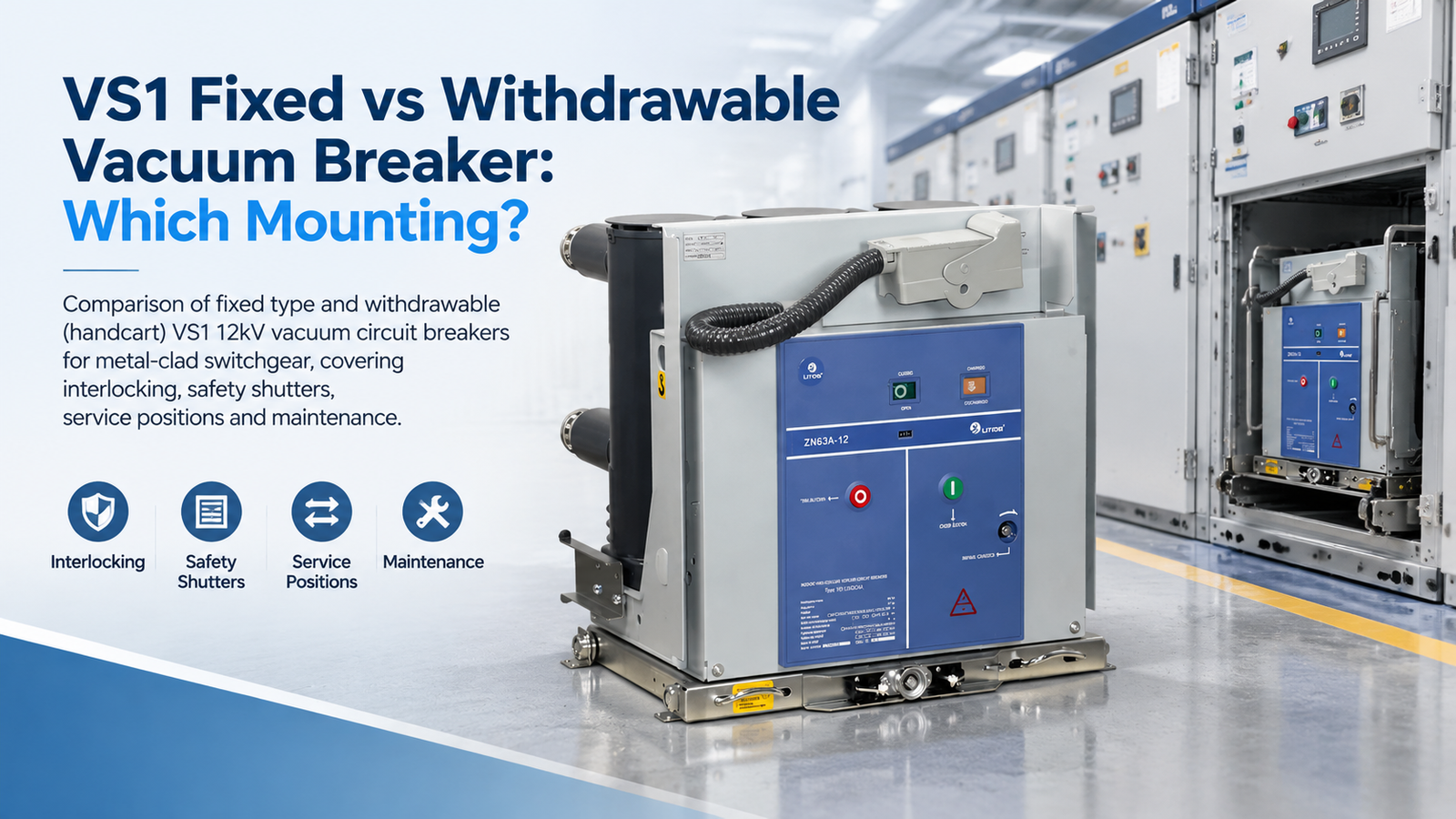
Fixed and withdrawable VS1 breakers interrupt the same fault current. The difference is isolation, testing and replacement time – here is how to choose.