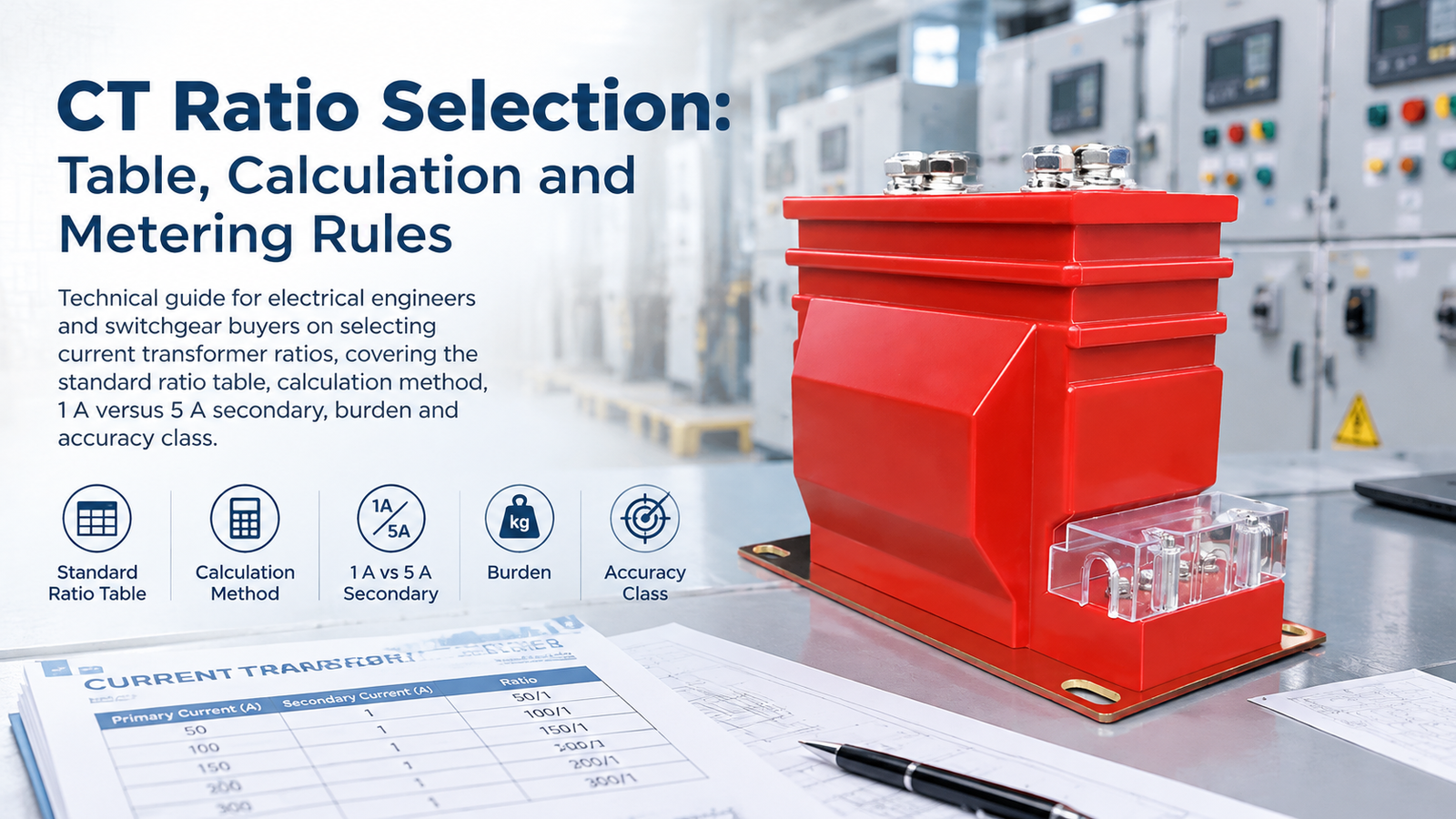
CT Ratio Selection: Table, Calculation and Metering Rules
How to select a CT ratio: the standard ratio table, the calculation from load current, 1 A versus 5 A secondaries, and the burden limits that decide whether the meter stays accurate.

How to select a CT ratio: the standard ratio table, the calculation from load current, 1 A versus 5 A secondaries, and the burden limits that decide whether the meter stays accurate.

Capacity, ratio, losses, impedance and cooling decide a 35 kV oil-immersed distribution transformer. Selection steps with the published loss table.
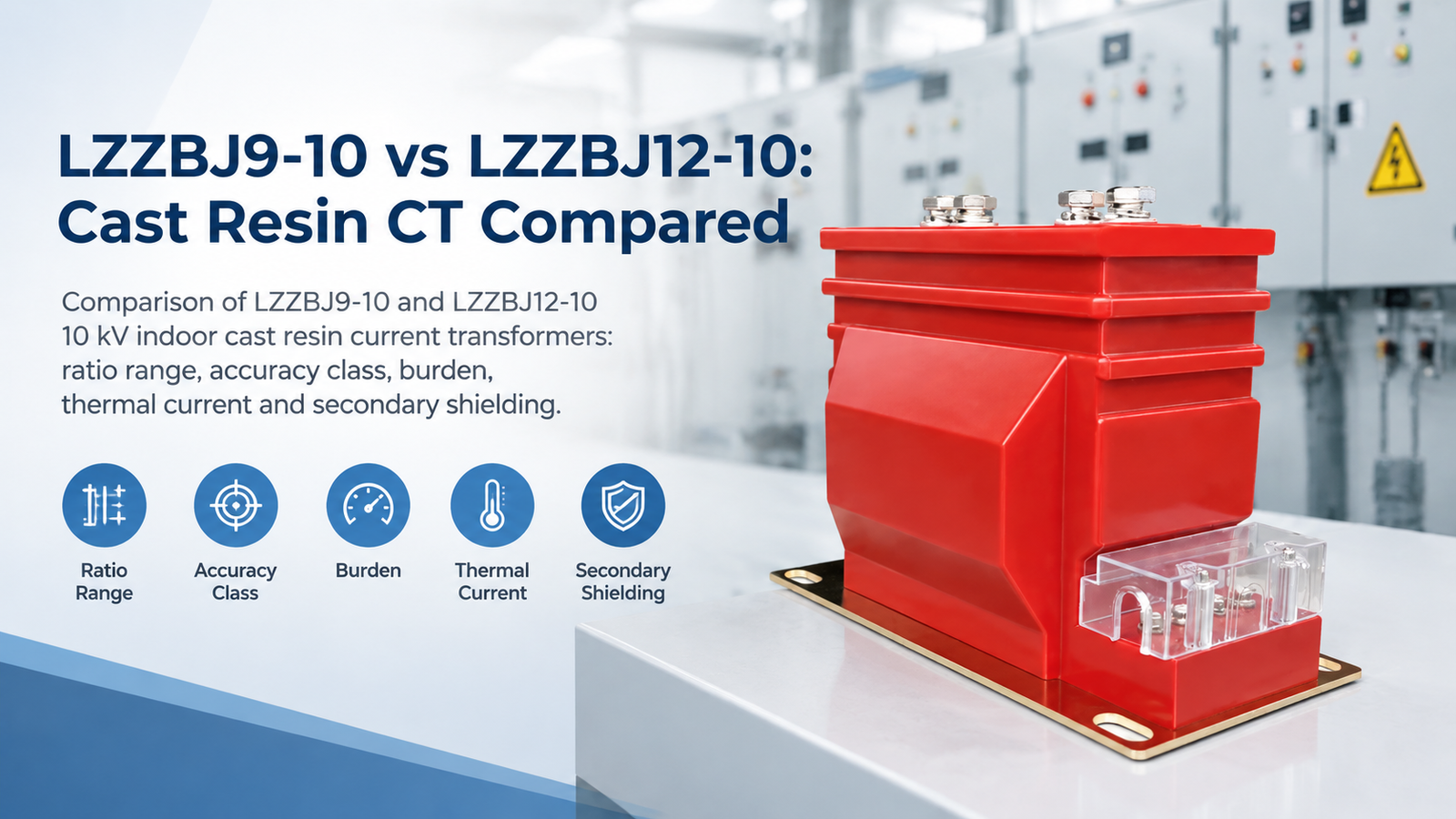
Both are 10 kV cast resin CTs, but LZZBJ9-10 is 50 Hz only while LZZBJ12-10 covers 50/60 Hz with shielded terminals. Compare before ordering.
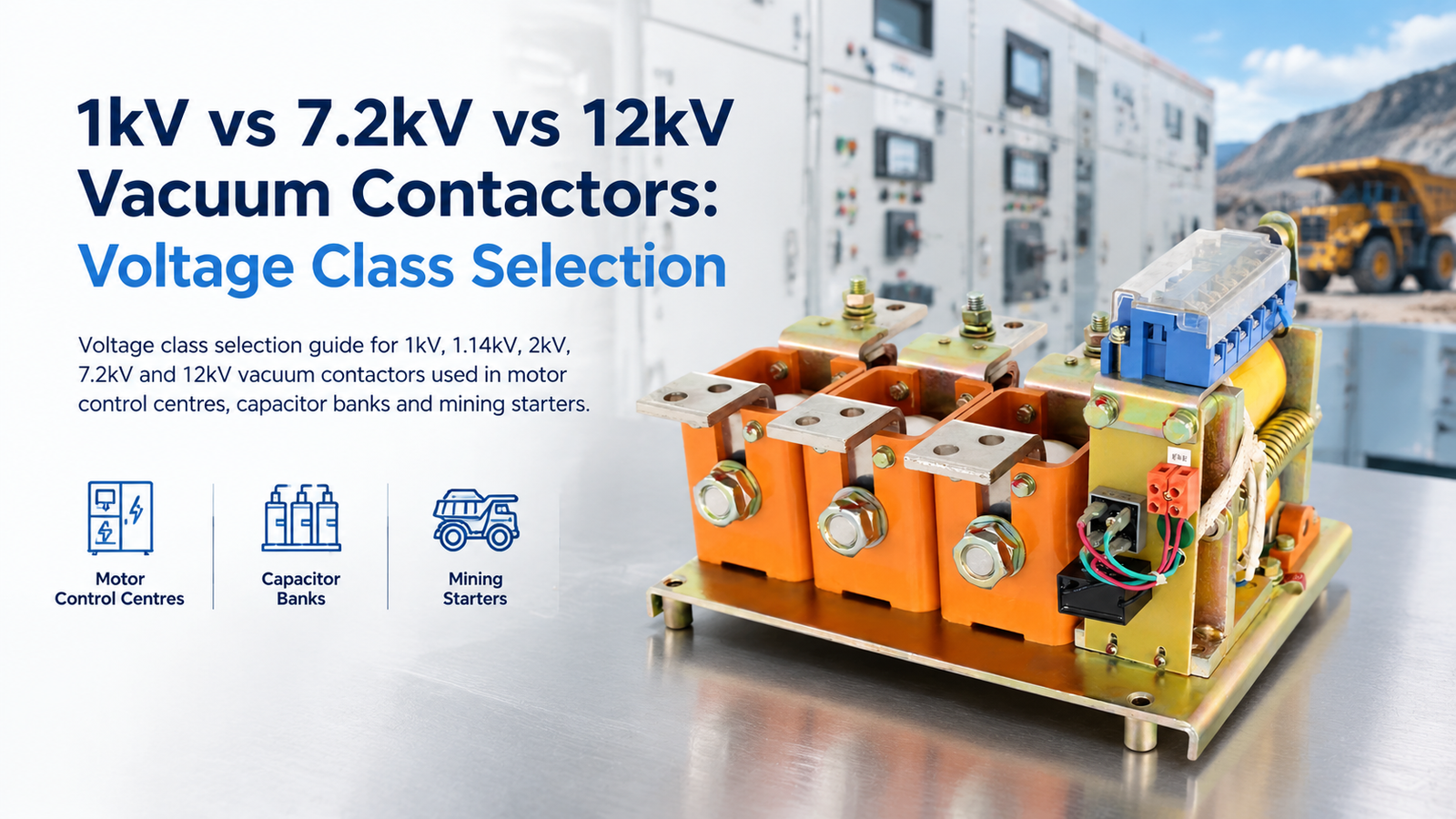
A 1 kV vacuum contactor is really a 1,140 V device. Compare the 1.14 kV, 2 kV, 7.2 kV and 12 kV classes by insulation, current and duty life.
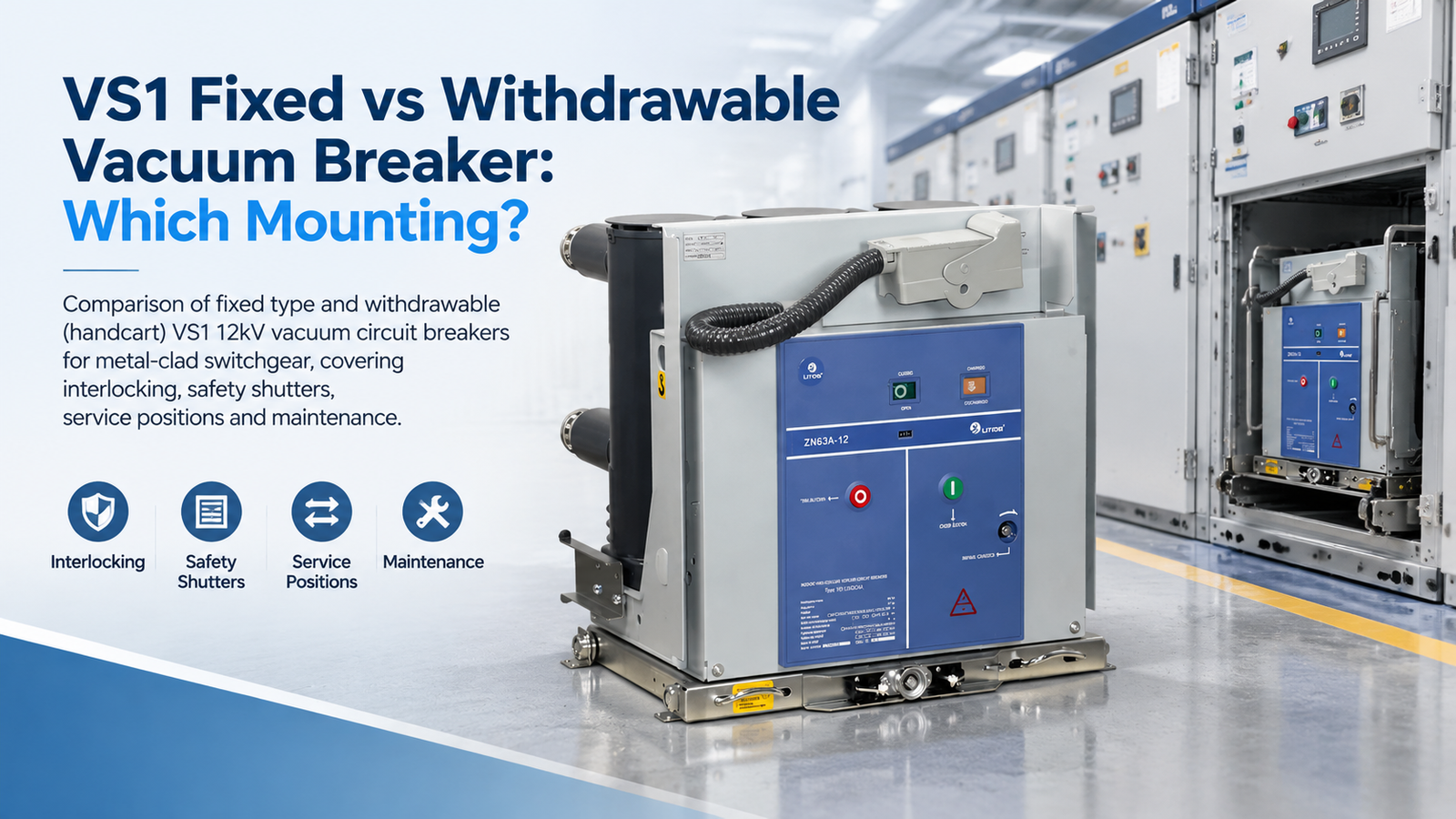
Fixed and withdrawable VS1 breakers interrupt the same fault current. The difference is isolation, testing and replacement time – here is how to choose.
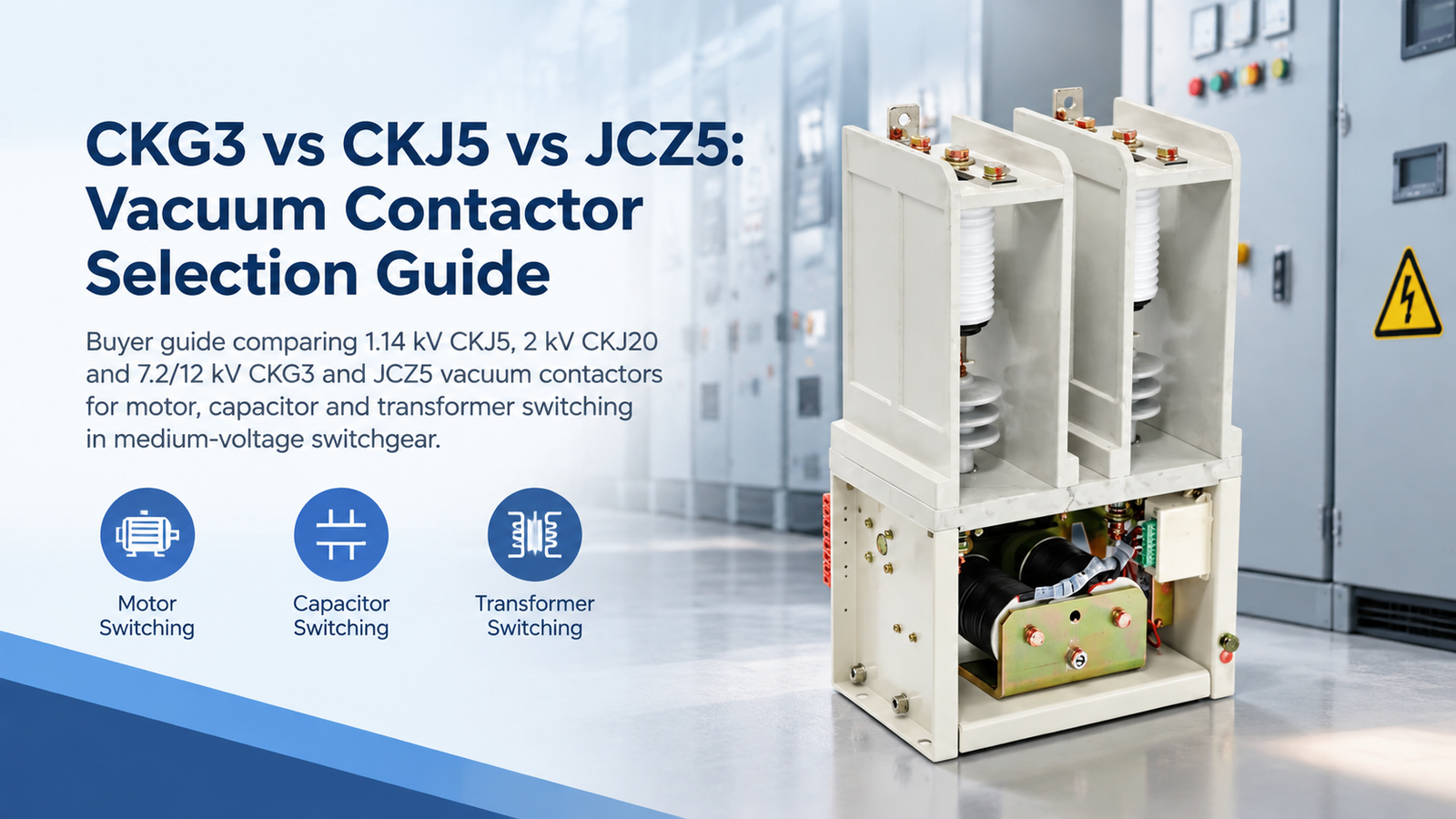
CKG3, CKJ5 and JCZ5 are three different devices: 12 kV, 1,140 V and 7.2/12 kV. Compare breaking capacity, duty life and control supply before ordering.
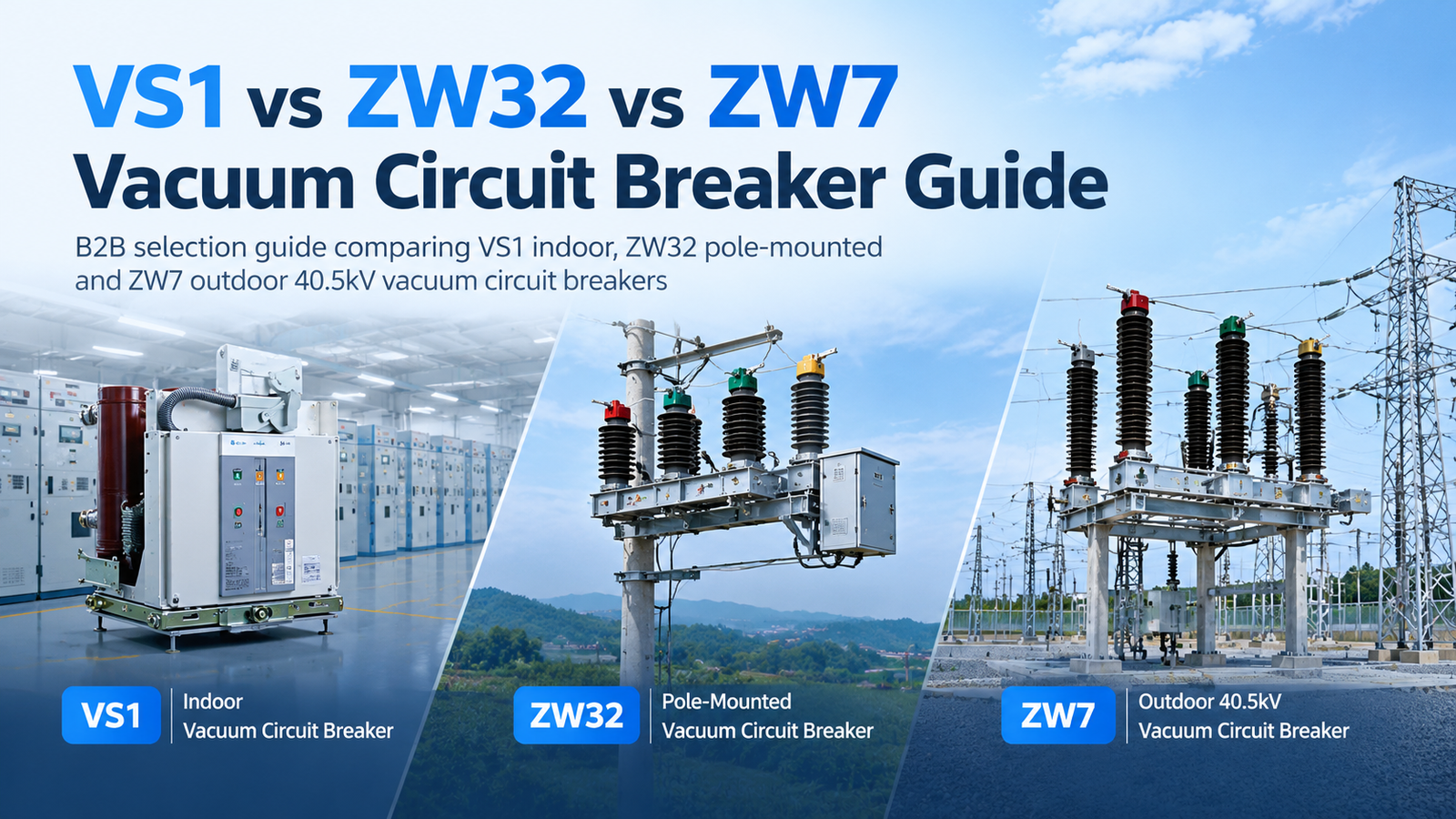
How to choose between VS1 indoor, ZW32 pole-mounted and ZW7 40.5 kV outdoor vacuum circuit breakers, including type codes and breaking capacity sizing.
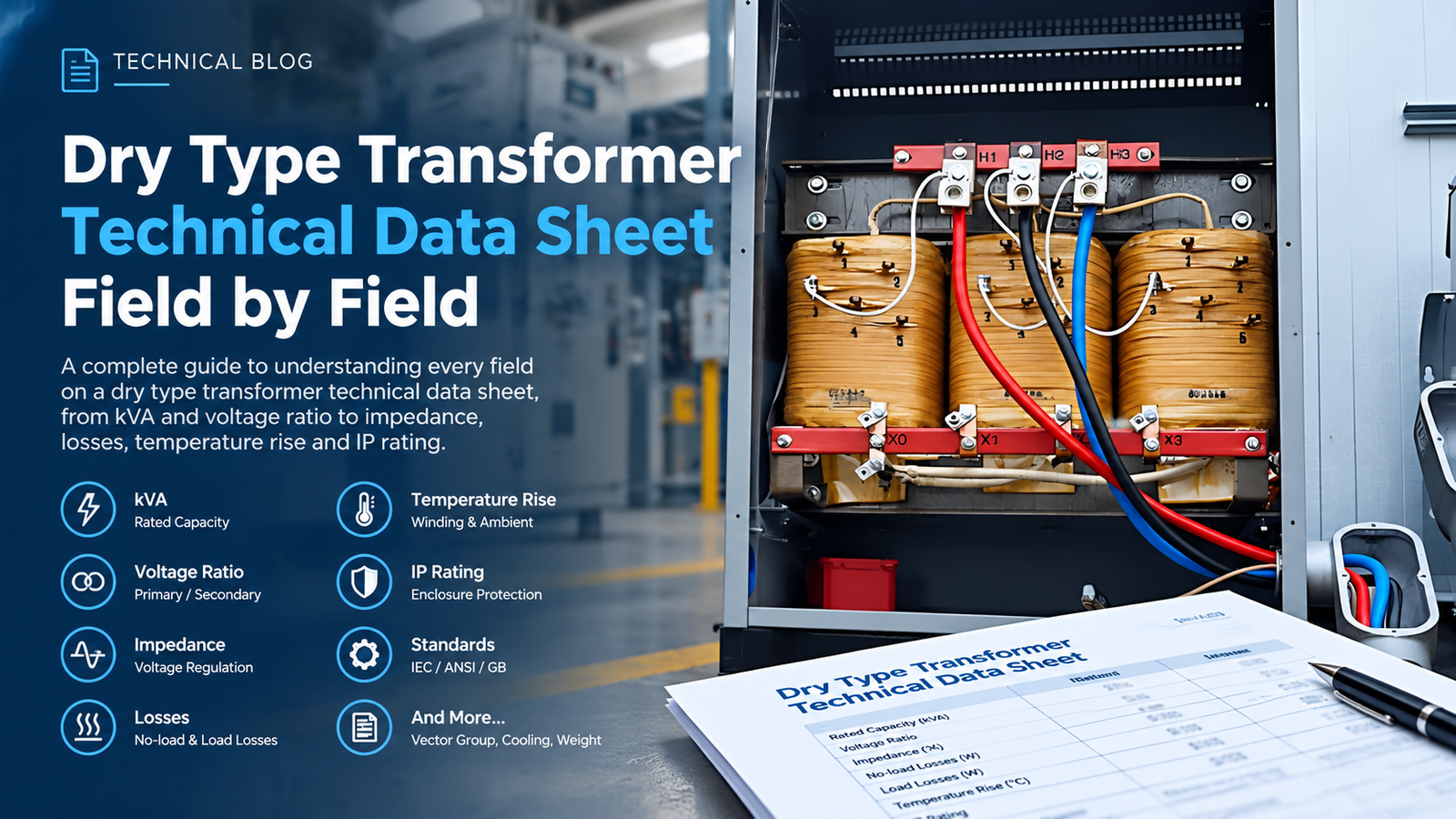
A field-by-field walkthrough of the dry type transformer technical data sheet, including the eight fields that move the price and the errors that cause disputes.

Read IP codes and NEMA types correctly, understand what encapsulation actually protects, and see how a sealed enclosure changes the usable kVA rating.