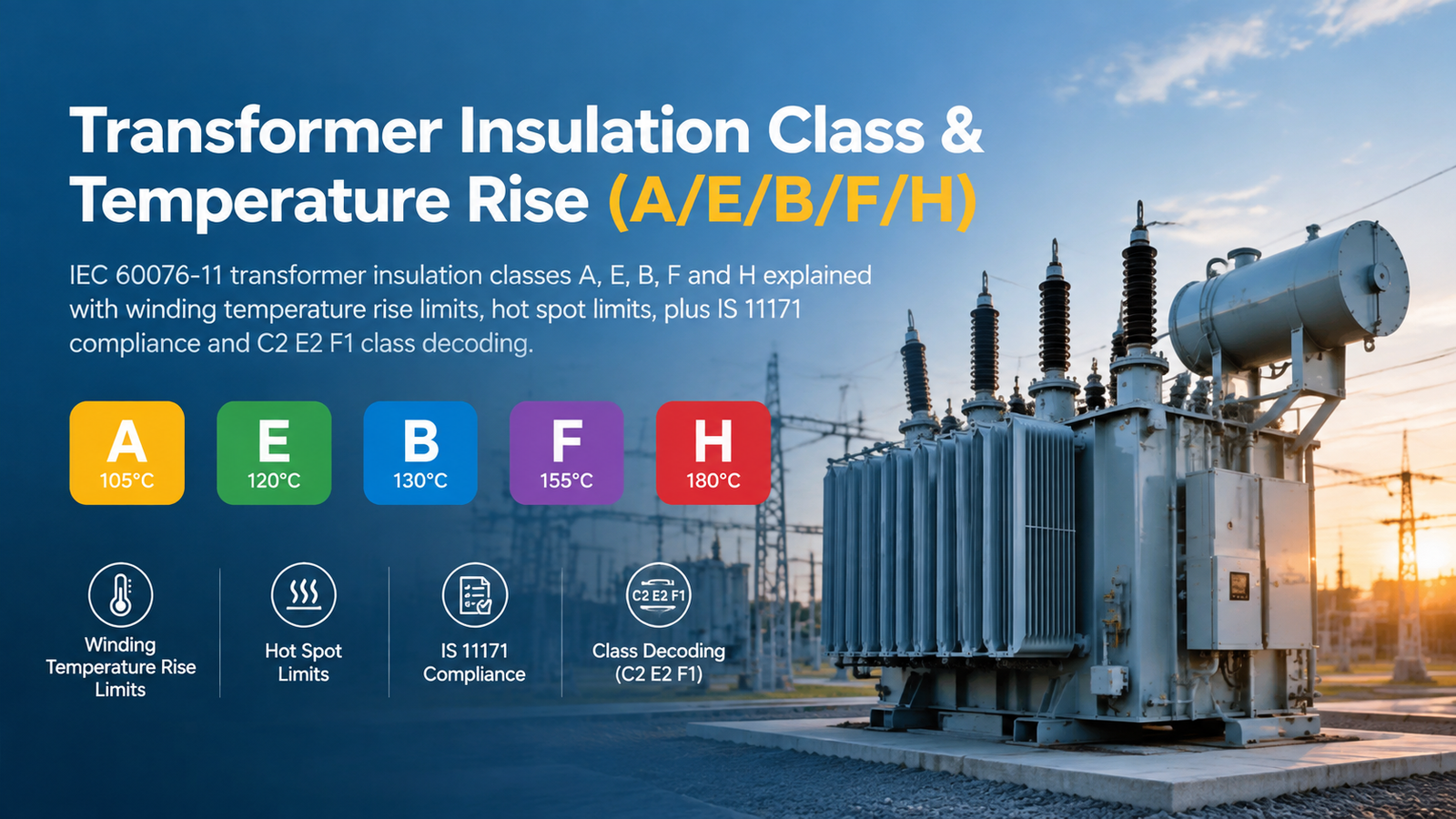
Transformer Insulation Class & Temperature Rise (A/E/B/F/H)
How transformer insulation classes A, E, B, F and H set temperature rise limits, and how IEC 60076-11 and IS 11171 compliance classes are specified and verified.

How transformer insulation classes A, E, B, F and H set temperature rise limits, and how IEC 60076-11 and IS 11171 compliance classes are specified and verified.
A 2026 oil immersed transformer price guide for 11kV-35kV units: cost per kVA benchmarks by rating, the factors that move a quote, and how to compare suppliers.
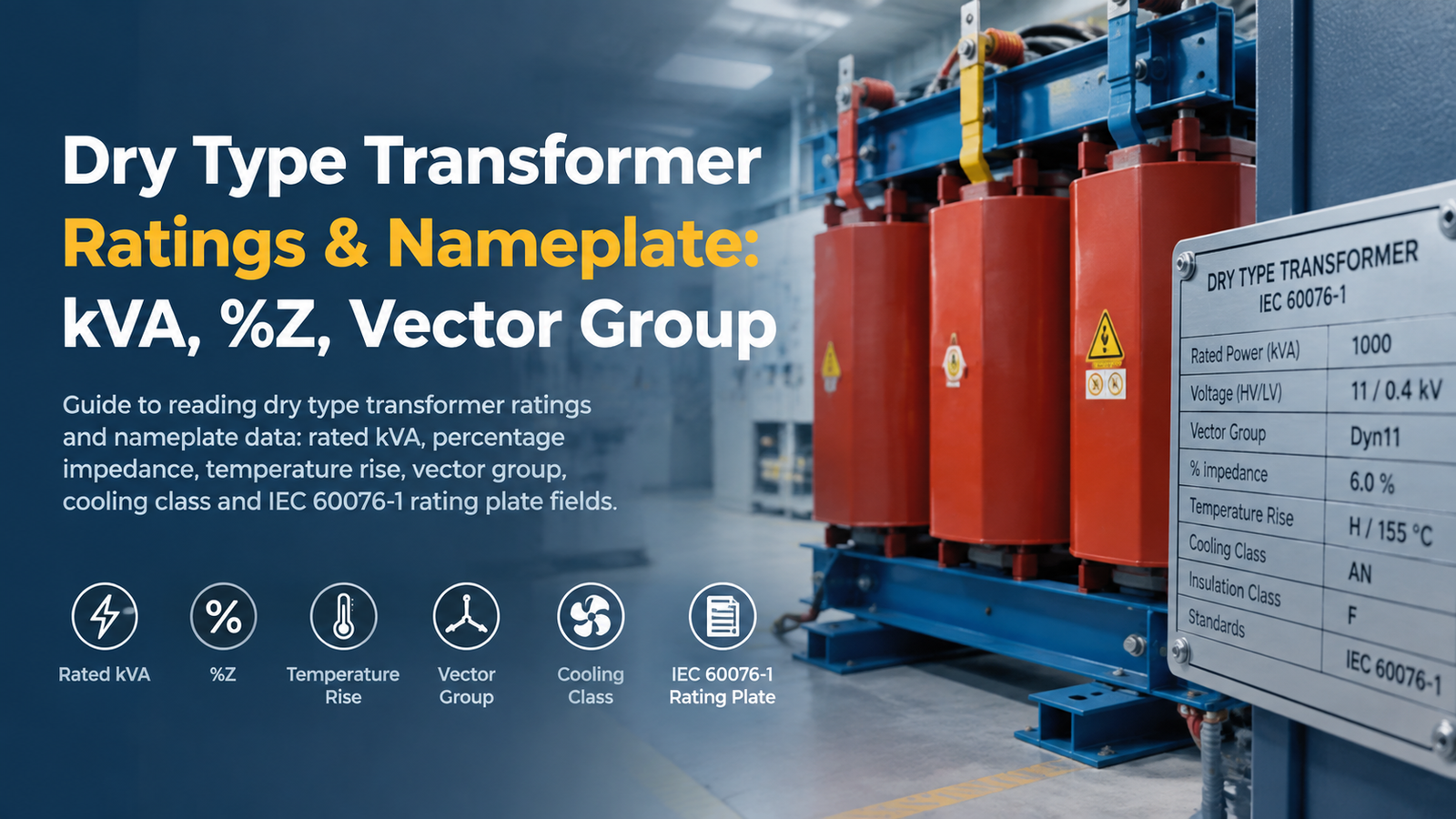
How to read dry type transformer ratings from the nameplate: rated kVA, percentage impedance, temperature rise, vector group and cooling class, plus an acceptance checklist.
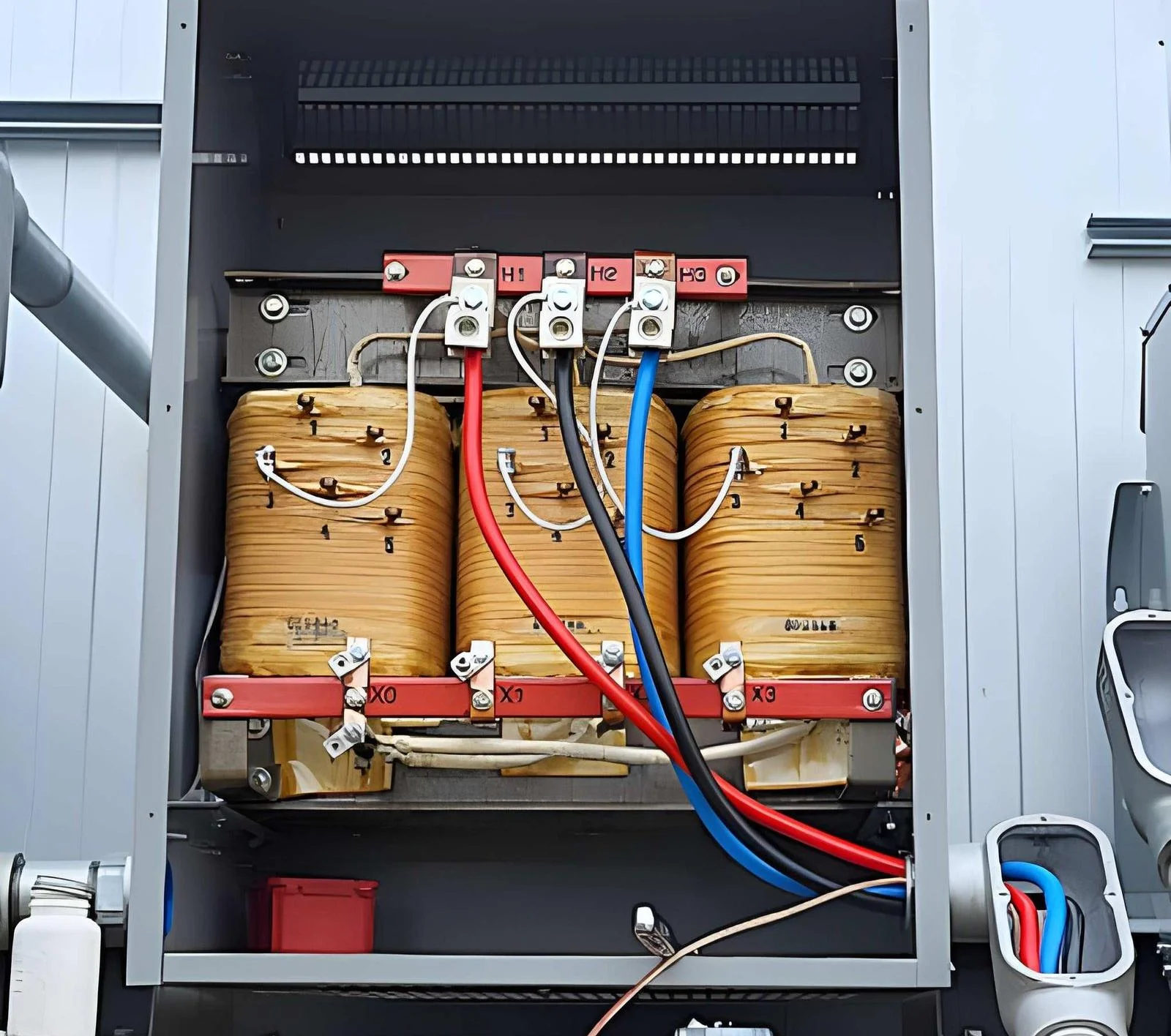
How to specify a dry type transformer for data center power distribution: 2N and N+1 redundancy, K-factor selection for UPS and server harmonics, and sizing for generator transfers.
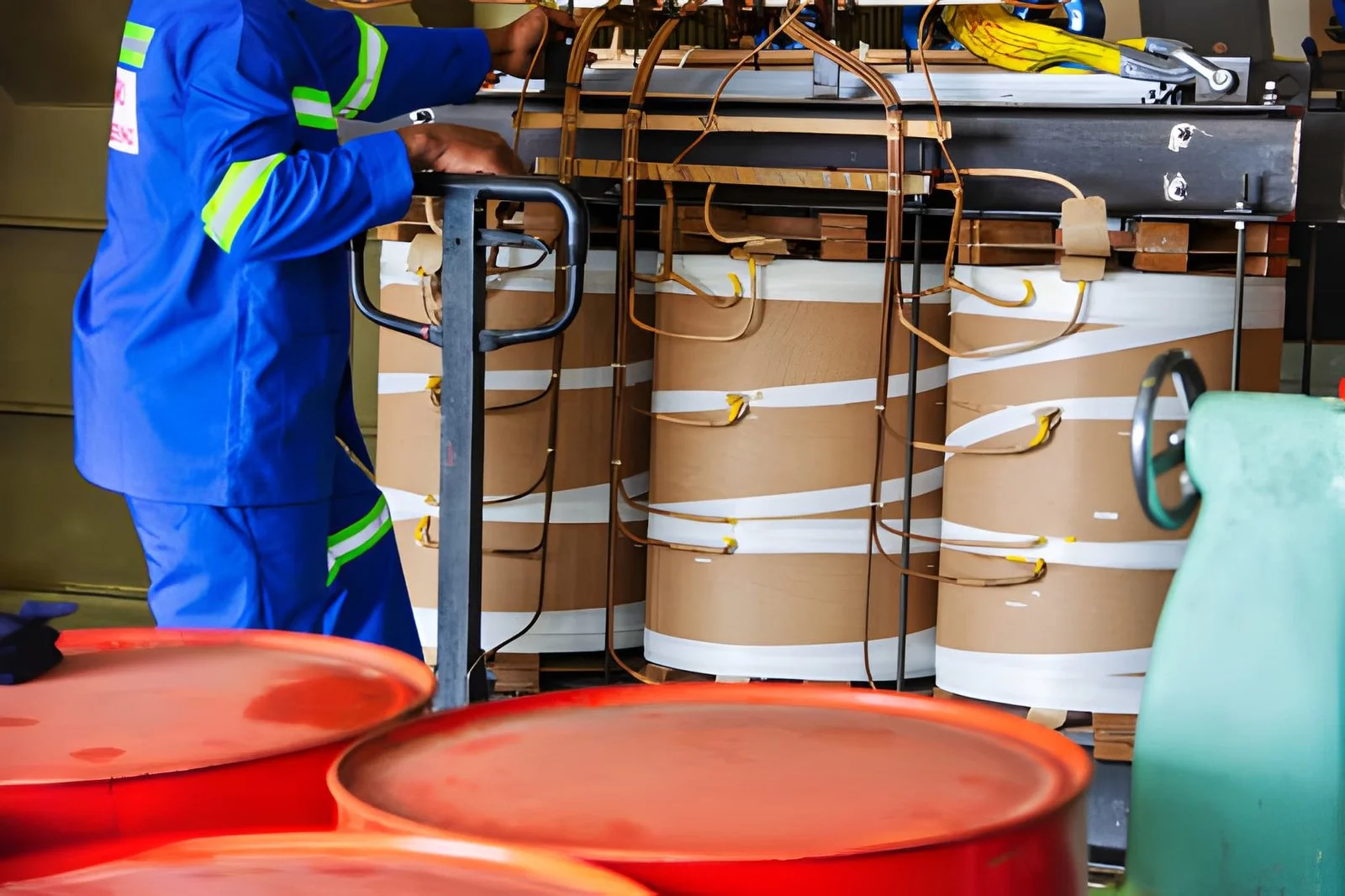
How to size and specify a dry type transformer for commercial buildings, shopping malls and hospitals: load diversity, harmonic K-factor, hospital essential systems and installation rules.
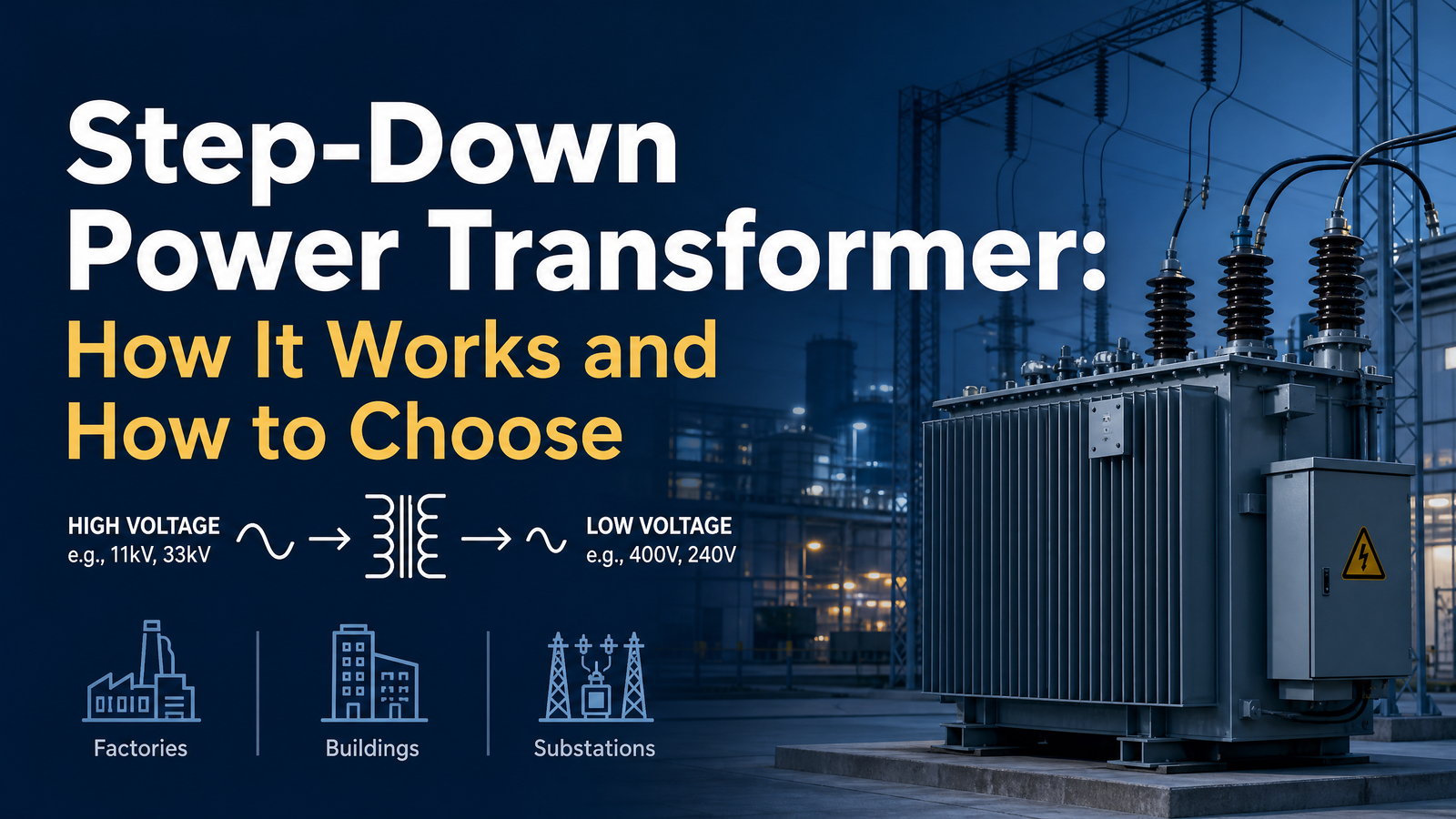
A step down power transformer is a static electrical device that converts a higher input voltage into a lower output voltage for safe distribution and use.

The core difference is simple: a vacuum contactor is designed for frequent switching of normal load currents, while a vacuum circuit breaker is designed to interrupt both normal and fault currents under short-circuit conditions.

A vacuum contactor is an electrically operated switching device that uses a vacuum interrupter to make and break AC circuits, primarily designed for frequent load

Every component serves a specific electrical, magnetic, or thermal function. Together they transfer thousands of kilovolt-amperes from one voltage level to another, silently and continuously, often for decades.