


Description
VS1 ZN63A at a Glance
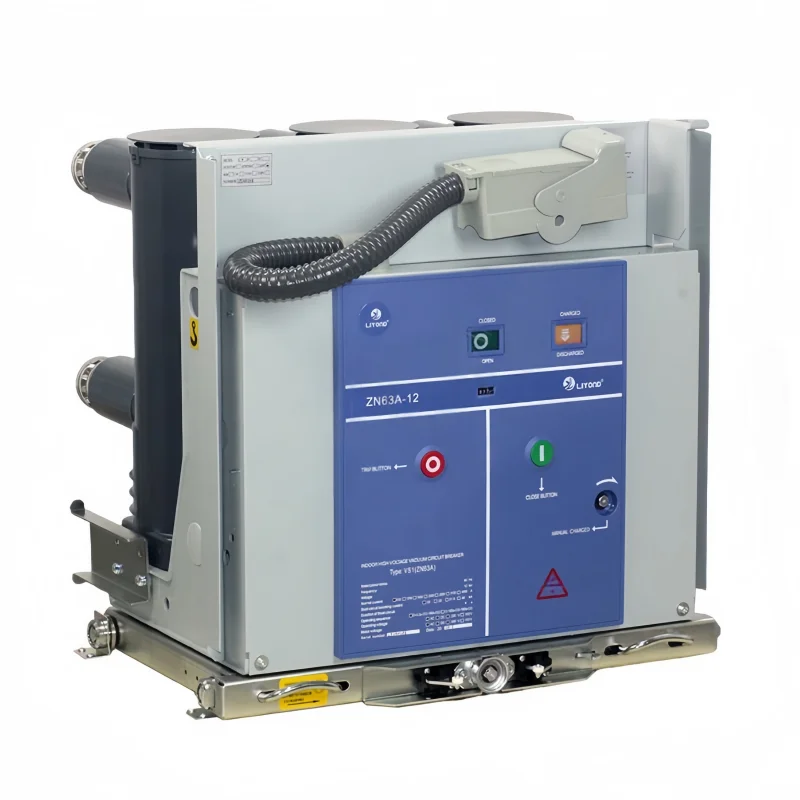
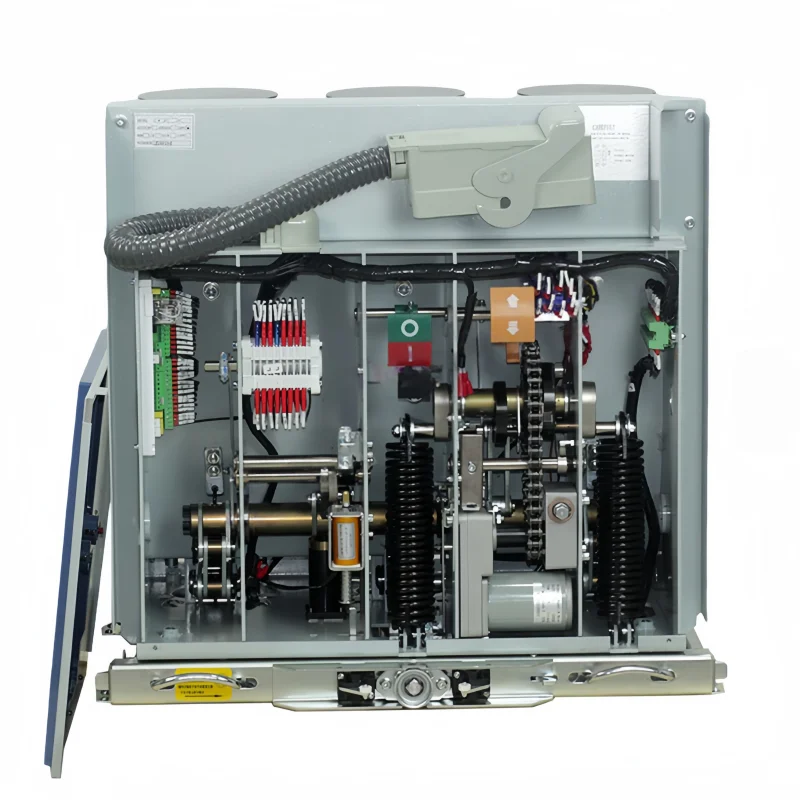
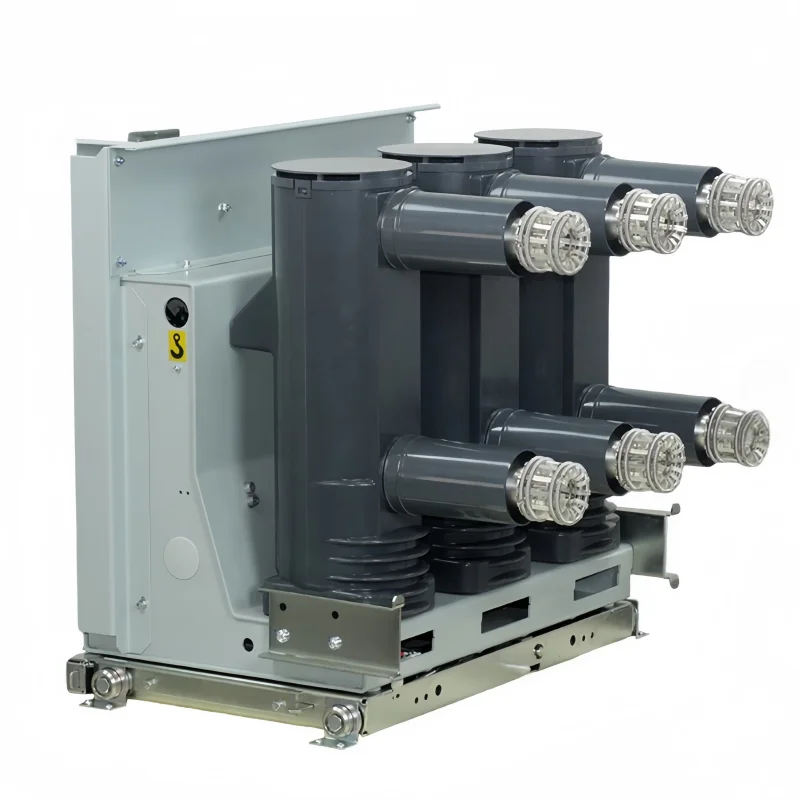
The VS1 ZN63A 12kV indoor vacuum circuit breaker is a three-phase unit for metal-clad switchgear, covering 630 A to 4,000 A with short-circuit breaking from 20 kA to 50 kA depending on the current frame. It uses a modular spring operating mechanism and is available for fixed or withdrawable installation.
The VS1 ZN63A 12kV indoor vacuum circuit breaker is the workhorse of 12 kV distribution: incomer, outgoing feeder, busbar section and motor switching in plant and utility boards. What distinguishes one order from another is the current and breaking pair, the operating sequence and whether the unit sits on a chassis.
Reading the VS1 ZN63A Designation
| Element | Meaning | What it tells you |
|---|---|---|
| VS1 | Model family name | Spring-mechanism indoor VCB, the export designation |
| ZN63 | Chinese type code | Z = vacuum, N = indoor, 63 = design sequence |
| A | Design variant | Revision of the base frame |
| 12 | Voltage class in kV | 12 kV, with 42/75 kV insulation |
VS1 and ZN63 refer to the same product. Export enquiries usually use VS1, domestic Chinese specifications use ZN63, and the two appear together in a quotation so that both sides recognise the model.
11 kV and 6.6 kV Systems on a 12 kV Rated Breaker
Most enquiries for an 11 kV vacuum circuit breaker are answered with a 12 kV frame, and that is correct rather than a substitution. The 12 kV figure is the equipment maximum voltage, and it covers any 11 kV system with margin for insulation coordination. What changes between an 11 kV and a 12 kV order is the nameplate wording and the system voltage written into the documentation, not the hardware.
Two practical points follow. First, the specification table below is also the 11 kV vacuum circuit breaker specification, current for current: 630 A through 3,150 A, with breaking from 20 kA to 50 kA. An 11 kV 630 A vacuum circuit breaker is the smallest standard build and the most common single configuration on 11 kV ring feeders. Second, 11 kV vacuum circuit breaker price tracks the 12 kV price at the same current and breaking combination, because it is the same breaker with a different system voltage on the paperwork.
At 6.6 kV the same logic holds with more headroom. A 6.6 kV system has an equipment maximum voltage of 7.2 kV, so a 12 kV frame sits two classes above the requirement. It remains the sensible order wherever spares commonality with an existing 11 kV or 12 kV board matters, and it is what most industrial 6.6 kV projects in mining and cement plants specify. Where the board is dedicated and commonality is irrelevant, a 7.2 kV frame would be smaller and cheaper, but that is a different product line.
One caveat worth stating plainly: an 11 kV feeder from a transformer with a high prospective fault level can push the required breaking current beyond what the smallest current frame offers. On this breaker current and breaking rating are tied together, so confirm the fault level at the installation point before fixing either. If your tender specifies a fixed version rather than a truck, say so at enquiry; the fixed build uses the same breaker with different accessories and a different price.
Current and Breaking Range
| Parameter | Published value |
|---|---|
| Rated voltage | 12 kV |
| Power-frequency withstand, 1 minute | 42 kV |
| Lightning impulse withstand, peak | 75 kV |
| Rated current options | 630 / 1,000 / 1,250 / 1,600 / 2,000 / 2,500 / 3,150 / 4,000* A |
| Short-circuit breaking current | 20 / 25 / 31.5 / 40 / 50 kA, by current configuration |
| Peak making and dynamic current | 50 / 63 / 80 / 100 / 125 kA, by configuration |
| Short-circuit duration | 4 seconds |
| Breaking operations | 50; 30 for 40 kA and above |
| Operating sequence | O–0.3 s–CO–180 s–CO; O–180 s–CO–180 s–CO above 40 kA |
The asterisk against 4,000 A is not decorative. The top of the current range is a special build with its own pole geometry and forced cooling consideration, and it should not be assumed available at every breaking rating.
Current and Breaking Are One Decision
On the VS1 ZN63A 12kV indoor vacuum circuit breaker, current and breaking appear as separate columns, which suggests they can be chosen independently. They cannot: each current frame is offered at one or two breaking levels, and the pair is fixed by the pole design and the interrupter size.
What that means when reading a quotation: a line that offers 2,500 A with 20 kA is not a bargain, it is a mismatch that will not be built. Ask for the pair explicitly, and check it against the fault level at the point of installation.
A worked case: a plant incomer feeding 2,000 kVA of load at 12 kV draws roughly 96 A, so the current rating is not the constraint. The board fault level of 25 kA is. That points to the 1,250 A frame at 25 kA rather than the 2,500 A frame, because paying for current you will never carry buys nothing.
Breaking Operations and Operating Sequence
Two figures state how hard the breaker is allowed to work before the interrupter is spent, and they are easy to confuse with the mechanical life.
50 breaking operations at the rated short-circuit current is the interrupter allowance for frames up to 31.5 kA. Above 40 kA it drops to 30 operations, because the arc energy at that level consumes the contact material faster. Neither figure is the total number of operations the breaker performs; it counts only full-rated fault interruptions.
The operating sequence describes the auto-reclose duty the breaker is rated for. O–0.3 s–CO–180 s–CO means: trip, reclose after 0.3 seconds onto the fault, trip again, wait 180 seconds, then close and trip once more. Above 40 kA the sequence becomes O–180 s–CO–180 s–CO, with no fast reclose, because a 40 kA interruption leaves the interrupter too hot to re-strike within 0.3 seconds.
If your protection scheme uses a fast auto-reclose on a board with a fault level above 40 kA, this frame will not support it. That is a scheme change, not a setting change.
Fixed or Withdrawable
Both arrangements use the same breaker; what changes is the accessories and the panel design.
- Fixed. The unit bolts into the cubicle with the primary connections made directly. Cheaper, and common on smaller plant boards where maintenance access to the busbar is not needed.
- Withdrawable. The breaker sits on a chassis with isolating contacts, so it can be racked out for maintenance while the busbar stays live. It adds the racking mechanism, the position indicator and part of the interlock chain.
For a board where downtime costs money, the withdrawable arrangement pays for itself the first time a breaker needs replacing. For a board that is rarely opened, the fixed version is the sensible purchase.
The Interlock Chain
The frame supports the standard five-interlock arrangement used in metal-clad switchgear: the breaker cannot be racked in or out with the main circuit closed, the earthing switch cannot be closed with the breaker in the service position, the breaker cannot be closed with the earthing switch closed, the cubicle door cannot be opened with the breaker in service, and the breaker cannot be racked in with the door open.
The interlocks are mechanical rather than electrical on this frame, which is why they hold even with the control supply lost. State the required chain with the inquiry, because panel builders sometimes specify a reduced chain and the accessories differ.

When a Different Breaker Fits Better
- Capacitor bank switching. The VBI 12 kV vacuum circuit breaker is rated for capacitor-bank duty, including back-to-back banks, which this frame does not state.
- 24 kV systems. The ZN63 (VS1) 24 kV breaker covers the higher class in the same mechanism family.
- Outdoor pole-mounted duty. The ZW32 40.5 kV outdoor breaker is built for that arrangement.
All frames sit under vacuum circuit breakers.
Service Conditions
Indoor installation at altitudes up to 1,000 m, ambient from -10 °C to +40 °C, daily average relative humidity up to 95 percent with a monthly average of 90 percent, and a maximum earthquake intensity of 8. No fire, explosion or corrosive atmosphere, and no severe vibration.
The humidity figures are high because the standard assumes a switchroom without dehumidification. Where condensation forms on the insulation, the failure mode is surface tracking rather than an internal fault, and space heaters are the usual remedy.
Standards and Tests
Routine tests on every unit cover power-frequency withstand at 42 kV, main-circuit resistance, contact travel, and a mechanical operation sequence including the rated operating sequence. Type test reports covering temperature rise, short-circuit making and breaking, and mechanical life are available for project documentation.
Manufacturer Supply, OEM and Wholesale
The VS1 ZN63A 12kV indoor vacuum circuit breaker is supplied direct. Panel builders order against a frozen current and breaking pair, chassis arrangement and interlock specification under OEM or private-label marking; distributors hold a standing specification for repeat supply; project buyers receive drawings and test reports for consultant approval.
Price, MOQ and Lead Time
- MOQ. Single units. Custom interlock chains and private-label marking carry a higher minimum.
- Price drivers. Current rating, breaking rating, fixed or withdrawable, interlock complexity, auxiliary contacts and quantity.
- Lead time. Confirmed against the production schedule at order.
- Payment. Deposit with balance against the bill of lading copy; letter of credit for project quantities.
What to Send With Your Inquiry
- System voltage and the board insulation class
- Continuous current required
- Fault level at the installation point
- Fixed or withdrawable arrangement
- Operating sequence and auto-reclose requirement
- Interlock chain required
- Auxiliary contact count and control voltage
- Quantity, destination port and required delivery date
Send those through the quote form on this page. Current and breaking must be quoted as a pair, so stating both avoids a revised quotation.
FAQ
Can I choose current and breaking independently?
What does 50 breaking operations mean?
Why does the operating sequence change above 40 kA?
Are the interlocks mechanical or electrical?
Fixed or withdrawable?
What is the MOQ?
Request Quote
Tell us your specifications, quantity, or application scenario and we will reply with a tailored quote.