


Description
VBI 12kV at a Glance
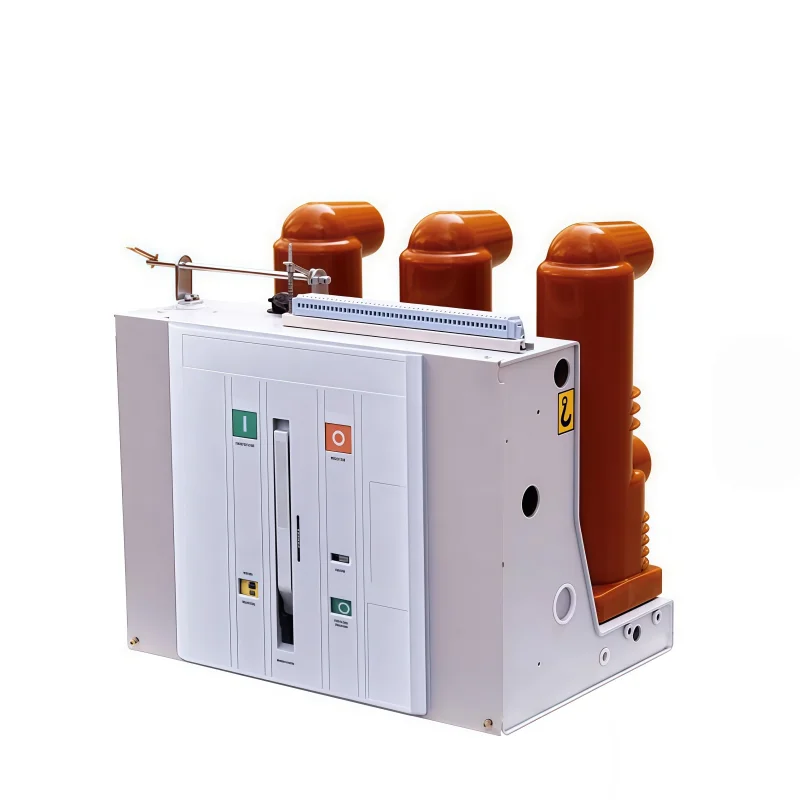
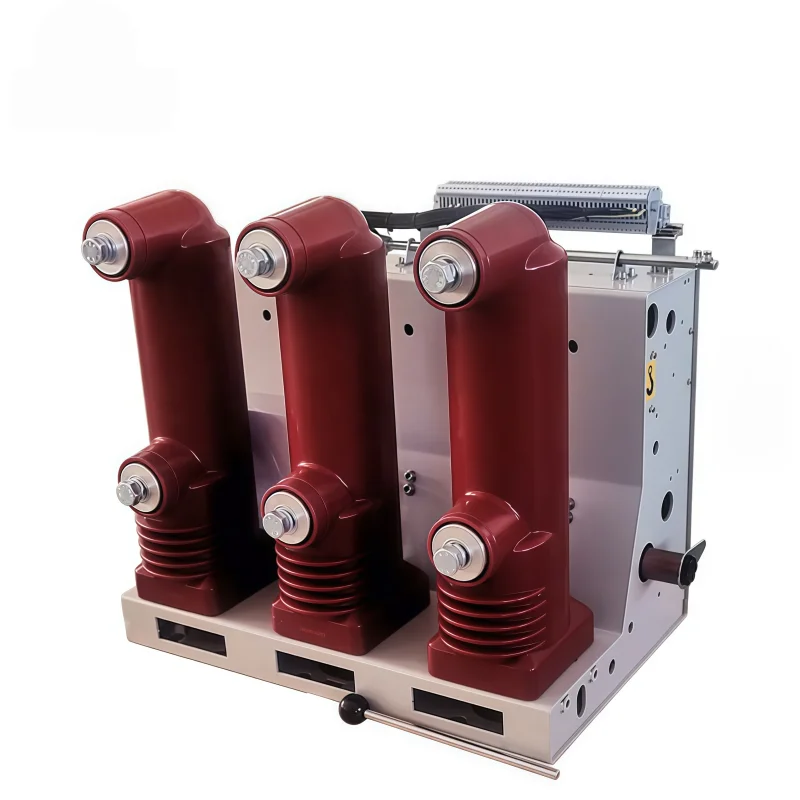
The VBI 12kV indoor vacuum circuit breaker is a three-phase unit for 12 kV metal-clad switchgear, covering 630 A to 3,150 A with breaking currents from 20 kA to 40 kA. What separates it from a general-purpose distribution breaker is its published capacitor-switching ratings: 630 A for a single capacitor bank and 400 A for back-to-back banks.
Capacitor switching is the duty that breaks ordinary breakers, and it is the duty the VBI 12kV indoor vacuum circuit breaker is rated for. The frame is rated for it because the interrupter and the mechanism are specified against the two effects that capacitors produce, which are inrush and restrike.
Reading the VBI Designation
| Element | Meaning | What it decides |
|---|---|---|
| V | Vacuum interrupter | Sealed arc-quenching chamber |
| B | Design series | Frame family |
| I | Indoor (户内) | Metal-clad cubicle installation |
| 12 | Voltage class in kV | 12 kV, with 42/75 kV insulation |
Ratings
| Parameter | Published value |
|---|---|
| Rated voltage | 12 kV |
| Power-frequency withstand, 1 minute | 42 kV |
| Lightning impulse withstand, peak | 75 kV |
| Rated current | 630 A / 1,250 A / 2,000 A / 3,150 A |
| Short-circuit breaking current | 20 kA / 25 kA / 31.5 kA / 40 kA |
| Short-circuit making current, peak | 50 kA / 63 kA / 80 kA / 100 kA |
| Peak withstand current | 50 kA / 63 kA / 80 kA / 100 kA |
| Thermal-stability current, RMS | 20 kA / 25 kA / 31.5 kA / 40 kA, for 4 s |
| Rated operating sequence | O–0.3 s–CO–180 s–CO |
| Mechanical life | 10,000 operations |
| Single capacitor-bank breaking current | 630 A |
| Back-to-back capacitor-bank breaking current | 400 A |
Why Capacitor Switching Is Hard on a Breaker
A capacitor bank behaves nothing like a motor or a cable. Two effects dominate, and neither appears in a general distribution duty.
Inrush on closing. An uncharged capacitor looks like a short circuit at the instant of energisation. Closing onto it produces a current that rises to tens of times the rated bank current within a few hundred microseconds, at a frequency of several hundred to several thousand hertz. That current does not come from the system alone; when a second bank is already energised, the new bank draws its inrush largely from the neighbouring bank, which has no impedance between it and the closing contacts.
Restrike on opening. When the breaker interrupts capacitive current, the voltage across the opening contacts is the difference between the system voltage and the trapped charge on the capacitor. That difference can reach twice the peak system voltage within milliseconds of interruption. If the contact gap cannot hold it, the gap breaks down again, the capacitor recharges, and the resulting transient can reach three to five times normal voltage. That is what damages both the breaker and the equipment downstream.
Both effects scale with the interrupter design, not with the breaker’s short-circuit rating. A 40 kA breaker is not automatically good at capacitors; a 20 kA breaker built for capacitive duty is.
Single Bank and Back-to-Back
The two capacitor ratings on the VBI 12kV indoor vacuum circuit breaker are not interchangeable, and the lower one is the more demanding test.
- 630 A single bank is the current the breaker can interrupt when one capacitor bank is switched on its own, with the rest of the network as the only source.
- 400 A back-to-back applies when multiple banks are connected to the same busbar and the breaker must switch one while others are already energised. The inrush is higher and the recovery voltage is more severe, so the permitted current is lower.
A common specification error is to quote the 630 A figure for a multi-bank installation. If the board has more than one capacitor step, the back-to-back rating is the one that applies, and 400 A may not cover the bank size.
Inrush Current and Damping Reactors
Where the calculated inrush exceeds what the breaker is rated for, a series reactor between the breaker and the bank is the usual remedy. The reactor adds impedance in the inrush path, which lowers both the peak and the frequency of the inrush current.
To size it, three inputs are needed: the bank kvar and its capacitance, the fault level at the busbar, and the number of banks that can be connected simultaneously. Without the third input the back-to-back case cannot be assessed, and it is the one that most often fails.
State the bank rating and the number of steps with the inquiry. A quotation for a capacitor breaker that does not ask about the number of banks is an incomplete quotation.
Mechanical Life and Capacitor Duty
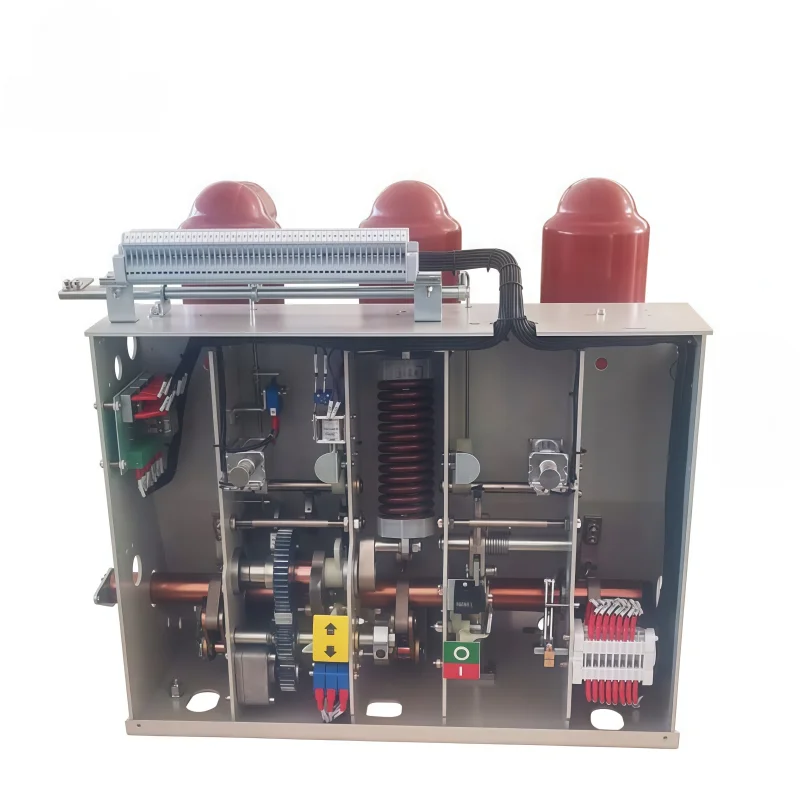
The frame is rated at 10,000 mechanical operations. On a distribution feeder that is generous; on a capacitor bank with automatic power-factor control it can be consumed quickly.
A controller that switches a bank four times an hour to track a varying load uses roughly 10,000 operations in about eight months of continuous operation. At that rate the mechanism, not the interrupter, sets the maintenance interval, and it is worth checking the switching frequency the controller will actually produce rather than the one assumed at design.

Where VBI Is Used
- Power factor correction banks in plants and substations, including multi-step installations.
- Filter banks where harmonics are present and the capacitor is part of a tuned circuit.
- General distribution duty in power plants, substations and industrial boards, including circuits that require frequent operation.
For a plain feeder without capacitors, a general-purpose breaker is usually cheaper. The VBI premium buys the capacitive rating, and if there is no capacitor on the circuit, that premium buys nothing.
Fixed Type Indoor Duty: Where the VBI Sits
VBI is a fixed type indoor vacuum circuit breaker built for capacitor switching, and the fixed arrangement is part of the logic rather than a cost compromise. A capacitor bank breaker is operated on a schedule and inspected on a schedule, so the racking mechanism of a withdrawable truck adds parts without adding much availability. The fixed build puts the money into the interrupter and the damping instead.
That makes it the usual choice for an indoor high voltage vacuum circuit breaker feeding a shunt capacitor bank in a plant substation, a filter circuit, or a back-to-back capacitor installation where inrush current is the design driver. Ratings run 630 A to 3,150 A with 20 kA to 40 kA breaking, with 630 A single bank and 400 A back-to-back as the capacitor duty figures.
Where the same board also feeds mixed industrial load and needs a rackable truck, VS1 ZN63A is the frame to look at. Where the load is capacitive and the switching duty is repetitive, VBI’s capacitor rating is the reason to choose it, and a general purpose frame should not be substituted on price alone.
When a Different Breaker Fits Better
- General distribution without capacitors. The VS1 ZN63A 12 kV breaker covers that duty up to 4,000 A and 50 kA.
- 24 kV systems. The ZN63 (VS1) 24 kV breaker covers the higher class.
- Outdoor installations. The ZW8 12 kV outdoor breaker handles harsh environments down to -40 °C.
Service Conditions
Indoor installation at altitudes up to 1,000 m, ambient from -10 °C to +40 °C with storage down to -30 °C, daily average relative humidity up to 95 percent and monthly average up to 90 percent, and a maximum earthquake intensity of 8. Condensation may form when the temperature drops sharply, so space heaters are normally required.
Standards and Tests
Routine tests cover power-frequency withstand at 42 kV, main-circuit resistance, contact travel and a mechanical operation sequence. Capacitive-current switching is verified by type test rather than on every unit, so ask for the type test report covering the bank configuration you intend to use it on.
Manufacturer Supply, OEM and Wholesale
The VBI 12kV indoor vacuum circuit breaker is supplied direct. Panel builders order against a frozen current, breaking and capacitor rating under OEM or private-label marking; distributors hold a standing specification for repeat supply; project buyers receive drawings and test reports for approval.
Price, MOQ and Lead Time
- MOQ. Single units. Private-label marking carries a higher minimum.
- Price drivers. Current rating, breaking rating, capacitor-switching rating, auxiliary contacts and quantity.
- Lead time. Confirmed against the production schedule at order.
- Payment. Deposit with balance against the bill of lading copy; letter of credit for project quantities.
What to Send With Your Inquiry
- System voltage and fault level at the busbar
- Capacitor bank kvar and the number of steps
- Whether banks can be connected simultaneously, which sets the back-to-back case
- Any series reactor already specified
- Expected switching frequency per day
- Continuous current and breaking current required for the general duty
- Auxiliary contacts and control voltage
- Quantity, destination port and required delivery date
Send those through the quote form on this page. The number of banks and the expected switching frequency are what decide whether this frame is adequate, so both belong in the first message.
FAQ
Why are capacitor breakers rated separately?
What is the difference between the 630 A and 400 A ratings?
What causes a restrike?
How do I reduce inrush?
What if the switching frequency is high?
What is the MOQ?
Request Quote
Tell us your specifications, quantity, or application scenario and we will reply with a tailored quote.