
Description
ZN63 (VS1) 24kV at a Glance
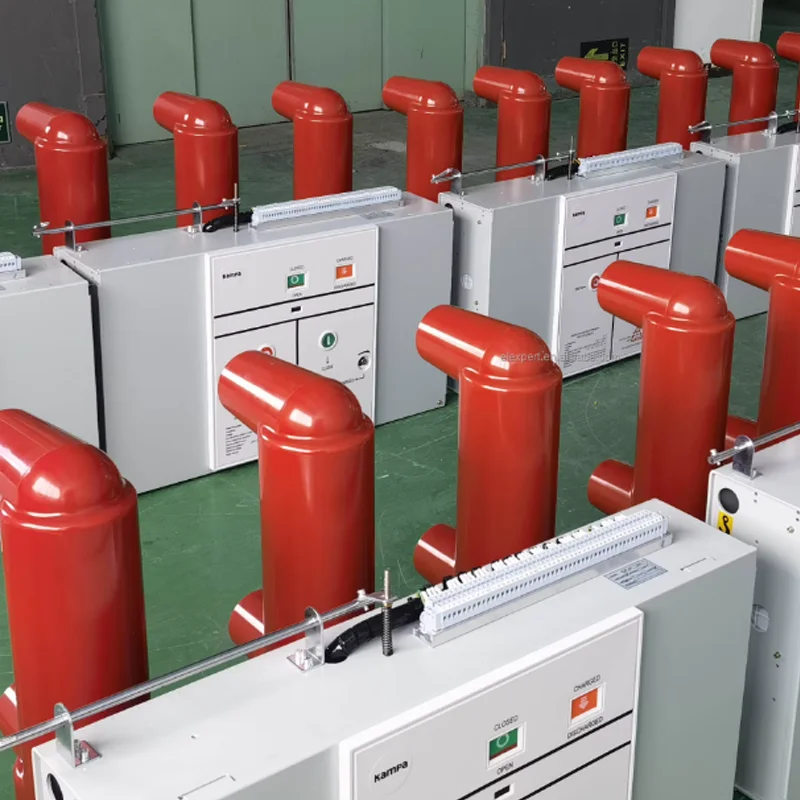
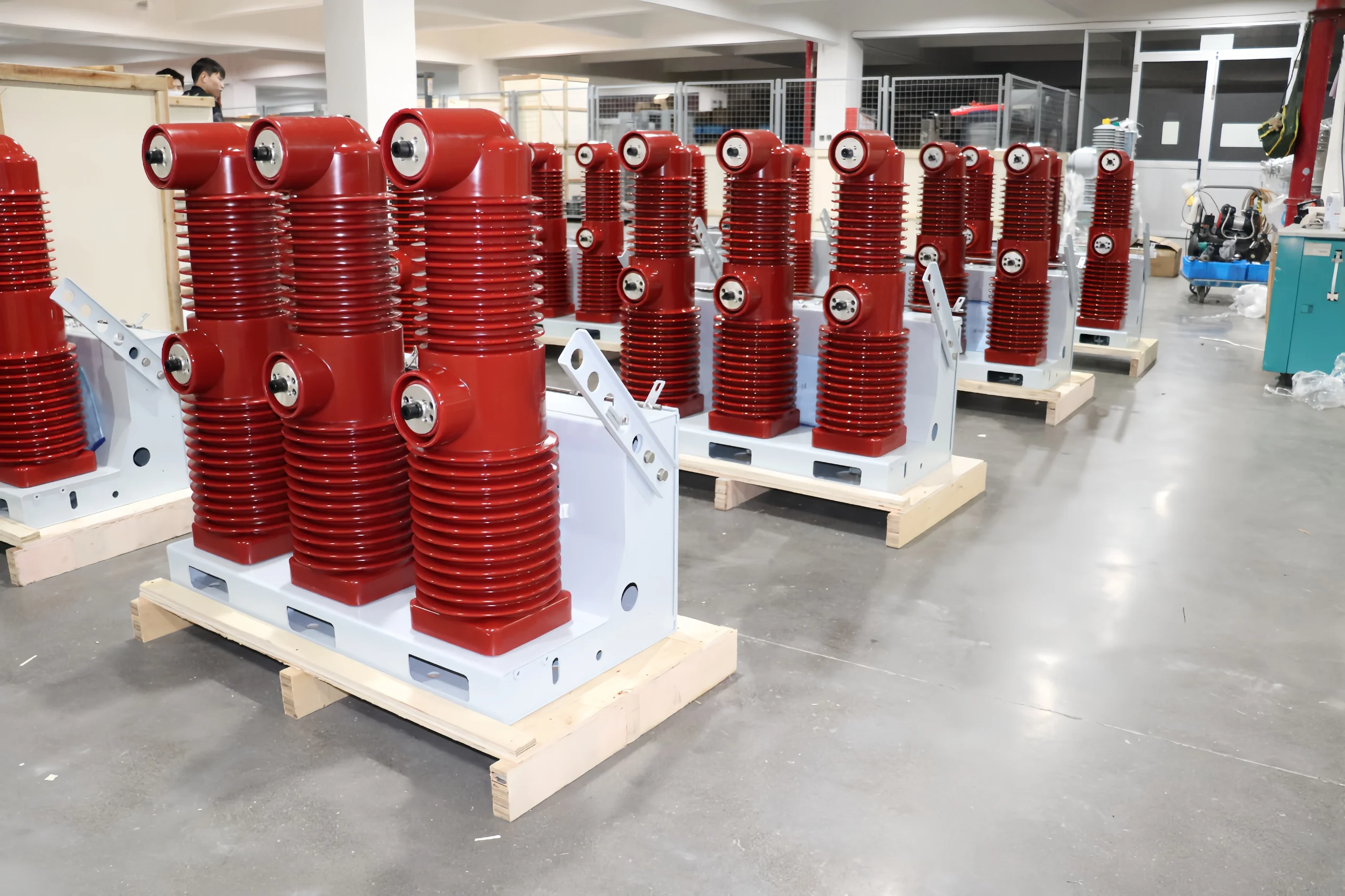
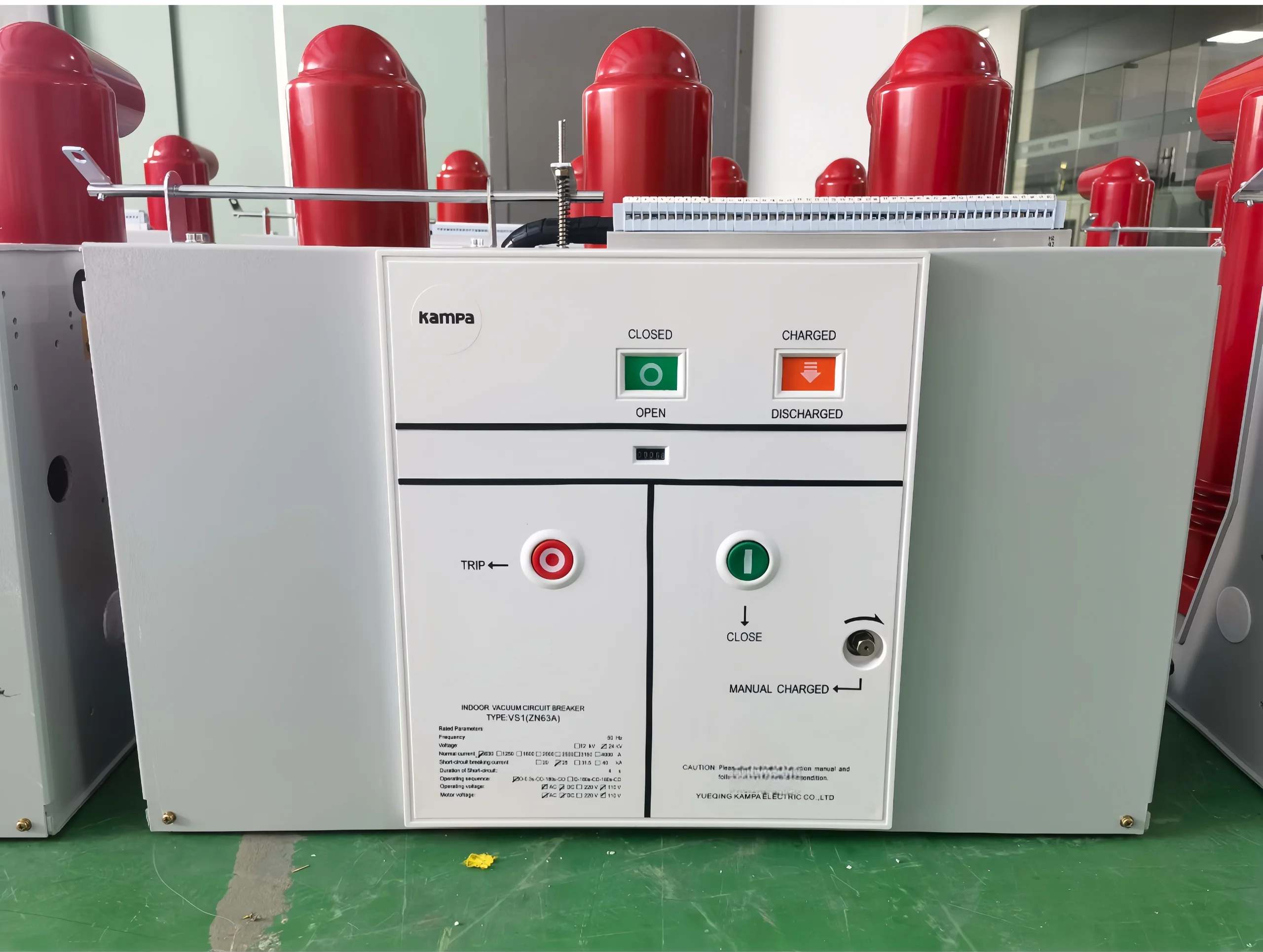
The ZN63 (VS1) 24kV indoor vacuum circuit breaker is a three-phase unit for 24 kV metal-clad switchgear, built on the same modular spring mechanism as the 12 kV frame but with a larger pole assembly to carry the higher insulation level. It is available for fixed installation or on a moving-base carrier, with a solidly sealed pole as standard and an insulating tube as an option.
The ZN63 VS1 24kV indoor vacuum circuit breaker is used in 24 kV distribution boards, industrial substations and utility switchgear where the system voltage sits between the common 12 kV and 40.5 kV classes. Its published ambient range reaches -25 °C, wider than the 12 kV frame, which makes it the choice for colder sites.
Reading the Designation
| Element | Meaning | What it decides |
|---|---|---|
| Z | Vacuum (真空) | Vacuum interrupter |
| N | Indoor (户内) | Metal-clad cubicle installation |
| 63 | Design sequence | Frame family, shared with the 12 kV build |
| VS1 | Export model name | Same product, used in international quotations |
| 24 | Voltage class in kV | 24 kV nominal system |
The design sequence 63 is shared across voltage classes. That is convenient for a buyer standardising on one mechanism family, but it also means the model name alone does not tell you the voltage. Always confirm the class in the specification, not from the model prefix.
What 24 kV Changes
On the ZN63 VS1 24kV indoor vacuum circuit breaker, moving from 12 kV does not simply double a number in the specification. Three physical things change, and each has a consequence for the cubicle.
- Insulation level. The nominal class goes to 24 kV with a corresponding step up in power-frequency and impulse withstand. The pole assembly grows to provide the creepage that level requires.
- Phase spacing. The wider poles force a larger phase centre distance, so a 24 kV breaker will not fit a cubicle built for 12 kV equipment. The busbar arrangement and the cable termination positions both change.
- Interrupter size. The vacuum bottle is larger because the contact gap has to hold a higher recovery voltage after interruption.
The practical result is that a 24 kV cuble is a different panel, not a 12 kV panel with a different breaker inside. That is worth settling before the switchgear is ordered, because retrofitting is not an option.
15 kV, 20 kV and 22 kV Systems on a 24 kV Breaker
A 24 kV frame answers three different enquiries. On a 15 kV system, the North American medium voltage standard, the 24 kV equipment maximum voltage sits comfortably above the 15 kV nominal and covers the 17.5 kV insulation class. On 20 kV and 22 kV distribution, common across Europe and in Chinese industrial parks, the 24 kV frame is the matching class. All three are quoted as this product, with the system voltage stated on the nameplate and in the test documentation.
The 15 kV 1250 A combination is the most common single configuration: 1,250 A continuous, 25 kA breaking, a board current that suits a 15 kV feeder from a 20 MVA transformer. Where the scope is a complete 15 kV switchgear package rather than a breaker alone, state that at enquiry, because the quote is then built around a 15 kV 1250 A vacuum circuit breaker switchgear line-up with matching CTs and interlocks rather than a single unit.
One boundary to state clearly. A 25 kV system is not covered by this frame. The 24 kV equipment maximum voltage would fall below the 25 kV system nominal, insulation coordination fails, and the correct class is 36 kV, quoted on the 40.5 kV outdoor frames instead. Buyers searching for a 25 kV vacuum circuit breaker are usually on traction or long rural feeders and need the higher frame.
Fixed or Moving-Base Carrier
Two installation forms are published for the ZN63 VS1 24kV indoor vacuum circuit breaker: a fixed unit bolted into the cubicle, and a moving-base carrier version that racks in and out on a chassis.
- Fixed. The breaker is bolted down and the primary connections are made directly. Maintenance means working on a de-energised board.
- Moving-base carrier. The breaker sits on a chassis with isolating contacts and can be withdrawn to a test position while the busbar stays live.
On a 24 kV board the withdrawable option is more common than at 12 kV, because the higher voltage boards tend to serve larger loads where downtime is more expensive. The carrier also makes it practical to test the breaker without opening the cubicle.
The Sealed Pole and the Insulating Tube Option
The standard primary circuit is a solidly sealed pole: the vacuum interrupter is enclosed in a cast or moulded housing that provides the external insulation. The optional insulating tube adds an additional barrier around the pole, used where the environment is more demanding or where the specification calls for it.
The two are not interchangeable after manufacture. If the project specification names an insulating tube, state it at the inquiry stage, because it changes the pole geometry and the phase spacing.
Five Interlocks
The frame supports the five-interlock arrangement standard in metal-clad switchgear: no racking with the main circuit closed, no earthing switch closure with the breaker in service, no breaker closure with the earthing switch closed, no door opening with the breaker in service, and no racking in with the door open.
The interlocks are described in the published data as being applied after panel installation, which means the panel builder completes the chain rather than the breaker arriving with it fully set. Confirm with the panel builder that the cubicle is designed for the full chain, because a partial chain is a safety case failure rather than a performance issue.
Ratings Confirmed at Order
The published data for this frame covers the electrical class, the installation forms and the service conditions. Rated current and short-circuit breaking current are not stated as a fixed table, so they are confirmed against the project rather than selected from a list.
| Parameter | Published value |
|---|---|
| Rated voltage | 24 kV |
| Rated frequency | 50 Hz |
| Installation | Fixed, or moving-base carrier |
| Operating mechanism | Modular spring mechanism |
| Primary circuit | Solidly sealed pole; insulating tube optional |
| Interlocking | Five-interlock chain, completed at panel installation |
| Rated current and breaking current | Confirmed per configuration at order |
Send the continuous current and the fault level at the installation point, and the pair is confirmed against the frame. Quoting a 24 kV breaker without those two figures produces an estimate rather than a specification.
When 12 kV or 40.5 kV Fits Better
- 12 kV systems. The VS1 ZN63A 12 kV breaker covers 630 A to 4,000 A with breaking up to 50 kA, and it fits a smaller cubicle.
- 35 kV systems. The ZW32 40.5 kV outdoor breaker covers the 40.5 kV class for pole-mounted duty; for indoor 35 kV, a different frame applies.
- Capacitor switching at 12 kV. The VBI 12 kV breaker is rated for bank switching.
Service Conditions
Indoor installation at altitudes up to 1,000 m, ambient from -25 °C to +40 °C, daily average relative humidity up to 95 percent with a monthly average of 90 percent, and a maximum earthquake intensity of 8. No flammable, explosive or corrosive medium and no severe vibration.
The -25 °C lower limit is the notable figure. It is 15 degrees below the 12 kV frame’s published range, which is what makes this model the one specified for cold-climate sites. Below -25 °C the lubricant in the mechanism stiffens and the closing time extends, so the limit is a real operating boundary rather than a storage rating.
Standards and Tests
Routine tests on every unit cover power-frequency withstand, main-circuit resistance, contact travel and a mechanical operation sequence. Type test reports covering temperature rise, short-circuit making and breaking, and mechanical life are available for project documentation.
Manufacturer Supply, OEM and Wholesale
The ZN63 VS1 24kV indoor vacuum circuit breaker is supplied direct. Panel builders order against a frozen current, breaking and carrier arrangement under OEM or private-label marking; distributors hold a standing specification for repeat supply; project buyers receive drawings and test reports for consultant approval.
Price, MOQ and Lead Time
- MOQ. Single units. Custom carrier arrangements and private-label marking carry a higher minimum.
- Price drivers. Current and breaking rating, fixed or carrier form, insulating tube option, auxiliary contacts and quantity.
- Lead time. Confirmed against the production schedule at order.
- Payment. Deposit with balance against the bill of lading copy; letter of credit for project quantities.
What to Send With Your Inquiry
- System voltage and the cubicle insulation class
- Continuous current required
- Fault level at the installation point
- Fixed installation or moving-base carrier
- Whether an insulating tube is specified
- Interlock chain required by the panel design
- Site ambient temperature, particularly if below -25 °C
- Auxiliary contacts and control voltage
- Quantity, destination port and required delivery date
Send those through the quote form on this page. Current and breaking are confirmed as a pair against the frame, so stating both avoids a revised quotation.
FAQ
Why is this frame rated to -25 °C when the 12 kV version is -10 °C?
Does a 24 kV breaker fit a 12 kV cubicle?
What is the insulating tube option for?
Are rated current and breaking fixed?
What does the moving-base carrier add?
What is the MOQ?
Request Quote
Tell us your specifications, quantity, or application scenario and we will reply with a tailored quote.