Current Transformer Construction Details with High Precision Materials and Insulation
Published: Author: Kampa
Table of Contents
Engineering & Design Philosophy
Current transformer construction is founded on sound instrument transformer design principles aimed at ensuring precise measurement, safety, and durability. The primary objective is to accurately step down high currents to standardized, measurable levels while maintaining electrical isolation. This involves balancing magnetic core performance, winding configuration, insulation integrity, and housing robustness.
Key design considerations include:
Magnetic Core Saturation Resistance: Selecting core materials and geometry to minimize saturation effects, ensuring accurate current transformation even under transient overloads.
Primary & Secondary Winding Configuration: Optimized conductor materials and precise winding techniques to reduce losses and maintain linear performance across variable loads.
Insulation & Housing Technology: Adoption of advanced epoxy resin cast current transformer housings and durable plastic/polycarbonate materials to guarantee high voltage CT insulation and environmental protection.
Safety Distances and Creepage: Strict adherence to industry standards for creepage and clearance distances to prevent dielectric breakdown and enhance longevity.
Structural Variants: Use of window type, busbar type, and bushing type configurations tailored to installation requirements and primary conductor integration.
Performance and Reliability: Designing to meet or exceed accuracy classes such as 0.2S and 5P20 alongside short time thermal current (Ith) ratings to assure operational stability in demanding environments.
This design philosophy integrates cutting-edge materials, industry standards, and practical functionality, addressing global market demands for safe, reliable, and high-performance current transformers.
Internal Construction Breakdown: The Magnetic Core
The magnetic core is the heart of any current transformer construction, crucial for accurate measurement and reliable performance. Material selection plays a vital role here—most commonly, silicon steel or nanocrystalline alloys are used to minimize magnetic core saturation and enhance efficiency.
Core geometry is designed to optimize magnetic flux. Toroidal cores, shaped like doughnuts, provide low loss and high sensitivity, making them ideal for precision CT applications. On the other hand, split core designs offer easy installation without disconnecting the primary conductor, perfect for retrofit or maintenance scenarios where uninterrupted service is key.
Both toroidal and split core CTs balance accuracy and convenience but choosing the right core depends on the specific engineering demands—whether it’s reducing losses, handling high thermal currents, or fitting into existing switchgear layouts.
For more details on core materials and design, you might also find insights on advanced dry-type transformer core technology useful in related applications.
The primary and secondary windings are crucial components in current transformer construction, impacting both accuracy and durability. Typically, the primary winding is a single-turn conductor, often formed by the power cable, busbar, or a built-in metal bar. This setup minimizes magnetic losses and simplifies installation. In some designs, multiple turns on the primary winding are used to adjust transformation ratios, but this is less common.
Materials for the windings include high-purity copper or aluminum conductors, chosen for their excellent electrical conductivity and mechanical strength. Copper is preferred when low resistance and higher accuracy classes, such as 0.2S or 5P20, are required. Aluminum offers a lighter alternative but is generally found in larger transformers or cost-sensitive applications.
The winding technique ensures precise layering and insulation between turns to maintain the integrity of the insulation system and minimize leakage inductance. Techniques like random or layer winding are selected based on the transformer’s type—Toroidal CT cores favor uniform, continuous windings while split core CTs may use segmented winding for easier assembly.
For primary configuration, three common types exist:
Cable or busbar through window type, where the conductor itself acts as the primary, ideal for high current applications.
Built-in primary winding, where the primary is integrated within the magnetic core for compactness.
Split core designs, allowing clamping around existing conductors without disconnecting the circuit.
Each configuration affects accessibility, installation convenience, and overall transformer accuracy. Adjustments in primary winding style and conductor choice directly influence performance metrics like thermal rating and dynamic stability.
For specialized applications, such as high voltage protection, selecting the right primary winding and conductor material is essential to prevent magnetic core saturation and ensure longevity.
Explore our collection of high-quality transformers and accessories, including reliable current transformers designed to meet rigorous standards, and find compatible options alongside advanced circuit breakers at our vacuum circuit breaker product section.
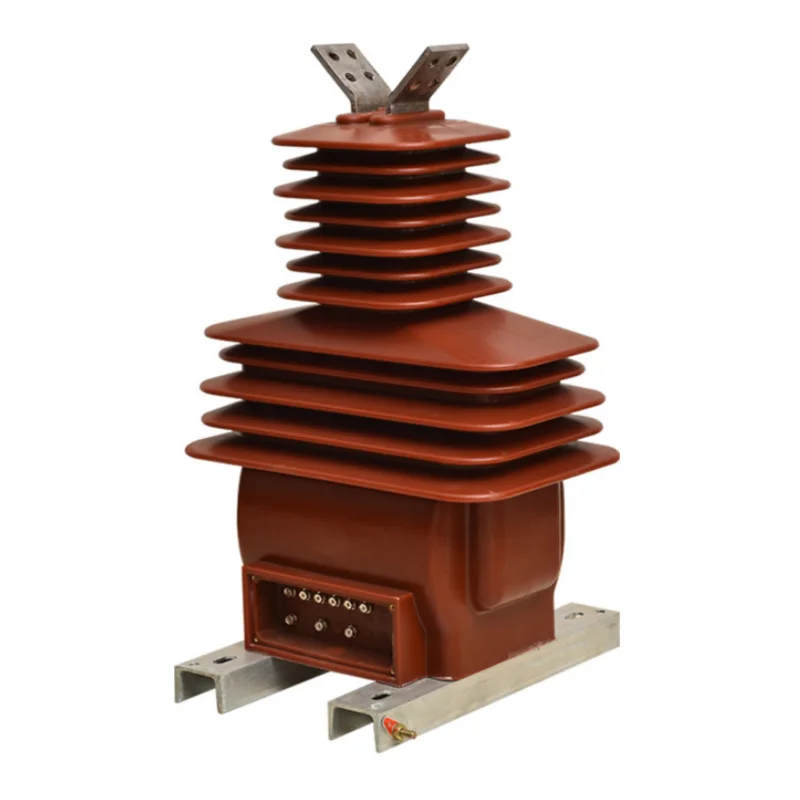
In current transformer construction, insulation plays a critical role in safety and performance. The dielectric medium, most commonly epoxy resin, is used extensively for casting the CT. This epoxy resin cast current transformer technique offers excellent electrical insulation, moisture resistance, and mechanical strength. Epoxy resin castings protect the internal magnetic core and windings from dust, vibration, and environmental stress, making them highly reliable for indoor and outdoor applications.
Plastic or polycarbonate housings are also popular for housing current transformers, especially for lower voltage and window type current transformers. These materials provide durable, lightweight protection while ensuring sufficient mechanical strength and electrical insulation. Combined with well-calculated creepage and clearance distances, they contribute to meeting high-voltage CT insulation standards, preventing insulation breakdowns and enhancing product longevity.
For example, products like the 10kV indoor cast resin current transformer integrate epoxy resin technology effectively to guarantee durability and stable performance under various operating conditions. This approach exemplifies modern insulation and housing technology in instrument transformer design, catering to high voltage and industrial environments globally.
In current transformer construction, proper insulation and housing are crucial for safety and reliable operation. Safety distances like creepage and clearance help prevent electrical arcing and ensure long-term durability, especially in high voltage CT insulation environments.
Creepage distance refers to the shortest path along the surface of insulating materials between two conductive parts. Maintaining adequate creepage reduces the risk of surface tracking caused by moisture or contamination. On the other hand, clearance is the shortest air distance between conductive parts, vital to avoid flashover in the air gap.
Key factors influencing safety distances in epoxy resin cast current transformers and those with plastic or polycarbonate housing include:
Operating voltage and expected environmental conditions
Material properties with high dielectric strength
Precise creepage distance calculation to match insulation standards
Following strict creepage and clearance guidelines is especially critical for busbar type CTs and window type current transformers, where physical size and shape impact the minimum safety distances. These design considerations align with industry manufacturing standards to ensure reliable insulation performance under electrical and mechanical stresses.
Structural Configurations & Mounting: Window Type, Busbar Type, Bushing Type
Current transformer construction offers various structural configurations tailored to different installation needs and applications. The most common types include window (through-hole), busbar, and bushing current transformers.
Window Type (Through-hole) CT: This design features a hollow core through which the primary conductor, such as a cable or busbar, passes. It’s simple to install and ideal for retrofit applications or existing setups. The window type CTs often support different primary conductor sizes and offer flexible mounting options.
Busbar Type CT: Specifically designed to mount directly on busbars, these CTs have a compact form that fits around flat or round busbars without interrupting the circuit. This type is preferred in switchgear and panels where busbar current measurement is essential. Busbar type CTs are typically robust, allowing for stable performance under heavy electrical loads.
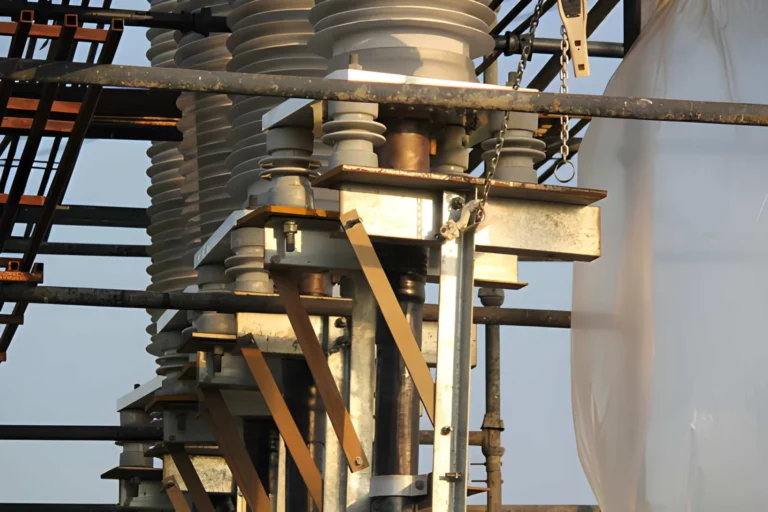
Bushing Type CT: These are integrated into high-voltage bushings and often used in power transformers or high-voltage equipment. The bushing CT provides current measurement without the need for separate installation, enhancing reliability and reducing wiring complexity. Their insulation technology matches the high-voltage environment, ensuring safety and accuracy.
Each structural configuration balances installation ease, accuracy, and durability, catering to varied industrial and utility requirements. For more on dry-type transformer designs closely related to CT housings and installations, you might find our detailed guide on dry-type transformer types useful.
When it comes to current transformer construction, technical performance data is critical for reliable operation in electrical systems. Key factors include:
Thermal & Dynamic Stability
Short-time thermal current (Ith): Ability to withstand high fault currents briefly without damage.
Dynamic withstand current: Resistance to mechanical forces during short circuits.
Uses high-grade magnetic cores like nanocrystalline core CTs to reduce saturation under load.
Accuracy Classes
Classified by standards such as CT accuracy class (0.2S/5P20):
0.2S: High precision for metering.
5P20: Protection class with defined accuracy limits for fault detection.
Maintains accuracy through precise primary winding configuration and quality core materials.
Accuracy critical for secondary injection testing and proper system protection.
Insulation Levels
Rated according to nominal voltage and environment:
High voltage CTs require enhanced high voltage CT insulation techniques.
Insulation includes epoxy resin cast current transformer bodies or plastic housings.
Designed with proper creepage & clearance distances to avoid surface tracking and failures.
Parameter
Typical Values
Short-Time Thermal Current (Ith)
10-30 times rated current
Dynamic Withstand Current
Matches or exceeds Ith
Accuracy Classes
0.2S, 0.5, 1.0, 3P, 5P20
Insulation Levels
Up to IEC 60044-1 standards
Advanced insulation and robust design ensure transformers maintain performance under stress, matching requirements seen in various structural configurations like window type current transformers or busbar type CTs.
For customized transformers with superior thermal and insulation performance, consider checking options from trusted providers like dry type transformer cast resin suppliers who specialize in reliable insulation technology and construction.
Manufacturing Standards & Quality Assurance
Manufacturing current transformers involves strict adherence to international standards to ensure safety, accuracy, and durability. Standards like IEC 61869 and IEEE guide the design, testing, and production of instrument transformers, including epoxy resin cast current transformers and busbar type CTs. These standards help maintain consistent CT accuracy classes, such as 0.2S and 5P20, guaranteeing precise measurement across diverse industrial applications.
Quality assurance focuses on thorough testing of magnetic core saturation, short time thermal current (Ith) capabilities, and insulation levels. The processes include verifying creepage distance calculations and confirming that epoxy resin housings and plastic/polycarbonate casings meet dielectric strength requirements. Each CT undergoes dynamic stability and thermal performance tests to withstand demanding operational conditions.
By combining advanced manufacturing techniques with rigorous quality controls, current transformer construction delivers reliable and safe products that meet global power distribution protection needs. For tailored solutions on transformer insulation and design, you can explore our detailed switchgear and substation solutions.
Request a Quote / Download Datasheet
Ready to explore our current transformer construction options? Whether you need a toroidal CT core, split core current transformer, or busbar type CT, we offer detailed datasheets packed with specifications on primary winding configurations, insulation levels, and accuracy classes like 0.2S and 5P20. Download these datasheets for in-depth technical performance data, including thermal stability and precise creepage distance calculations.
If you’re looking to tailor your instrument transformer design or require epoxy resin cast current transformers for enhanced durability and insulation, request a quote today. Our expert team is ready to assist with your specific requirements, ensuring compliance with manufacturing standards and quality assurance.
For specialized products like window type current transformers or high voltage CT insulation solutions, see examples such as our LZZBW-35 series outdoor current transformers for reliable, high-performance options.
Get in touch now to secure your custom current transformer quote or download datasheets and make an informed choice for your electrical projects.
Product Overview Kampa’s High Voltage (HV) transformer series is engineered specifically for efficient power transmission and distribution networks. Designed to meet the demands of modern electrical grids, these transformers deliver reliable performance in a variety of critical applications, including: Built with a focus on reliability, Kampa HV power transformers incorporate advanced engineering to ensure: Kampa’s […]
Product Overview: Current Transformer Introduction & Key Value Proposition A current transformer (CT) is a vital instrument transformer used to measure alternating current (AC) by producing a reduced current proportional to the current flowing in the primary circuit. It enables safe and accurate monitoring and control of electrical systems across industrial, commercial, and utility sectors. […]
Product Overview Kampa voltage transformers are precision instrument devices designed to step down high voltages safely and accurately. As essential voltage instrument transformers (VTs), they convert high primary voltages to standardized secondary levels, enabling reliable metering, protection, and control in electrical power systems. These inductive voltage transformers provide accurate voltage scaling, making them indispensable for […]