Oil-Filled Transformer Price per kVA and Specifications
Published: Author: Lisa
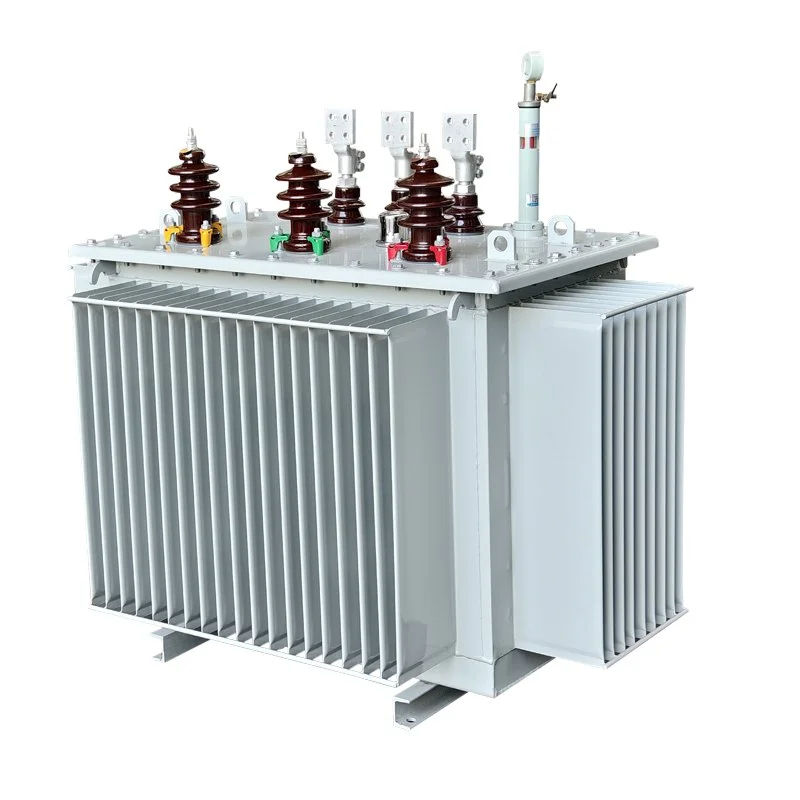
When buyers ask me about oil-filled transformer price per kVA and specifications, I usually smile because the real answer is never a single neat number. A transformer is not a sack of cement; it is a living piece of electrical infrastructure with ratings, losses, cooling, tap range, standards, and service expectations all hiding inside the quotation like extra toppings on a pizza you did not notice until the bill arrived.
In the real distribution market, small oil-filled units in the 10–50 kVA range have been quoted around $200–$800, 100–500 kVA units around $1,000–$4,000, 630–1250 kVA units around $5,000–$15,000, and very large 20 MVA units around $150,000–$450,000, which shows immediately that “price per kVA” moves with size, voltage class, and design complexity rather than following one flat formula. At the same time, distribution tenders for oil-immersed units commonly sit in the 25 kVA to 5000 kVA range for 10.5–11 kV / 0.4 kV service, so most B2B buyers are comparing equipment that looks similar from far away but can be very different once losses, impedance, cooling, accessories, and test scope enter the conversation.
I write this from a buyer-facing perspective because I have seen too many RFQs that say “same as last project” and then act shocked when the site, utility, or consultant demands Dyn11, a wider tapping range, or a full routine test package. That is how a “cheap” transformer suddenly develops an expensive personality.
For procurement teams, the smartest way to read oil-filled transformer price per kVA is not as a universal benchmark, but as a shorthand for how efficiently a supplier converts material, thermal design, and compliance into usable capacity. Market examples show that price bands widen sharply once voltage level, cooling design, testing requirements, and project-specific standards are added, especially around the 1000 kVA level where higher current, thermal stress, and short-circuit forces demand stronger mechanical construction and better cooling.
That is also why two quotations for an oil immersed distribution transformer with the same kVA rating can land far apart in commercial terms. Compliance with IEC, ANSI, or utility-specific requirements, extra documentation, factory inspection, and extended testing can all raise the final price, even before freight and installation support are discussed. For 2026 per-kVA benchmarks across the 11 kV to 35 kV range, with the cost drivers behind each band, see our power transformer price guide.
Rating band
Typical quoted set price
What buyers usually infer
What actually changes the number
10–50 kVA
$200–$800
“Cheap per project, so easy decision.”
Small units can still vary with enclosure style, voltage ratio, and local standards .
100–500 kVA
$1,000–$4,000
“This should be my baseline industrial price.”
Copper, cooling, test scope, and insulation requirements quickly shift the quote .
630–1250 kVA
$5,000–$15,000
“Price per kVA should keep dropping.”
It often does, but reinforced windings, stronger short-circuit design, and utility documentation can push it back up .
25–5000 kVA distribution range
Project-dependent
“Same family, same budget logic.”
Loss targets, impedance class, accessories, and warranty terms matter just as much as nameplate size .
If I am comparing for oil filled distribution transformers and Oil-Filled Transformer Price, I do not stop at the purchase price. I look at no-load loss, load loss, and the long operating life because some utility specifications explicitly evaluate transformer losses over a 20-year period using a present-worth formula, which means a lower-loss unit can beat a lower upfront price in commercial value.
The practical takeaway is simple: buyers should ask for the price, the price per kVA, and the loss data in the same conversation. If one of those three items is missing, the quotation is wearing too much perfume and not enough engineering.
The specifications that actually drive selection
When someone says oil immersed type transformer, transformer oil immersed type, or oil immersed distribution transformer, I care less about the wording and more about whether the specification sheet is tight. For three-phase distribution duty, one widely used utility specification covers 25–5000 kVA transformers stepping down 10.5–11 kV to 0.4 kV, using Dyn11 vector group, seven off-load tap positions from +5% to -10%, ONAN cooling as the standard arrangement, and impedance that typically rises from 4% in smaller ratings to 7% in larger ones.
Those details are not decorative. They affect voltage stability, fault performance, installation fit, and future operating cost, and they also tell me whether the Oil-Filled Transformer Price was quoted for a serious industrial project or for a casual “please send your best price” email that everyone secretly fears.
These standard ratings shape availability, delivery time, and whether a supplier is quoting a routine build or a custom design .
Voltage ratio
10.5–11 kV / 400 V
This is the classic 11kV to 400V oil immersed transformer arrangement used to step medium voltage down for LV distribution .
Vector group
Dyn11
It affects phase displacement, system compatibility, and how comfortably the transformer fits common distribution networks .
Tap range
+5%, +2.5%, 0, -2.5%, -5%, -7.5%, -10% on HV side
A wider tapping range helps the buyer handle supply variation without pretending the incoming voltage is always perfect .
Cooling
ONAN standard, ONAF optional by requirement
Cooling choice changes thermal performance, footprint, accessories, and cost .
Impedance
4% up to 630 kVA, 5% for 800–1250 kVA, 6% for 1500–2500 kVA, 7% for 3000–5000 kVA
Impedance influences short-circuit behavior and system coordination, so it should never be treated like a tiny footnote .
A serious three phase oil immersed transformer quotation should also mention insulation level, temperature rise, and environmental conditions. One current distribution specification calls for ambient operation from -5°C to +45°C, relative humidity up to 95%, altitude up to 1000 m, top-oil rise of 45°C, winding rise of 55°C, hotspot of 60°C, and ONAN cooling with mineral insulating oil meeting the relevant oil standard.
Material choices matter too. Utility-style specifications often call for cold-rolled grain-oriented silicon steel core material and copper windings, while commercial suppliers also highlight PCB-free mineral oil and designs up to 33 kV or 36 kV classes depending on the application. In practice, that means your spec sheet should not only say “oil filled”; it should say what kind of core, what winding conductor, what cooling method, what tap changer, what losses, and what tests.
I also watch the accessories because they quietly separate a clean project from a messy one. For example, the 500 kVA-and-above range in one utility spec requires items such as a Buchholz relay, while standard accessories can include drain valve, lifting shackles, earthing studs, a dial oil thermometer, wheels with locking facility, and in hermetically sealed designs a pressure relief valve and integrated multifunction device.
That is the part many buyers overlook, and then the site team calls me later asking why the Oil-Filled Transformer Price arrived like a very expensive steel box with a mysterious lack of “the obvious accessories.”
Why installation support changes the buying decision
The keyword transformer supplier near me with installation support sounds like a search query, but for B2B buyers it usually means something deeper: fast response, site coordination, correct documentation, and somebody who still answers the phone after delivery. Some suppliers actively market after-sales service, installation help, operation assistance, and doorstep delivery, while formal transformer specifications may require shipment with installation, operation, and maintenance manuals, interconnection diagrams, lifting and moving instructions, tap-changing instructions, and “as manufactured” drawings in English.
That package is not a nice extra. It is part of risk control, because installation quality affects commissioning time, warranty discussions, and whether the project team spends Friday evening energizing the substation or apologizing to management.
Support area
What a serious buyer should ask for
Why it matters commercially
Documentation
Installation, operation, and maintenance manuals; wiring and interconnection drawings; accessory data in English
Good documents reduce site delays and make acceptance smoother for contractors and consultants .
Site handling
Instructions for carrying, skidding, rolling, lifting, assembly, disassembly, tap changing, and temperature indicator use
These details protect the unit from damage before energization, which is a very expensive time to discover bad handling .
Testing support
Routine tests on each transformer, plus type tests such as lightning impulse and temperature rise where required
A complete test package gives procurement and QA teams evidence, not optimism .
After-sales presence
Installation support, operation assistance, and post-delivery service commitments
This is what turns a supplier into a project partner instead of a carton with a logo .
Routine tests deserve special attention because they are often the last quiet checkpoint before a noisy failure. A utility-style routine program can include winding resistance measurement, turns ratio and vector-group check at all tap positions, impedance voltage measurement, load loss, no-load loss, induced overvoltage withstand, separate-source power-frequency withstand, electrical oil tests, and insulation tests between windings and earth.
If your project is a new factory, commercial complex, or infrastructure site, ask the supplier how commissioning support is handled, who signs off test records, and what happens if site conditions differ from the quotation assumptions. I am only half joking when I say a transformer supplier with installation support is sometimes worth more than a slightly lower ex-works price, because power-on day has a way of exposing every shortcut you allowed earlier.
And yes, there is room for a commercial nudge here: if your project schedule is already tied to civil works, switchgear delivery, and utility approval, sending the inquiry before the transformer room is finalized is smarter than pretending dimensions are a future-you problem.
Instead of waving around a generic brochure, I prefer to match the offer to the actual load, site, and service expectation. Oil-immersed distribution transformers are used in industrial power distribution, commercial buildings, agriculture, substations, utilities, airports, hotels, ports, factories, mining, and oil and gas projects, with suppliers commonly offering indoor or outdoor duty and voltage classes reaching 33 kV or 36 kV depending on the product family.
That means the right transformer is not simply the one with the lowest number on page one. It is the one whose electrical rating, cooling, losses, dimensions, accessories, and support package match the load profile and the site reality without making the procurement team age seven years in one quarter.
Typical project
Practical transformer fit
What I would focus on first
Commercial building LV distribution
11 kV / 0.4 kV oil immersed distribution transformer in a standard utility-friendly rating
Voltage ratio, Dyn11, tap range, dimensions, and no-load loss .
Factory or workshop with variable load
Medium-size oil filled distribution transformers with solid short-circuit design and verified routine tests
Copper windings, impedance, thermal margin, accessory completeness, and test package .
Outdoor utility or infrastructure site
Three-phase oil-immersed unit suitable for indoor/outdoor installation and standard utility operation
Cooling, environmental conditions, bushings, surge protection options, and after-sales support .
Higher-capacity feeder or expansion plan
Larger oil immersed type transformer with stronger mechanical support and cooling design
At the end of the day, the best buying decision comes from treating the transformer as both an electrical asset and a project-delivery package. Price per kVA opens the conversation, but voltage ratio, Dyn11, losses, cooling, impedance, accessories, testing, warranty, and installation support are what decide whether the transformer performs quietly for years or becomes the most expensive lesson in your procurement file.
So if the next RFQ on your desk is for an oil immersed distribution transformer, do not ask only “What is your best price?” Ask what you are really buying, what support comes with it, and how the specification will behave on site after the paint is dry and the switchgear is live. That is where smart buyers win, and where good suppliers earn the inquiry instead of merely receiving it.
FAQ
Is 1000 kVA oil filled transformer price just a bigger version of 500 kVA pricing?
No, not in any honest quotation. At the 1000 kVA level, design has to handle higher current, greater thermal stress, stronger short-circuit forces, and more demanding cooling, while standards compliance and extended testing can also add cost, so the commercial jump is about more than “double the copper”.
What is the most common distribution spec buyers ask for?
A very common request pattern is an 11 kV to 0.4 kV, three-phase, Dyn11, ONAN-cooled unit with off-load taps from +5% to -10%, especially in mainstream distribution applications. If a buyer searches for an oil immersed type transformer or transformer oil immersed type, this is often the specification language that eventually settles the discussion.
Are oil filled distribution transformers suitable for outdoor industrial use?
Yes, many suppliers position them for indoor and outdoor service, and published application examples include utilities, substations, factories, agriculture, commercial buildings, airports, hotels, ports, and oil and gas facilities. The exact fit still depends on cooling method, enclosure arrangement, accessories, ambient conditions, and the customer specification.
What should I expect from a transformer supplier near me with installation support?
At minimum, I would expect installation and operation documentation, interconnection drawings, handling instructions, test reports, and some level of commissioning or operation assistance after delivery. If the supplier can also support routine test review, site coordination, and after-sales troubleshooting, the buying risk drops significantly even when the headline price is not the lowest on the table.
Which long-tail search terms usually signal a buyer who is close to conversion?
In my experience, phrases such as 1000 kVA oil filled transformer price, 11kV to 400V oil immersed transformer, Dyn11 ONAN transformer, 33kV oil immersed transformer supplier, custom OEM oil filled transformer manufacturer, and factory acceptance test for transformer usually come from buyers who are moving beyond browsing and into specification matching. That behavior aligns with the way real quotations are driven by rating, voltage class, cooling, test scope, standards, and support requirements rather than by product name alone.
Step-up and step-down oil-immersed transformers differ in taps, impedance, cooling and loss weighting. Here is how to specify each duty for generation and distribution.
Compare solid, low resistance, high resistance, resonant and ungrounded MV neutrals, and size the grounding transformer and resistor that go with each method.
Why partial discharge decides cast resin transformer life: the 10 pC limit, how the IEC 60270 test runs, what the pC reading means, and the casting defects behind it.