Most people rarely think about transformers unless their work depends on them. They sit in the background, unnoticed, until a project needs one — and at that point the question is no longer what a transformer is, but which type to specify.
This page is the starting point for that decision. It maps the main transformer families — liquid-filled and dry-type, power and instrument — against the applications they actually suit, and links out to the detailed guide for each type.
The underlying job is always the same. A transformer adjusts electrical energy from one voltage level to another so it can be used safely, using a primary coil that receives the incoming voltage and a secondary coil that delivers it at a different level. If you want the physics rather than the selection logic, start with the explanation of how power transformers work.
Start Here: Four Questions That Narrow the Choice
Transformer selection goes wrong when the conversation starts with product names. Start with four questions instead — each answer eliminates whole families before anyone opens a data sheet.
What voltage class are you working in? If both sides sit at or below 600 V (1 kV in IEC terms), you are specifying a low voltage unit, and the choice is between a general-purpose dry-type transformer and a small liquid-filled distribution transformer. If the primary is 3 kV or above, you are in medium voltage territory. The dry type transformer specification guide sets out the parameters that change at each class.
Where will the unit sit? Indoors in an occupied building, on a concrete pad in public space, on a utility pole, or underground. This is the answer that most often decides the family, because dry-type construction is the default indoors where fire load and fluid containment are a problem, while oil-immersed transformers dominate outdoors and wherever high overload capacity matters.
What kind of load is it feeding? Motors, heaters and lighting behave predictably. Drives, rectifiers, IT equipment and anything with switched-mode power supplies do not — they inject harmonics that need K-rated or drive-isolation construction, a 200% neutral and an electrostatic shield. See custom dry type transformer options for how that changes the build.
Do you need isolation, or only a voltage change? If isolation is not required and the change is within roughly plus or minus 5–20%, an autotransformer or buck-boost unit does the job with less copper and a smaller footprint. If the load needs a separately derived system or noise rejection, only a two-winding isolation transformer will do. This is covered in how to choose a step down power transformer.
Once those four answers are fixed, the table below settles which family you are actually shopping for.
Transformer Types at a Glance
Every widely used transformer type, the construction that defines it, and where it is the right answer. The last column links to the detailed guide for that type.
Type
Construction and insulation
Typical voltage class
Indoor / outdoor
Best fit
Learn more
Padmount transformer
Dielectric fluid in a sealed, compartmentalised, tamper-resistant tank
Distribution, typically up to 35 kV
Outdoor, public space
Airports, campuses and commercial buildings where protection and switching are built in
Transformers fall into two main groups, and the choice between them is usually made for you by the installation environment rather than by preference.
Liquid-Filled Transformers
Liquid-filled transformers use a dielectric fluid to both cool and insulate their internal windings, circulating by natural convection. Most carry an insulation rating of around 120 °C, though higher-rated designs using enhanced Kraft paper exist. Because fluid transfers heat far more efficiently than air, these units cool better than dry-type designs and tolerate overload conditions with far more resilience. Their sealed tank structure also makes them naturally suited to outdoor installation.
Dry-Type Transformers
Dry-type transformers are intended mainly for indoor environments and typically carry a higher insulation rating, around 220 °C. They rely on surrounding air rather than fluid, which is why they usually come in ventilated enclosures. They run at higher internal temperatures and, in overload conditions, are generally less resilient unless specifically designed for it — but because no fluid is present, they need no containment systems at all, which makes them the practical choice wherever fire load and oil handling are a concern.
Feature
Liquid-filled
Dry-type
Cooling and insulation medium
Dielectric fluid — mineral oil or synthetic — circulated by natural convection
Air, or solid resin encapsulation
Typical insulation rating
Around 120 °C
Around 220 °C
Fire load and containment
Flammable fluid; bunding or containment required
No fluid, no containment, minimal fire load
Thermal behaviour
Cools more effectively; handles overload better
Runs hotter; less resilient to overload unless purpose-built
Typical installation
Outdoors by default; sealed tank suits weather
Indoors by default; ventilated enclosure
Maintenance
Oil testing and periodic fluid replacement
Dust, connection and ventilation checks
Best fit
Utility distribution, industrial sites, high overload duty
Occupied buildings, hospitals, data centres, high-rises
Liquid-filled transformers come in several designs, each built for a specific environment and duty.
Padmount Transformers
“Padmount” describes a compartmentalised, tamper-resistant transformer installed on a concrete pad. Their secure construction puts them in public and commercial spaces — airports, campuses, commercial buildings — usually painted green to blend into their surroundings. A front cabinet houses the cable connections alongside controls and monitoring, and the unit may include bayonet fuses and under-oil rotary load-break switches. Because protection and switching are built in, they operate without separate switchgear, which often makes them the more cost-effective option.
Substation Transformers
Substation transformers use a stronger, more durable tank, with control and monitoring equipment mounted outside the tank for access. Many use external cooling fans to support higher load capacity, and they are normally installed in industrial locations that are not open to the public. They rarely work alone — they form part of a larger substation system alongside other electrical equipment, which is where the name comes from. See the 30kV oil immersed transformer for substation projects and the wider switchgear and substation solutions range.
Pole-Mount Transformers
Pole-mount transformers sit on utility poles and are widely used in power distribution. Most are single-phase units, which is why they dominate residential areas where supply is reduced for domestic use. Where larger commercial or industrial demand exists, several units can be grouped to supply three-phase power. In many areas, though, underground systems built around small padmount units are steadily replacing single-phase pole-mounted equipment — more on that in pole mounted distribution transformers.
Submersible / Network Transformers
Submersible units, also called network or vault-type transformers, are designed for underground installation, with construction that accounts for limited space and higher surrounding temperatures. They serve dense urban areas, supplying apartments and office buildings, and are built to withstand harsh conditions — including extended exposure to water during flooding. The full range sits under oil immersed power transformers.
Types of Dry-Type Transformers
Dry-type designs split mainly by voltage class and by how the windings are protected.
Low Voltage Dry-Type Transformers
Low voltage dry-type transformers are used when both primary and secondary voltages are 600 V or less. They are commonly installed inside commercial and industrial buildings to raise or lower the service voltage so a specific piece of equipment runs at its required level. Floor-mounted enclosures and flexible application earned them the name general-purpose dry-type transformers. The dry type distribution transformer guide covers how they are specified.
Medium Voltage Dry-Type Transformers
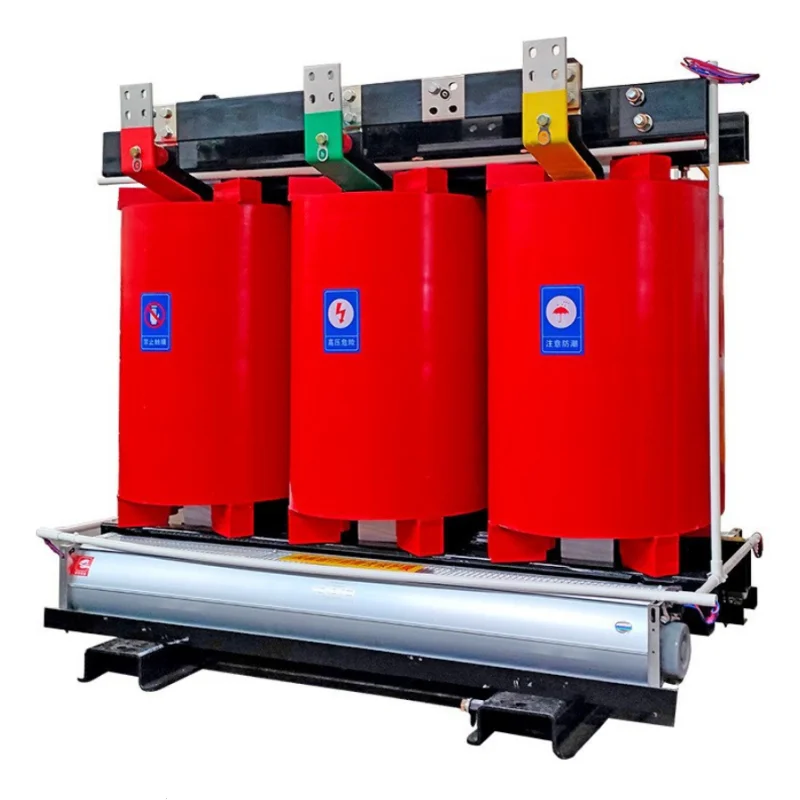
Medium voltage dry-type transformers are usually built in a unit substation-style enclosure and installed in line with other distribution gear — a medium-voltage switch on the high side, low-voltage switchgear at the other end. A single unit can also be installed standalone, with power cables entering the primary and secondary through junction boxes or air terminal chambers. Typical builds at 6 kV and 10 kV are covered under the 10kV dry type transformer and 6kV dry type transformer pages.
Cast Coil Transformers
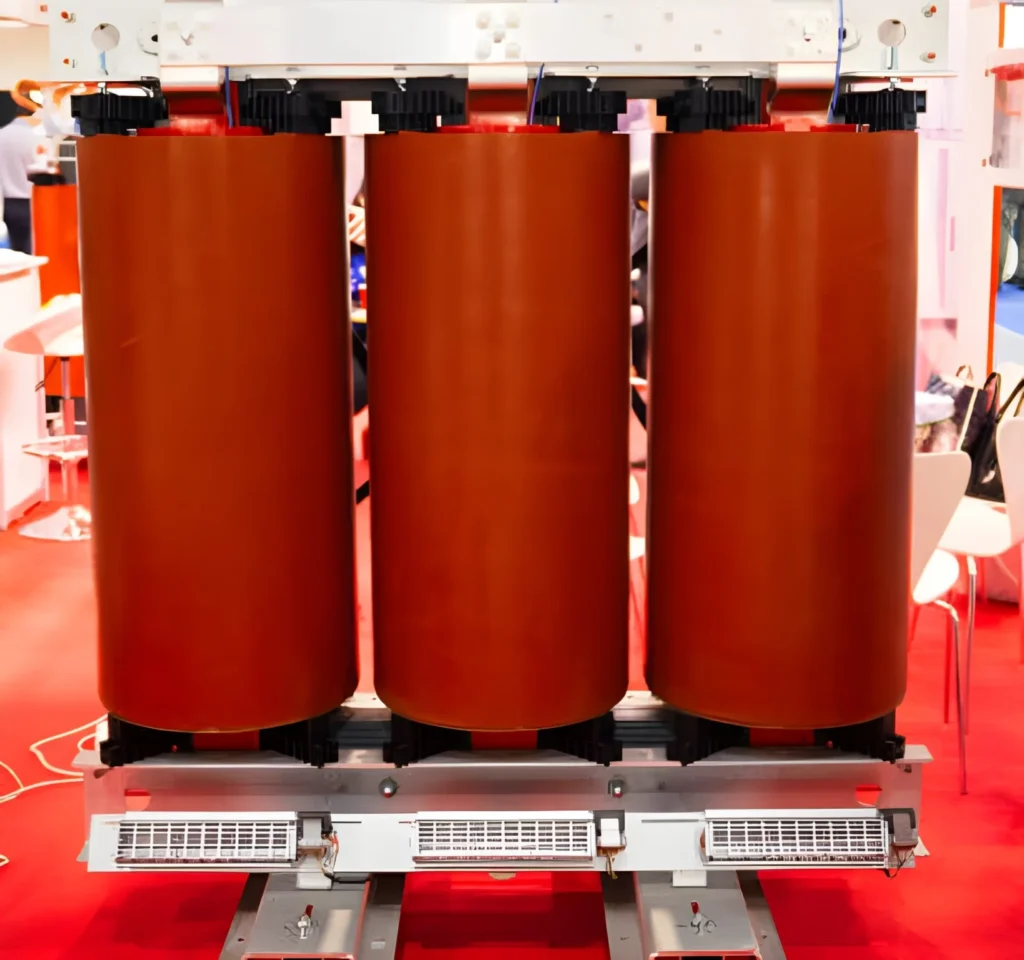
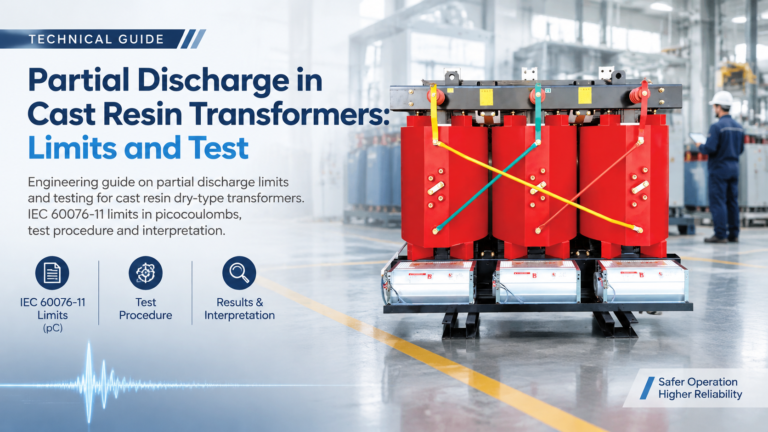
Cast coil transformers are the tougher variation of medium voltage dry-type units. Their windings are fully embedded in solid epoxy resin, which seals and protects them, making them a strong choice in damp or harsh environments where open windings on a standard dry-type unit would absorb moisture or suffer damage. See cast resin dry type transformers for construction detail and the SCB series for a worked example.
Autotransformers
An autotransformer uses a single coil serving as both primary and secondary. With no separate secondary it provides no electrical isolation between input and output, so it is unsuitable wherever isolation is required. The shared winding reduces copper and core material, which makes these units smaller and more economical for everyday step-up or step-down duty. Where the required voltage change is only about plus or minus 5–20%, a buck-boost style transformer often handles the job well — the selection logic is set out in how to choose a step down power transformer.
Drive-Isolation Transformers
Drive-isolation dry-type transformers are built for loads with motor drives such as variable frequency drives. Like standard isolation transformers they have separate primary and secondary windings, but they are additionally designed to withstand heavier non-linear loading and higher harmonic levels. They are K-rated, typically from K-4 upward, and include a 200% rated neutral plus an electrostatic shield between the windings. Specify them whenever harmonic content is above normal and extra robustness is needed; the build options are covered under custom dry type transformers.
Encapsulated Transformers
Encapsulated transformers are another cast-resin family. Their windings, and often the core, are completely surrounded by a mix of sand and epoxy or a similar resin cured into a solid shell. The sealed construction keeps out moisture, dust and contaminants, suiting tough environments where ordinary ventilated dry-type transformers would be exposed to dirt and humidity. See dry type transformer insulation and the dry type transformer insulation series.
Selection Checklist Before You Request a Quote
Whichever type you settle on, the same information has to be fixed before anyone can quote accurately. A supplier cannot price a transformer from a kVA figure alone, and a quotation that arrives without losses and impedance stated is not yet a comparison.
Item to confirm
Why the supplier needs it
Rated capacity (kVA)
Sets the frame size, the losses and the physical footprint
Voltage ratio and connection group
A 10/0.4 kV Dyn11 unit is not interchangeable with a 10/0.4 kV Yyn0 unit even at the same capacity
Impedance voltage (%)
Governs voltage drop, short-circuit current and whether units can be paralleled
Enclosure rating and installation location
Indoor, outdoor, washdown or corrosive duty decides the enclosure and the insulation system
Cooling method (AN or AF)
Air natural versus air forced changes the usable capacity and the maintenance regime
Temperature control and monitoring
Determines whether RTDs, a controller or fans are required, and how the unit is protected
Efficiency standard for the destination market
Failure to state it produces a quotation you cannot legally install in the target market
Accessories and test scope
Fans, shields, surge protection and witnessed testing are all separate line items
Send those eight items and the quotation comes back with losses, impedance and test scope stated explicitly rather than left to assumption. If the selection is still open, contact our engineering team with your voltage, capacity and site conditions.
Frequently Asked Questions
What are the main types of transformers?
They divide first into liquid-filled and dry-type. Liquid-filled covers padmount, substation, pole-mount and submersible or network designs. Dry-type covers low voltage general purpose, medium voltage, cast coil and cast resin, encapsulated, autotransformers and drive-isolation units. Instrument transformers (current and voltage transformers) form a separate family used for metering and protection rather than power transfer.
Should I choose a liquid-filled or a dry-type transformer?
Let the installation decide. Dry-type is the default indoors in occupied buildings because it has no flammable fluid and needs no containment, which is why hospitals, high-rises and data centres specify it. Liquid-filled is the default outdoors and where high overload capacity or the highest efficiency at large ratings matters, because the fluid transfers heat more effectively than air.
Which transformer type is best for indoor installation?
A dry-type unit, in almost every case. Ventilated low voltage general purpose units suit electrical rooms; cast resin and encapsulated units suit damp, dusty or washdown areas where open windings would degrade. Where an indoor installation still needs liquid-filled construction, it requires a vault with containment and fire protection, which is normally the more expensive route.
Which type suits harmonic-rich loads such as VFDs?
A K-rated or drive-isolation dry-type transformer. These use separate primary and secondary windings, an electrostatic shield between them, a neutral rated at 200% and a K-factor of K-4 or higher, so they tolerate the non-linear loading and extra heating that drives, rectifiers and switched-mode power supplies create. A standard general-purpose unit in the same position will run hot and fail early.
What is the difference between cast coil and encapsulated transformers?
Both are sealed resin designs, but the construction differs. Cast coil units have the windings fully embedded in solid epoxy resin, which suits damp or harsh environments. Encapsulated units surround the windings, and often the core, with a cured sand-and-epoxy shell, giving a heavier but very robust seal for contaminated or corrosive sites.
What is the difference between a distribution transformer and a power transformer?
It is a matter of where the unit sits in the network and how it is loaded. Distribution transformers step voltage down to the level a building or neighbourhood uses, usually at lower ratings and with a load that varies through the day. Power and substation transformers sit further upstream at higher ratings and higher voltage, working alongside switchgear as part of a substation.
Where are padmount transformers typically used?
Outdoors, in public or commercial areas where the unit has to be tamper-resistant and low-profile. They are installed on a concrete pad, normally painted green to blend into their surroundings, and often include bayonet fuses and under-oil load-break switches so they need no separate switchgear.
When should I choose a dry-type transformer?
When the unit goes indoors or where fluid containment is not acceptable, and fire safety and low maintenance matter more than the last few percent of efficiency at very large ratings. Dry-type units are common in commercial and industrial buildings, and in public and medical facilities with strict fire requirements.
How do I know which transformer type is best for my project?
Work through four answers: voltage class, installation location, load profile and whether isolation is genuinely required. Those four eliminate whole families before you look at a data sheet. After that, confirm capacity, voltage ratio and connection group, impedance, enclosure rating and cooling method, and then ask an engineer to check the selection against your site conditions.
If you are unsure which transformer type is right for your project, work through the four questions above and then talk the answers through with an engineer who can match a unit to your application. Kampa manufactures liquid-filled and dry-type transformers, including instrument transformers, with full OEM and ODM customisation. Send your voltage, capacity and site conditions and we will come back with the type, the losses and a firm lead time.
Step-up and step-down oil-immersed transformers differ in taps, impedance, cooling and loss weighting. Here is how to specify each duty for generation and distribution.
Compare solid, low resistance, high resistance, resonant and ungrounded MV neutrals, and size the grounding transformer and resistor that go with each method.
Why partial discharge decides cast resin transformer life: the 10 pC limit, how the IEC 60270 test runs, what the pC reading means, and the casting defects behind it.