A 10kV dry type transformer is a medium-voltage distribution transformer commonly used to step a 10kV or 10.5kV supply down to 0.4kV for industrial and commercial loads. It uses solid insulation and air cooling instead of insulating oil, making it well suited to indoor locations where fire safety, clean operation and straightforward maintenance are priorities.
Selecting the correct unit requires more than choosing a kVA rating. The transformer must match the load profile, voltage system, impedance, vector group, installation environment and applicable project standards. This guide combines product fundamentals with the technical information an engineer or buyer should confirm before requesting a quotation.
How a 10kV Dry Type Transformer Works
The primary winding receives the medium-voltage supply and transfers electrical energy through electromagnetic induction to the secondary winding. The turns ratio determines the output voltage, while the core, winding conductor, insulation system and cooling arrangement determine losses, temperature rise, sound level and service capability.
A typical three-phase cast-resin unit includes a laminated electrical-steel core, resin-encapsulated high-voltage windings, low-voltage windings made from copper or aluminum, insulation supports, temperature sensors and connection terminals. An enclosure and cooling fans can be added when required by the installation.
Two dry type construction methods are commonly considered for medium-voltage projects:
Cast-resin transformers: the high-voltage winding is encapsulated in epoxy resin, providing mechanical support and resistance to moisture and contamination. SCB models generally fall into this category.
VPI transformers: windings are vacuum-pressure impregnated with insulating varnish. This construction can suit clean, controlled environments and project-specific thermal requirements.
The appropriate construction depends on site humidity, pollution, fire-performance requirements, maintenance conditions and the governing specification. The term “dry type” alone does not define environmental or fire classification.
Start With the Required Transformer Specifications
The table below is a specification framework for quotation and technical review. Available values depend on the selected rating and project requirements; the approved datasheet and outline drawing control the final design.
Parameter
Typical / Configurable Range
Information to Confirm
Product type
Three-phase cast-resin dry type transformer
Indoor or protected outdoor installation
Series
SCB series; efficiency generation selected by project
Required loss level or local efficiency regulation
Rated capacity
Common ratings from 30 to 2500kVA; other ratings subject to engineering review
Continuous load, starting load, harmonics and future allowance
Rated primary voltage
10kV / 10.5kV / 11kV or project-specific
System nominal voltage and highest equipment voltage
Rated secondary voltage
Commonly 0.4kV; other outputs available by design
Required no-load secondary voltage
Frequency
50Hz or 60Hz
Grid frequency
Phase
Three phase
System configuration
Tapping range
Commonly ±5% or ±2 × 2.5%, off-circuit
Utility voltage variation and tap positions
Vector group
Dyn11, Yyn0 or project-specific
Earthing, neutral and parallel-operation requirements
Short-circuit impedance
Selected by rating and system study
Fault level, voltage regulation and parallel operation
Winding conductor
Copper or aluminum
Loss target, size, weight and budget
Insulation system
Cast-resin winding; thermal class selected by design
Temperature-rise limit and ambient conditions
Cooling method
AN; AF available where engineered
Required base and fan-assisted rating
Enclosure
Open type or protective enclosure
Required IP degree, material and ventilation arrangement
Installation altitude
Standard design conditions or altitude-corrected design
Site altitude above sea level
Ambient conditions
Designed to the declared site conditions
Minimum/maximum temperature, humidity, dust and pollution
Important: no-load loss, load loss, no-load current, sound level, partial discharge, dimensions and mass vary by capacity and design. These values should be listed in the project-specific technical offer rather than represented by one figure for every model.
Key Benefits of a Cast-Resin 10kV Dry Type Transformer
No insulating oil: eliminates routine oil sampling and the risk of an oil leak.
Suitable for indoor distribution: often selected for substations located close to the electrical load.
Configurable performance: capacity, losses, impedance, conductor, vector group and enclosure can be engineered for the project.
Reduced routine maintenance: normal service focuses on cleanliness, connections, ventilation and temperature monitoring.
Compact system integration: can be coordinated with medium-voltage switchgear and low-voltage distribution equipment.
These benefits depend on correct specification and installation. A dry-type transformer is not automatically maintenance-free, weatherproof or suitable for every harsh environment.
Choose the Correct SCB Model and kVA Rating
Common cast-resin model designations include SCB10, SCB11, SCB12, SCB13, SCB14 and later efficiency-oriented variants. A higher series number does not by itself define compliance in every market. Buyers should specify the required maximum losses, test standard and local efficiency rule instead of relying only on the model name.
Capacity Group
Common Ratings
Typical Project Use
Small distribution
30, 50, 80, 100, 125, 160, 200, 250kVA
Small workshops, auxiliary systems and local loads
Medium distribution
315, 400, 500, 630, 800kVA
Commercial buildings, factories and packaged substations
Large distribution
1000, 1250, 1600, 2000, 2500kVA
Large industrial loads, data centers and infrastructure
For preliminary room planning, review the dry type transformer size and dimension chart. Final civil dimensions, foundation channels, ventilation clearance and transport access must be checked against the approved outline drawing.
Confirm the Applicable Standards and Tests
The primary international product reference for this equipment is IEC 60076-11, which covers dry-type power transformers within its stated scope. Other parts of the IEC 60076 series may apply to general requirements, temperature rise, insulation levels, short-circuit withstand and sound measurement. GB/T requirements or another national standard may be used when specified in the contract.
The purchase specification should state the exact edition and any local grid or efficiency requirements. Do not assume that an IEC-designed product automatically carries a market-specific certification. CE, UL, RoHS or third-party certificates should only be shown when the certificate is available for the exact supplied configuration.
Typical routine test documentation
Winding resistance measurement
Voltage ratio and phase-displacement verification
Short-circuit impedance and load-loss measurement
No-load loss and no-load current measurement
Applied-voltage and induced-voltage withstand tests
Partial-discharge measurement where required by the governing standard
Temperature-rise, sound-level, environmental, climatic, fire-behaviour or short-circuit withstand evidence should be requested when the project specification requires type or special tests.
Select the Construction and Accessories
Core: laminated grain-oriented electrical steel designed to limit excitation current and no-load loss.
High-voltage winding: vacuum-cast resin construction for electrical insulation and mechanical support.
Low-voltage winding: copper or aluminum conductor selected for the required current and loss target.
Temperature monitoring: winding temperature sensors, controller and alarm/trip contacts.
Cooling: natural-air cooling with optional fans when an engineered AF rating is required.
Enclosure: optional protective housing with the IP degree, ventilation and material defined by site conditions.
Other options: anti-vibration pads, space heaters, surge protection, monitoring contacts and customized terminal arrangements.
Match the Transformer to Its Application
Factories and processing plants: indoor distribution close to production loads.
Commercial buildings and hospitals: oil-free equipment for occupied or fire-sensitive areas.
Data centers: configurations engineered for redundancy, harmonics and critical-load requirements.
Metro, tunnel and airport projects: installations where fire behaviour and environmental class must be specified.
Solar and energy-storage projects: designs matched to converter duty, harmonics and bidirectional loading.
Packaged substations: coordinated with medium-voltage switchgear and low-voltage distribution equipment.
Marine or humid locations: only with a design and enclosure selected for the actual condensation, salt and pollution conditions.
Oil-Immersed vs. Dry Type Transformers
Neither design is universally better. The correct choice depends on installation location, fire strategy, capacity, environmental conditions and lifecycle requirements.
Factor
Dry Type Transformer
Oil-Immersed Transformer
Insulation and cooling medium
Solid insulation and air
Insulating liquid and external cooling surfaces
Typical location
Indoor or protected installations close to loads
Outdoor substations and higher-capacity duties
Leak containment
No transformer oil to contain
Oil containment and leak management may be required
Routine service
Cleaning, inspection, connection and ventilation checks
Includes oil condition and sealing-system checks
Environmental exposure
Requires a suitable enclosure and ventilation strategy
Sealed tank designs often suit outdoor exposure
Selection priority
Indoor safety, cleanliness and proximity to load
Capacity, outdoor service and heat dissipation
How to Select a 10kV Dry Type Transformer Step by Step
Calculate the required kVA. Provide the continuous demand, motor starting requirements, load profile and planned expansion.
Confirm the voltage system. State primary and secondary voltages, frequency, neutral arrangement, earthing method and tap range.
Define the load. Identify motors, UPS systems, rectifiers, variable-frequency drives or other harmonic-producing equipment.
Provide site conditions. Include indoor/outdoor location, altitude, ambient temperature, humidity, dust, corrosion and seismic requirements.
Specify performance limits. State maximum losses, impedance, temperature rise, sound level and partial-discharge requirement.
Confirm interfaces. Provide cable entry, terminal arrangement, enclosure degree, room dimensions and protection scheme.
A useful price cannot be determined from “10kV transformer” alone. The main cost drivers are rated capacity, voltage ratio, copper or aluminum windings, guaranteed losses, impedance, enclosure, cooling accessories, temperature monitoring, required tests, documentation and delivery destination.
Compare quotations on guaranteed performance and scope, not model name alone. Check whether the quoted price includes the enclosure, fans, temperature controller, test reports, terminal arrangement, packing and delivery terms. A lower purchase price can be offset by higher electrical losses or missing project requirements.
10kV dry type transformer Installation and Maintenance Essentials
Before installation
Confirm floor loading, transport route, lifting points and final dimensions from the approved drawing.
Provide the manufacturer’s required ventilation and electrical clearances.
Keep the installation area dry and free from conductive dust or corrosive contamination.
Verify earthing, cable support, terminal phasing and protection settings before energization.
During operation
Inspect for dust buildup, blocked airflow, loose connections, corrosion and abnormal sound.
Monitor winding temperature and investigate repeated alarm or fan operation.
Use approved dry-cleaning methods after isolation; do not apply water or unsuitable solvents.
Carry out insulation and electrical testing according to the maintenance plan and site procedures.
Follow lockout/tagout requirements and use qualified personnel for inspection and service.
10kV dry type transformer maintenance intervals should reflect load, environment, duty cycle and the manufacturer’s instructions rather than a fixed generic schedule.
Prepare a Complete Request for Quotation
For an accurate technical proposal, send the following information:
Required capacity in kVA
Primary and secondary voltages
Frequency, phase and vector group
Load type and harmonic or motor-starting requirements
Required impedance, losses and temperature rise
Winding material preference
Indoor/outdoor location, IP degree and enclosure material
Altitude, ambient temperature and other site conditions
Applicable standard, tests and certificates required
Quantity, destination and requested delivery date
Need a project-specific datasheet and price?Contact Kampa Electric and attach your single-line diagram or transformer schedule. The engineering team can confirm the model, guaranteed parameters, outline dimensions and quotation for your application.
FAQ
What is the usual voltage ratio of a 10kV dry type transformer?
A common distribution ratio is 10/0.4kV, but 10.5/0.4kV, 11/0.4kV and other project-specific ratios are also used. The correct ratio must match the utility system and required low-voltage bus.
Which kVA ratings are available?
Standard project ratings commonly run from 30 to 2500kVA. Larger or non-standard ratings require engineering review. Select capacity from the load calculation rather than simply choosing the next model in a catalogue.
Should I choose copper or aluminum windings?
Both can be engineered to meet the specified performance. Copper can produce a more compact design, while aluminum may reduce material cost and weight. Compare guaranteed losses, temperature rise, dimensions and total project cost rather than conductor material alone.
What information determines transformer price?
Capacity, voltage ratio, conductor material, loss requirement, impedance, enclosure, accessories, testing, documentation and delivery terms all affect price. A meaningful quotation requires a technical specification or completed inquiry checklist.
Can a 10kV dry type transformer be installed outdoors?
The active part is normally intended for a controlled installation. Outdoor service requires a suitable enclosure and an engineering review of rain, dust, condensation, ventilation, temperature, corrosion and maintenance access.
What is the difference between AN and AF cooling?
AN uses natural air circulation. AF uses fans to increase airflow and may provide an engineered fan-assisted rating. The available overload or uprating must be confirmed for the specific design; it should not be assumed from the presence of fans alone.
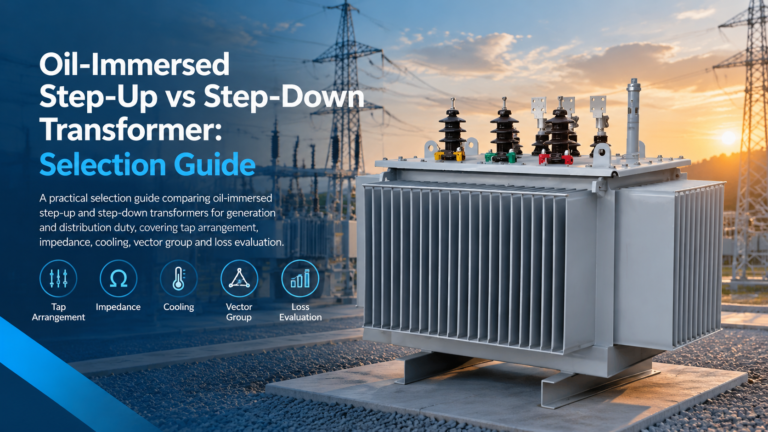
Step-up and step-down oil-immersed transformers differ in taps, impedance, cooling and loss weighting. Here is how to specify each duty for generation and distribution.
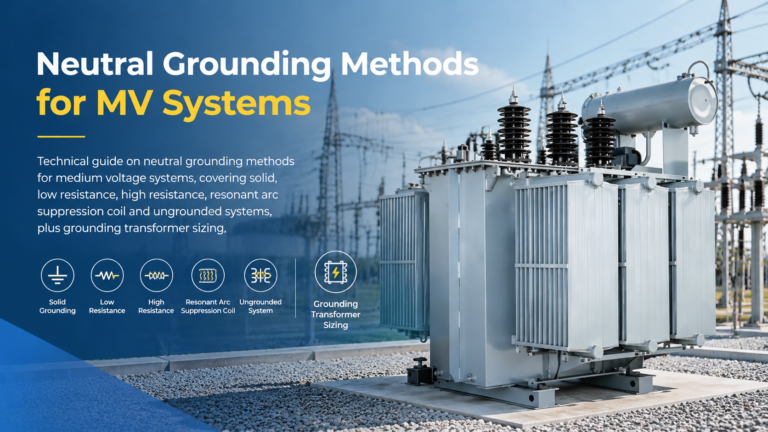
Compare solid, low resistance, high resistance, resonant and ungrounded MV neutrals, and size the grounding transformer and resistor that go with each method.
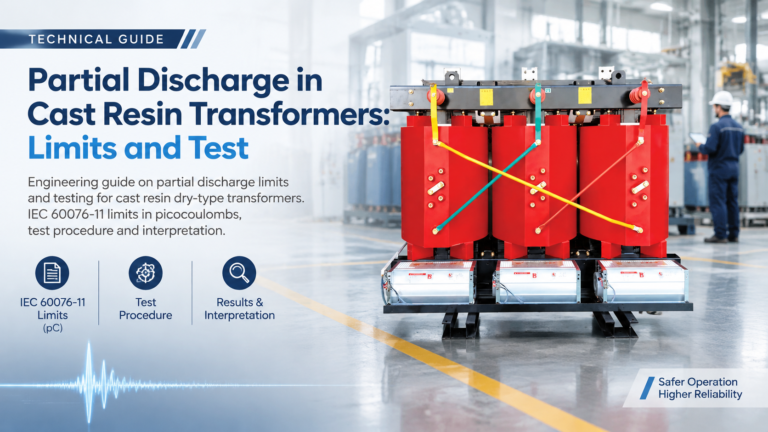
Why partial discharge decides cast resin transformer life: the 10 pC limit, how the IEC 60270 test runs, what the pC reading means, and the casting defects behind it.