What Is a Dry Type Distribution Transformer Features Benefits and Uses
Published: Author: Kampa
If you’re involved in power distribution or electrical system design, you’ve probably heard about dry type distribution transformers—but what exactly are they, and why are they becoming the go-to choice for modern installations? Unlike traditional oil-filled transformers, dry type transformers use air for cooling and solid insulation, making them a safer, eco-friendly solution ideal for indoor and fire-sensitive environments. In this post, you’ll get a clear, concise explanation of what a dry type distribution transformer is, how it works, and why trusted suppliers like Kampa are leading the way with high-quality, customized options that meet today’s demanding standards. Let’s break it down.
What Is a Dry Type Distribution Transformer?
A dry type distribution transformer is an electrical device designed to step down medium voltage to low voltage, making power safe and usable for end consumers. Unlike oil-filled transformers, dry type transformers use air or gas for cooling and rely on solid insulation materials—such as epoxy resin—instead of liquid insulation like oil or other fluids. This makes them inherently safer and more environmentally friendly.
Role in Power Distribution
Dry type transformers are key players in power distribution systems, especially where safety, indoor installation, or environmental concerns matter. Their purpose is simple yet vital: converting medium voltage electricity from the grid down to a lower voltage, suitable for commercial, industrial, or residential use.
Key Components
Core: Usually made of laminated silicon steel, it provides the magnetic path.
Windings: Includes both high-voltage and low-voltage windings, wrapped around the core to transfer electrical energy via electromagnetic induction.
Enclosure: Protects internal components from physical damage, dust, and moisture; often designed to facilitate air cooling.
Cooling System: Uses natural air ventilation or forced air to dissipate heat generated during operation.
Dry type transformers are widely preferred for their safety, clean operation, and flexibility in installation environments, making them an essential part of modern electrical networks.
How Dry Type Distribution Transformers Work
Dry type distribution transformers operate on the basic principle of electromagnetic induction. When alternating current flows through the transformer’s primary winding, it creates a magnetic field in the core. This changing magnetic field induces voltage in the secondary winding, allowing the transformer to step voltage levels up or down as needed, typically from medium to low voltage for safe end-use.
Cooling in dry type transformers is managed without oil. Instead, they rely on air and solid insulation to prevent overheating. There are two main cooling methods:
Natural Air Ventilation (AN): Air circulates freely around the transformer, dissipating heat naturally through convection. This is common in smaller units or those with lower loads.
Forced Air Ventilation (AF): Fans or blowers actively push air over the transformer surfaces, improving cooling efficiency. This method suits larger transformers or those in environments where heat buildup is a concern.
Insulation plays a crucial role in managing temperature rise and ensuring the transformer’s longevity. Dry type transformers use solid insulation materials like epoxy resins or vacuum pressure impregnated (VPI) coatings that withstand heat better and reduce risks of moisture damage. These materials maintain electrical integrity and keep temperature rise within safe limits, which is essential for reliable performance.
Types of Dry Type Distribution Transformers
Dry type transformers come mainly in two types: Vacuum Pressure Impregnated (VPI) and Cast Resin Transformers (CRT). Each has distinct features and ideal uses depending on the application and environment.
Transformer Type
Construction
Key Features
Typical Applications
Vacuum Pressure Impregnated (VPI)
Open-wound coils impregnated with insulating varnish under vacuum pressure
Good thermal performance, lightweight, suitable for indoor/outdoor use
General industrial, commercial buildings, moderate environment
Cast Resin Transformer (CRT)
Epoxy resin encapsulated coils (fully sealed)
Excellent moisture and dust resistance, high safety, fire-retardant
Harsh environments, hospitals, data centers, and indoor areas needing high fire safety
VPI vs. Cast Resin: Detailed Comparison
If your RFQ simply says “dry type transformer”, you are leaving an important design decision open. The two technologies differ mainly in how the windings are protected, and that difference drives service life in harsh environments, mechanical withstand against short-circuit forces, and price per kVA.
Feature
VPI Dry Type Transformer
Cast Resin Dry Type Transformer
Winding protection
Varnish-impregnated, not fully encapsulated
Fully encapsulated in epoxy resin
Moisture and dust resistance
Good, but windings can still absorb moisture in extreme humidity
Excellent; solid epoxy is nearly impervious to moisture and contaminants
Mechanical strength
Moderate to high; good bonding, but less rigid than a solid block
Very high; the rigid cast coil resists short-circuit forces well
Thermal performance
Good heat dissipation from the more open design; suits load cycling
Good, but the design must avoid hot spots inside the resin
Serviceability
Easier to inspect and clean, especially on larger units
Harder to repair; coils are fully encapsulated
Typical price level
Generally more cost-effective per kVA
Higher material and processing cost
Which one should you specify?
Normal industrial hall, commercial building, or data center with a controlled environment, where cost performance matters: a VPI dry type transformer is usually the most economical and flexible choice.
Coastal site, chemical plant, underground tunnel, or anywhere the air quality cannot be trusted: a cast resin dry type transformer pays for itself through lower risk and lower maintenance.
If you are unsure which insulation series matches your site, send us the environmental conditions — humidity, dust, chemical exposure, altitude — together with the kVA and voltage, and we will propose a VPI, cast resin, or hybrid solution based on comparable projects.
Insulation Systems and Construction Features
On a dry type transformer, the insulation system is the long-term thermal and mechanical backbone of the unit. It sets the service life, the overload capability, the safety margin, and a large part of the price. In our dry type transformer insulation series, that system is built around Class F or Class H materials.
These are the features worth comparing line by line on a product page:
Insulation class: Class F (155 °C) or Class H (180 °C), often using Nomex-based insulation for higher thermal stability and a wider safety margin.
Core material: Low-loss silicon steel is standard; premium designs use amorphous alloy to cut no-load losses further, at a higher upfront cost.
Cooling type: AN (air natural) for simpler, quieter duty, or AF (air forced) with fans to raise the usable load on the same frame size.
Enclosure and winding configuration: Indoor or outdoor enclosures to NEMA or IEC ratings, with delta, star, or zigzag winding arrangements to match the system.
Why does this matter commercially? Because better insulation supports a higher permitted temperature rise and more overload headroom, which lets the designer use less copper and core steel for the same duty and lower the lifetime cost. A Nomex-insulated dry type transformer rated for 80 K temperature rise, for example, can run continuously at up to 133% of its rated load — a decisive advantage where harmonic loading or a fluctuating load profile is normal.
Dry Type vs. Oil-Filled Transformers: Key Differences
Feature
Dry Type Transformer
Oil-Filled Transformer
Cooling Method
Air or gas cooling with solid insulation
Oil immersion cooling with liquid insulation
Insulation
Solid epoxy resin or varnished windings
Mineral or synthetic oil insulation
Fire Safety
Fire-safe, no oil spill risk
Risk of fire or oil leaks
Maintenance
Low maintenance, no oil checks
Requires regular oil testing & servicing
Cost
Higher initial cost
Generally lower upfront cost
Efficiency
Slightly lower efficiency at high loads
Often better cooling for large loads
Installation
Ideal for indoor and sensitive areas
Mainly outdoor or specially designed indoor rooms
Environmental Impact
Eco-friendly, recyclable materials
Oil disposal and leak concerns
Advantages of Dry Type Distribution Transformers
Dry type distribution transformers offer several clear benefits that make them a preferred choice for many applications. One of their biggest advantages is superior fire safety. Since they use air or gas for cooling and solid insulation instead of oil, there’s no risk of oil leaks or spills that could cause fires or environmental hazards. This makes them much safer in indoor settings or areas where fire risk must be minimized.
They are also environmentally friendly and recyclable, as they avoid the use of hazardous oils and toxic liquids. This aligns well with growing global demands for greener industrial solutions. Maintenance requirements are low, since there’s no oil monitoring or replacement, leading to reduced downtime and operational costs. Plus, their long service life ensures reliable performance over many years.
Disadvantages and Limitations of Dry Type Distribution Transformers
Dry type transformers generally come with a higher initial cost compared to oil-filled models. This upfront investment can be significant, especially when selecting cast resin or VPI transformers for specialized applications. Additionally, dry type transformers tend to have a limited capacity for very high-power needs, making them less suitable for heavy industrial loads where oil-filled transformers dominate.
Another challenge is that some dry type designs may produce more noise and heat during operation. Without liquid cooling, managing temperature rise relies heavily on air circulation, which can lead to louder and warmer performance in enclosed or poorly ventilated spaces.
Common Applications of Dry Type Distribution Transformers
Dry type distribution transformers are widely used across various sectors due to their safety, reliability, and eco-friendly features. They are a top choice for commercial buildings such as offices, shopping malls, and hotels, where low maintenance and fire-safe operation are critical.
In healthcare and educational facilities, including hospitals and schools, these transformers provide dependable power with minimal risk of fire or oil leaks, making them ideal for sensitive environments.
They also perform well in industrial sites like chemical plants, data centers, and renewable energy installations. Here, resistance to moisture, dust, and short circuits ensures continuous operation even under demanding conditions.
Key Specifications to Consider
Specification
What to Look For
Why It Matters
Voltage Ratings
Match system voltage (e.g., 11kV/415V)
Ensures compatibility with your power setup
kVA Capacity
Based on load requirement
Determines transformer size and efficiency
Efficiency Standards
Compliance with DOE 2016 or similar
Saves energy and reduces running costs
Insulation Class
Common classes: Class H (180°C), Class F (155°C)
Affects temperature resistance and lifespan
Temperature Rise
Limits (e.g., 115°C max)
Keeps transformer cool and reliable
Impedance
Percentage value (typically 4-6%)
Influences voltage regulation and fault current
Enclosure Types
IP ratings (IP23, IP54 etc.)
Protection against dust, water, and environmental factors
Noise Levels
Measured in dB, lower is better
Important for indoor or noise-sensitive areas
Winding Materials
Copper vs. Aluminum
Copper offers better conductivity; aluminum reduces cost and weight
Selection Checklist
Once the specification targets are clear, the selection itself comes down to four decisions:
Step
What You Decide
Typical Options
1. kVA rating
Based on total connected load, diversity factor, and future growth
100, 250, 500, 1,000, 2,000, 2,500 kVA
2. Primary / secondary voltage and vector
Match the grid and the load; consider delta/star, grounding, harmonics
Indoor or outdoor, AN or AF, ingress protection, noise limits
AN/AF, NEMA 1/3R, low-noise options
A few practical rules of thumb from projects we quote every week:
For a medium plant or commercial building, 500 kVA is often the sweet spot; data centers and large factories usually move to 1,000–2,500 kVA units, or several transformers in parallel.
Match the primary side to the utility or upstream switchgear (10 kV or 11 kV, for instance) and the secondary side to your low-voltage system, most commonly 0.4 kV.
Decide early whether the secondary neutral must be solidly grounded, resistance grounded, or left isolated, and whether a special vector group is needed for harmonic mitigation or isolation.
Where harmonic content is high or the load cycles hard, a Nomex-based insulation system earns its premium: it tolerates hot spots and a higher temperature rise on a more compact core.
Installation, Maintenance, and Best Practices for Dry Type Distribution Transformers
Proper installation is key to getting the most out of your dry type distribution transformer. Start by ensuring good ventilation around the unit to prevent overheating. Keep enough clearance on all sides—usually at least a few inches—to allow natural air flow and easy access for maintenance. Mount the transformer on a sturdy, level platform that can support its weight and reduce vibrations.
Routine maintenance is straightforward but important. Regularly check for dust, dirt, and moisture buildup on the enclosure and cooling vents, as these can reduce efficiency and cause overheating. Inspect connections and wiring for any signs of wear or loose fittings. Monitoring temperature rise during operation helps catch overheating issues early.
Electrical Connection Basics
The actual wiring must follow local code and be carried out by qualified personnel, but as the buyer or project engineer you need to understand the shape of the connection before you approve a drawing.
Primary side: usually medium voltage, fed from switchgear or a ring main unit, connected in delta or star depending on local grid practice.
Secondary side: usually low voltage (0.4 kV), connected in star with the neutral brought out for three-phase four-wire distribution in buildings and plants.
Most distribution dry type transformers are built to Dyn11 or a similar vector group: delta primary, star secondary, a 30-degree phase shift, and a neutral available on the low-voltage side. Before releasing the order, confirm three points with your electrical contractor:
Whether the neutral must be solidly grounded, resistance grounded, or left isolated, based on your protection scheme.
That the transformer impedance is compatible with the short-circuit level and the upstream breaker coordination.
That the cable and busbar systems match the transformer terminal type and current ratings.
If the project relies on reverse feeding — energizing the transformer from the low-voltage side — confirm that the unit is listed as reverse-feed capable before you buy.
One practical tip: attach a simple sketch of the intended connection (MV source, LV distribution, grounding, and any special loads such as VFDs or rectifiers) to your enquiry. It is the fastest way to get the right terminals, vector group, and accessories quoted without a second round of clarification.
Pricing, Customization, and Choosing a Supplier
Indicative Price Ranges by Capacity
There is no single price for a dry type distribution transformer, but the pattern is stable. The table below is an indicative reference at 2025–2026 market levels for distribution-class units.
Capacity (kVA)
Typical voltage level
Indicative price range (USD)
100 kVA
10 kV / 0.4 kV
1,800 – 2,300
250 kVA
10 kV / 0.4 kV
2,800 – 4,500
500 kVA
10 kV / 0.4 kV
5,000 – 7,500
1,000 kVA
10 kV / 0.4 kV
8,000 – 12,000
2,000 kVA
11 kV / 0.4 kV
15,000 – 22,000
2,500 kVA
11 kV / 0.4 kV
22,000 – 30,000
Indicative reference only — standard construction, single unit quantities, freight and duties excluded. Actual pricing depends on winding material, enclosure rating, insulation series, applicable standards, and order volume.
Broadly, low-voltage dry type transformers (5–100 kVA) run from about US$1,000 to US$10,000 depending on design, while medium-voltage units (10–1,000 kVA and above) often land between US$5,000 and US$30,000.
Dry type price per kVA is normally higher than for an oil-filled distribution transformer, because of the resin systems, ventilation design, and insulation materials. Part of that gap is offset by lower installation and environmental cost: no oil containment, no fire-rated pit, and no oil disposal at end of life.
What Drives the Price
Factor
Impact on Price
Transformer size
Larger capacity means more copper, core steel, insulation, and labour, so cost scales up
Voltage level and configuration
Medium voltage, dual-voltage, or special vector groups require more insulation and a more complex design
Construction type
Cast resin (CRT) tends to cost more than VPI because of materials and processing
Winding material
Copper windings cost more but cut load losses; aluminium is cheaper but less efficient
Insulation class and system
Class F/H and Nomex-based systems add upfront cost but support higher loading and a longer service life
Cooling method
AF (forced air) with fans and controls costs more than AN (natural air), but allows higher overload
Standards and certification
IEC, IEEE, UL, and CSA requirements, plus energy-efficiency classes, add design and test cost
Customization
Special enclosures, marine coatings, and small-lot custom builds carry a premium
Choosing the right supplier is crucial. Kampa provides high-quality dry type transformers that meet international quality standards. Their products come with reliable delivery schedules and customizable options tailored to your power distribution needs.
Service Life and Total Cost of Ownership
A well-designed dry type power transformer can deliver 30 years of service or more with proper installation and loading. That is why experienced buyers look past the ex-works price and weigh losses, maintenance, and downtime risk instead.
Energy-efficient units with low-loss cores and optimised windings may carry a higher initial price, but they consume less energy every hour of their working life. On a transformer that runs near rated load for long hours, that saving can comfortably exceed the purchase-price difference over 20 to 30 years.
Higher insulation classes add a second layer of value. Nomex-based Class H systems provide more temperature headroom, which improves overload resilience and slows insulation ageing under harmonically rich or fluctuating loads. Fewer unplanned outages is a benefit that never appears on a price sheet.
Why Choose Kampa Dry-Type Power Transformers
Kampa offers reliable, high-quality dry-type power transformers designed to meet the diverse needs of global customers. Whether you need customized dry type transformers tailored for specific voltage levels, kVA ratings, or environmental conditions, Kampa delivers precision-made solutions.
Feature
Benefit
Customization Options
Voltage, enclosure type, kVA, cooling methods adapted to your needs
Competitive Pricing
Cost-effective without compromising quality
Supplier Support
Responsive service and technical assistance worldwide
Safety Focus
Fire-resistant, eco-friendly, and low-maintenance designs
Efficiency
High operational efficiency with low losses
With a firm commitment to safety, efficiency, and customer satisfaction, Kampa ensures every dry-type power transformer performs reliably, whether installed indoors or in challenging environments.
FAQ
What exactly is a dry type power transformer?
A dry type power transformer is an air-cooled transformer with solid insulation instead of oil. It is used mainly for low- and medium-voltage distribution in buildings, plants, and infrastructure, where an oil-filled unit would add fire risk or require containment.
Why is dry type transformer price higher than oil-filled transformers?
Dry type units use specialised solid insulation, resin systems, and ventilation designs, and they often target higher safety and efficiency classes, which raises material and manufacturing cost per kVA. That premium is partly recovered at installation — no oil containment, no fire-rated pit — and over the life of the unit through lower maintenance and energy cost.
What is the price range of a typical 500–1,000 kVA dry type transformer?
As an indicative reference at current market levels, a 500 kVA unit often falls around US$5,000–7,500 and a 1,000 kVA unit around US$8,000–12,000. Exact figures depend heavily on voltage level, winding material, insulation series, enclosure rating, and applicable standards.
How do I choose between VPI and cast resin dry type transformers?
Choose VPI for a cost-effective, serviceable transformer in a reasonably clean indoor industrial or commercial environment. Choose cast resin or epoxy resin construction when you need very high moisture and contamination resistance, such as coastal, chemical, or tunnel installations.
Does Nomex dry type transformer insulation really make a difference?
Yes. Nomex-based systems offer strong thermal stability, mechanical toughness, and moisture resistance, which allows a higher temperature rise, more overload capability, and better behaviour under harmonic loading. The practical result is a more compact transformer with lower losses and a longer life.
How long can a dry type transformer last?
With proper design, installation, and loading, 30 years or more of reliable operation is typical for a quality dry type power transformer.
What information should I send to get a fast, accurate quotation?
Send the kVA rating, primary and secondary voltage, frequency, vector group, insulation class, technology preference (VPI or cast resin), installation environment (indoor or outdoor, humidity, dust), cooling type (AN or AF), and the standards and certificates you require. The more precise the enquiry, the fewer clarification rounds you need before you receive a firm price.
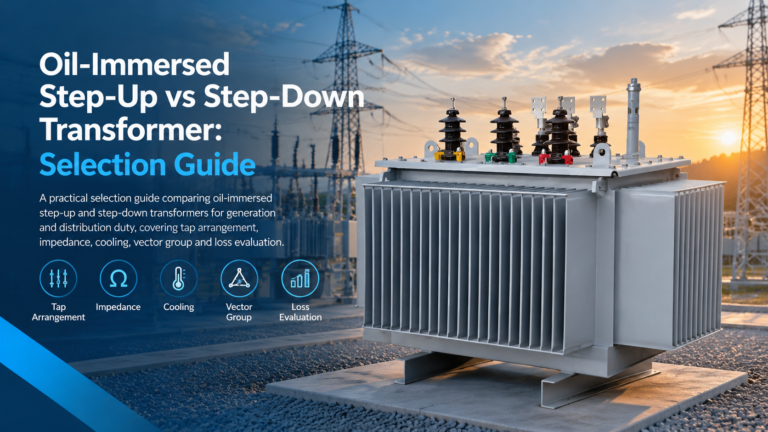
Step-up and step-down oil-immersed transformers differ in taps, impedance, cooling and loss weighting. Here is how to specify each duty for generation and distribution.
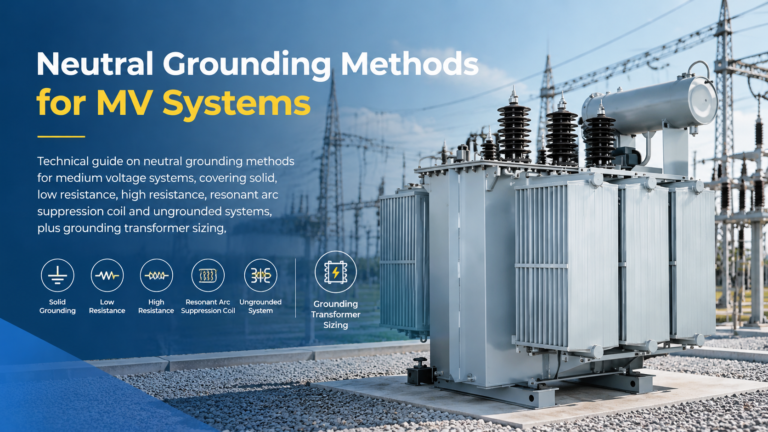
Compare solid, low resistance, high resistance, resonant and ungrounded MV neutrals, and size the grounding transformer and resistor that go with each method.
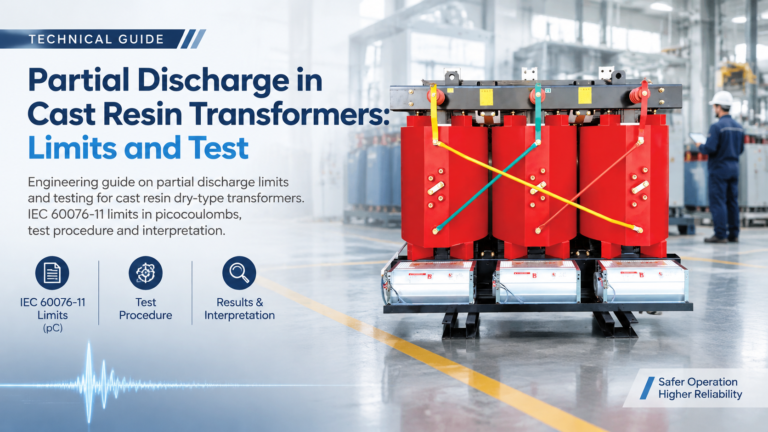
Why partial discharge decides cast resin transformer life: the 10 pC limit, how the IEC 60270 test runs, what the pC reading means, and the casting defects behind it.