Oil Immersed Distribution Transformer Manufacturer Guide
Published: Author: Lisa
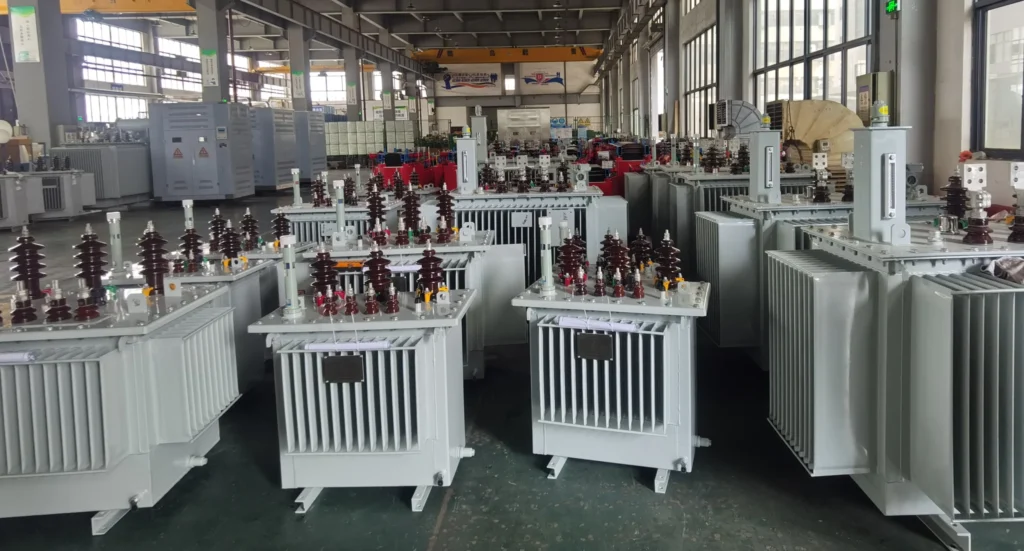
Choosing an Oil Immersed Distribution Transformer manufacturer is not only about finding a low quote. If the transformer does not match the site voltage, loss target, installation environment, or local standard, the real cost shows up later in rework, delays, higher energy use, or maintenance problems.
For B2B buyers, the bigger question is this: can the manufacturer deliver the right configuration, document it properly, and support export or customization without creating project risk? This article helps you compare manufacturers, understand key transformer types, and narrow down what to check before you send an RFQ.
Why the manufacturer matters more than the price tag
In transformer sourcing, a low unit price can hide expensive downstream issues. A factory may quote quickly but miss key details such as loss class, tap range, enclosure details for outdoor installation, or documentation required for export clearance.
A capable manufacturer or supplier usually adds value across the whole process, not only at the point of quotation:
Technical parameter confirmation before production.
Core, winding, insulation, and tank material control.
Loss calculation and temperature-rise design.
Standard or project-specific voltage combinations.
Routine test documentation.
Export packing and delivery coordination.
OEM/ODM labeling and customized accessories.
Technical communication during installation and commissioning.
Environmental protection belongs in the same conversation. A transformer ordered for a dry inland industrial zone may need a different corrosion-protection treatment from one installed near a coastal port, a mining site, or a humid tropical substation.
This is especially important for buyers comparing a China factory, trader, wholesaler, or export supplier. Many searches use terms like “china best” or “best supplier,” but the practical question is not who claims to be best. It is who can match your application, standard, and delivery requirements with the least project risk.
What is an oil immersed distribution transformer?
An oil immersed distribution transformer reduces medium voltage to a usable low-voltage level near the point of consumption. In commercial buildings, industrial plants, utility distribution nodes, and infrastructure projects, it often sits between the upstream distribution network and the end-use load.
The term “distribution transformer” matters because it describes the application role, not just the cooling medium. Buyers sometimes confuse it with larger power transformers used in transmission or substation applications.
Item
Distribution transformer
Power transformer
Typical role
Final voltage step-down near loads
Bulk power transfer in substations
Common project focus
Efficiency, installation fit, lifecycle cost
Grid integration, large capacity, system stability
Typical capacity range
Lower to medium distribution capacities
Medium to very large capacities
Typical installation
Distribution stations, industrial plants, commercial sites
Main substations, generation facilities, grid projects
Load pattern
Usually continuous but closer to end-user demand
Usually linked to network-level power transfer
Buyer concerns
Losses, voltage matching, site conditions, maintenance
System design, fault level, network performance
For a 35kV project, do not assume that the label “distribution transformer” automatically means the unit is too small. The correct choice depends on the voltage ratio, capacity, grid architecture, and project specification, not on the category name.
In many projects, an 11kV oil immersed distribution transformer is a common choice because 11kV distribution networks are standard in industrial parks, building developments, and local utility distribution systems in many regions.
Key specifications buyers should check first
Before comparing one manufacturer against another, confirm the core technical requirements. Without them, quotes are hard to compare and often misleading.
The minimum specification set
Rated power or capacity.
Primary voltage and secondary voltage.
Frequency.
Vector group.
Tapping range.
Loss requirement, standard or low loss.
Installation condition, indoor, outdoor, high humidity, coastal, dusty, or hot climate.
Applicable standard and required test documents.
Buyers should also confirm which standards apply to the project, especially when export requirements differ by market. For reference, the IEC 60076 power transformer standards are commonly used as a technical baseline in many international projects.
Specification
Why it matters
What happens if unclear
Rated capacity
Determines load handling and thermal margin
Undersized or unnecessarily costly design
Primary and secondary voltage
Must match the network and load side
Voltage mismatch, redesign, project delay
Frequency
Affects design compatibility
Incorrect operation in target market
Loss level
Drives energy cost over operating life
Cheap upfront purchase, higher lifetime cost
Cooling and insulation
Impacts temperature rise and durability
Reduced life under demanding conditions
Installation environment
Affects tank design, coating, sealing, accessories
Outdoor failure risk or over-specified indoor unit
Phase configuration
Three-phase or single-phase, matching the local network
Wrong phase arrangement for the distribution system
Vector group
Such as Dyn11 or Yyn0 – affects neutral arrangement and phase relationship
Incompatible with upstream protection and grounding design
Tap range
Off-circuit or on-load tap changer, and the tap percentage
No way to correct for grid voltage variation in service
Impedance voltage
Project-specified percentage
Fault-current and breaker-coordination mismatch
Winding material
Copper or aluminium, stated in the quotation
Prices compared across two different builds
Standard and tests
Needed for compliance and acceptance
Documentation disputes or rejected delivery
Losses are not a side issue
For continuous or high-hour operation, a low loss oil immersed transformer can make economic sense even if the purchase price is higher. The right decision depends on operating hours, expected loading, and energy price, not on brochure claims.
Outdoor and export details matter early
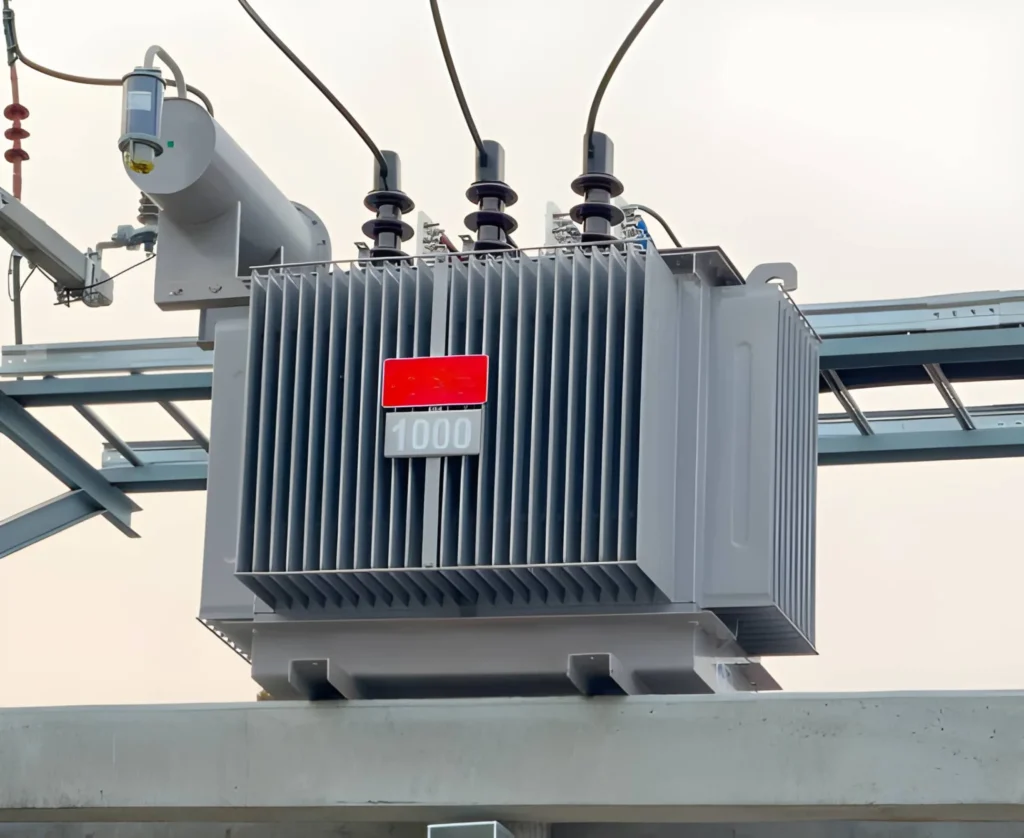
If the unit will be installed outside, an outdoor oil immersed transformer may need different anti-corrosion treatment, cable box options, sealing arrangement, and accessory protection. For export projects, the supplier also needs to align packaging, nameplate language, and test documents with the destination market.
If you are already narrowing options by voltage level, sealing method, or installation environment, reviewing a typical oil immersed distribution transformer configuration page can help you confirm what to ask in the RFQ.
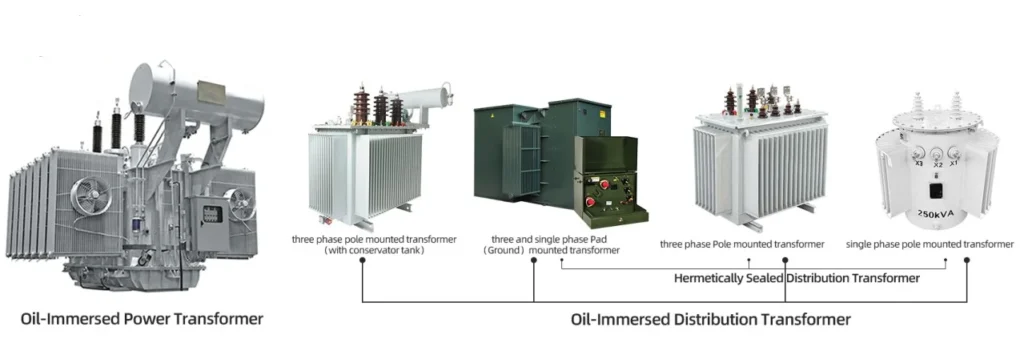
Common types and when each one fits
Type selection is the step buyers skip most often, and it is the one that decides whether the rest of the comparison is even meaningful.
Transformer type
Typical use
Main selection consideration
Three phase oil immersed transformer
Factories, substations, industrial parks, utility distribution
Best fit for three-phase medium-voltage distribution networks
Single phase oil immersed transformer
Rural networks, special utility applications, localized loads
Appropriate only where the grid or load structure requires single-phase supply
Pad mounted oil immersed transformer
North American-style underground distribution systems
Requires compatibility with local standards, dead-front interfaces, and pad-mounted installation practice
Requires careful review of insulation level, tap range, losses, impedance, and protection
Distribution transformer
Final voltage step-down close to end users
Usually selected for local distribution and load supply
Power transformer
Transmission or larger substation applications
Usually handles larger capacity, higher voltage, and more complex operation
Outdoor oil immersed transformer
This type fits projects where the transformer is installed in open air at industrial plants, utility distribution points, water treatment sites, pump stations, or real estate developments with outdoor substations.
It is the right direction when you need to account for:
Rain, dust, solar exposure, or humidity.
Limited maintenance access.
Mechanical protection for accessories and cable terminations.
It is not enough to label a unit “outdoor.” Buyers should confirm coating system, sealing method, accessory arrangement, and site-specific environmental stress.
Low loss oil immersed transformer
This option makes more sense when:
The transformer runs for long periods.
The facility has stable base load.
Electricity cost makes lifecycle savings meaningful.
The project owner tracks total cost of ownership rather than only capex.
It may be less compelling for temporary projects, low operating hours, or installations where budget approval depends mainly on first cost.
Hermetically sealed oil immersed transformer
A hermetically sealed oil immersed transformer is often preferred where the buyer wants reduced exposure of insulating oil to ambient air. That can be useful in humid, dusty, or maintenance-constrained locations.
It is a good fit when:
Routine maintenance access is difficult.
The site environment increases contamination risk.
The buyer wants a simpler operating profile over time.
It is not automatically better in every case. The choice depends on maintenance practice, local familiarity, and service expectations.
11kV oil immersed distribution transformer
An 11kV oil immersed transformer or 11kV oil immersed distribution transformer is common in factory distribution systems, mixed-use developments, and utility-connected commercial projects. The main selection issue is not the voltage class alone, but how that voltage class connects with capacity, loss level, and site conditions.
Single phase oil immersed transformer
A single phase oil immersed transformer suits certain utility networks, rural applications, and localized loads. It should not be selected because the unit price looks lower. The surrounding network architecture matters more than the price of an individual transformer, and a single-phase unit in a three-phase network usually creates more cost than it saves.
Pad mounted oil immersed transformer
A pad mounted oil immersed transformer is typically chosen for underground distribution systems where appearance, public safety, compact installation, and front-access cable connections matter. It is not a regular transformer placed on a concrete pad. Buyers must confirm the required regional standard, bushing configuration, enclosure design, and protection arrangement before quoting, because these vary significantly between markets.
Comparison logic buyers should use before requesting a quote
Surface-level comparisons are not enough. The right comparison should show when one option creates better project outcomes.
Comparison
Better choice when
Watch out for
Hermetically sealed vs conventional design
Hermetically sealed is often better where maintenance is limited or ambient conditions are harsher
Do not choose only by trend; check service practice and replacement preferences
Low loss vs standard loss design
Low loss is stronger where operating hours and energy cost justify payback
Higher upfront cost may not pay back in lightly loaded or short-life projects
Outdoor configuration vs protected installation
Outdoor-focused design is needed when the transformer faces weather, dust, or direct exposure
Do not over-specify if the site already has a protected transformer room
Hermetically sealed vs conventional design
The real issue is maintenance model. If the site is remote or service access is limited, a hermetically sealed design often reduces operational concern. If the buyer already has established maintenance procedures for conventional oil-immersed units, the traditional design may still be practical.
Low loss vs standard loss design
The best choice depends on lifecycle cost. Ask the manufacturer to help estimate the difference in annual loss cost based on realistic load profile, not ideal conditions.
Outdoor vs protected installation
A transformer placed inside a sheltered electrical room does not need the same configuration as one exposed to rain, dust, coastal air, or direct heat. This is where experienced factory input matters, because many bad purchases come from treating every installation as the same.
How to evaluate a manufacturer, supplier, or factory
Many buyers use “manufacturer,” “supplier,” and “factory” as if they mean the same thing. They do not.
A manufacturer controls production.
A factory is the actual production site.
A supplier may be a manufacturer, trading company, or channel partner.
A wholesaler may focus on volume supply, but not always on engineering customization.
That distinction matters when your project needs testing support, document control, or product changes.
Evaluation point
What to ask
Why it matters
Production capability
What voltage classes, capacities, and annual output do you handle?
Shows whether the factory fits your order scale
Test capability
What routine and type tests can you provide?
Reduces acceptance and compliance risk
Customization
Can you customize voltage, taps, accessories, and nameplate details?
Important for OEM, export, and market-specific projects
Export experience
What markets have you shipped to, and what packaging/documents do you provide?
Helps avoid logistics and clearance issues
Technical response
How do you review specifications before quotation?
Strong technical review reduces errors early
Lead time control
What affects production schedule?
Important for project planning and repeat orders
A serious B2B buyer should also ask whether the company can support:
OEM or private-label requests.
Export packaging and shipping marks.
Destination-standard documents.
Batch consistency for repeat procurement.
Technical communication during pre-sales review.
This is where a manufacturer has an advantage over a general trader. If your project needs customized terminals, special voltage ratios, or market-specific requirements, direct factory communication usually shortens the decision loop.
Material and process control checklist
The basic materials decide the losses, heat dissipation, insulation performance, and service life. Ask for specifics on:
Core material and core-loss design.
Copper or aluminium winding options.
Insulation system.
Transformer oil type and filling process.
Tank sealing design.
Radiator configuration.
Surface treatment and anti-corrosion coating.
Bushings, gauges, valves, and protection accessories.
A catalogue is useful for reviewing standard models, but it should be the beginning of the conversation rather than the end. Real projects need adjustments for voltage combinations, temperature, altitude, installation layout, and local regulations.
Routine tests and documents to request
A responsible manufacturer should be able to supply routine test documents and state clearly which additional tests are available for your project. Depending on the transformer type and the applicable standard, buyers may request:
Voltage ratio and vector-group verification.
Winding resistance.
No-load loss and load loss.
Impedance voltage.
Insulation resistance.
Applied-voltage testing.
Induced-voltage testing.
Oil-related tests.
Temperature-rise testing when required.
Dimensional drawings and nameplate drawings.
Packing list and export documentation.
For higher-value projects, discuss witness testing, third-party inspection, or factory acceptance testing before production is finished. Agreeing the test scope at quotation stage is what prevents a documentation dispute at delivery.
How to compare oil immersed transformer price correctly
Searching for an oil immersed transformer price is normal. Comparing prices without comparing the configuration behind them is where procurement mistakes begin.
The quoted figure can change significantly with:
Rated capacity.
HV/LV voltage ratio.
Copper or aluminium winding.
Core-loss target.
Tap changer type.
Cooling method.
Tank and radiator design.
Protection accessories.
Applicable standard.
Export packing requirements.
Quantity and delivery destination.
Testing scope and inspection requirements.
A lower quotation may exclude accessories such as temperature indicators, pressure-relief devices, Buchholz relay arrangements, surge arresters, or special bushings. Another quotation may use a different loss target or winding material. Treating those two quotations as though they are identical is not a fair price comparison.
Use a technical comparison sheet. List every parameter side by side before choosing a supplier:
Price comparison item
What to check
Capacity and voltage ratio
Are both suppliers quoting the same electrical rating?
Winding material
Copper and aluminium quotations should not be treated as identical
Losses
Compare no-load loss and load loss values, not just the total
Accessories
Confirm which gauges, relays, valves, bushings, and protection devices are included
Standard and tests
Check what documents and inspections are covered
Delivery scope
Confirm packing, shipping terms, and destination requirements
Warranty and support
Clarify responsibility after shipment and commissioning
Common sourcing mistakes in transformer projects
Focusing only on price
The lowest quote may exclude accessories, test scope, packaging, or a higher-efficiency design that would save money in operation. Compare complete delivered scope, not only the headline number.
Ignoring site conditions
Outdoor heat, dust, humidity, salt exposure, and limited service access change what design is appropriate. A transformer that works well in a protected substation room may not be the right choice for a rooftop, roadside, or exposed industrial yard.
Not clarifying standards before production
If the buyer and supplier do not align on standard, test requirement, or accessory list before production, the dispute usually appears late, when correction is expensive.
Treating all China suppliers as the same
Some buyers assume every China supplier offers the same quality and support. In practice, differences in engineering review, production control, export experience, and customization capability are significant.
What to prepare before contacting a manufacturer
A better RFQ gets better quotations. If you want useful responses from a manufacturer or export supplier, prepare the essentials first.
Information to prepare
Why it matters
Voltage ratio and frequency
Basic design matching
Required capacity
Determines core sizing and loss performance
Indoor or outdoor installation
Affects structure and accessory choice
Loss target, standard or low loss
Needed for lifecycle-cost comparison
Destination market
Determines export documents and compliance details
Quantity and timeline
Affects production planning and price
Phase arrangement and vector group
Determines neutral arrangement and phase relationship
Tap range and tap-changer type
Off-circuit or on-load, and the percentage range required
Required impedance voltage
Drives fault current and breaker coordination
No-load and load-loss requirements
Sets the energy-cost basis of the comparison
Cooling method
ONAN, ONAF, or project-specific, based on ambient and load profile
Winding material preference
Copper or aluminium, so quotes are comparable
Protection and monitoring accessories
Prevents a scope gap that only appears at delivery
Any customization need
Helps the factory quote accurately from the start
If you are comparing suppliers now, send your technical data first and ask them to confirm the proposed configuration before you ask for a final quote. That usually gives you a more useful answer than requesting price alone.
For a 35kV medium-voltage step-down project, our 35kV oil immersed power distribution transformer is a practical reference point when reviewing voltage combinations, tap settings, winding options, and installation conditions. For OEM/ODM programs, private-label documentation, and wider equipment scope, see About Kampa Electric.
If you’re comparing suppliers for an outdoor, low-loss, or hermetically sealed project, share your key requirements with our team and we can help you confirm the right oil immersed distribution transformer configuration before you request a final quote.
A good Oil Immersed Distribution Transformer manufacturer does more than supply hardware. The right partner helps you choose the correct transformer type, confirm the critical specifications, avoid mismatches in outdoor or export applications, and reduce lifecycle risk.
If your project involves 11kV distribution, low-loss targets, hermetically sealed design, or customized export requirements, compare manufacturers by technical fit, factory capability, and documentation discipline first. Price still matters, but it should be the last filter after you know the configuration is right.
FAQ
What is the difference between an oil immersed transformer and an oil immersed distribution transformer?
An oil immersed transformer describes the cooling and insulation method. An oil immersed distribution transformer is a specific application type used to step down voltage near the load side. In procurement, the second term is more precise because it tells the manufacturer how the unit will be used.
How do I choose an 11kV oil immersed distribution transformer for an industrial project?
Start with load demand, voltage ratio, installation environment, and loss target. Then confirm whether the project needs outdoor construction, special accessories, or export documentation. The right unit is the one that matches both the electrical system and the operating conditions.
Is a hermetically sealed oil immersed transformer better for outdoor use?
Often yes, especially where humidity, dust, or limited maintenance access are concerns. But “better” depends on the service model and environment, not on the label alone. Buyers should still review sealing design, accessories, and site exposure.
When is a low loss oil immersed transformer worth the extra cost?
It is usually worth stronger consideration when the transformer runs for long hours and electricity cost is meaningful over time. The payback is less attractive when loading is light, operating hours are low, or the project is heavily constrained by upfront budget.
What should I check before buying from a China oil immersed transformer manufacturer?
Check whether the company is the actual factory or only a trading supplier, and review test capability, customization support, export experience, and technical response quality. A good manufacturer should be able to explain why a certain configuration fits your project, not just send a price list.
Can a manufacturer customize voltage, capacity, and export requirements?
In many cases, yes. That is one of the main reasons B2B buyers prefer to work with a manufacturer rather than only a wholesaler. The key is to define the target market, technical parameters, and documentation requirements clearly before quotation.
Is a three phase oil immersed transformer better than a single phase model?
They serve different networks rather than competing on quality. A three phase unit is the standard choice for factories, substations, and industrial parks where three-phase loads dominate. A single phase unit suits certain utility networks, rural lines, and localized loads. Choose according to the network architecture you are connecting to, not according to unit price.
What affects oil immersed transformer price the most?
Capacity and voltage ratio set the baseline, then winding material, core-loss target, tap changer type, cooling method, and the accessory package move the number further. Standard and test scope matter as well, because two quotations for the same kVA can differ simply because one includes gauges, protection devices, and witness testing while the other does not.
Can an oil immersed transformer manufacturer provide OEM or ODM service?
A capable factory usually can, and it is one of the main reasons B2B buyers work with a manufacturer rather than a trading company. Typical OEM scope covers custom nameplates, branding, packaging, terminal arrangements, paint colours, and destination-market documentation. Define the target market and documentation requirements before quotation so the scope lands in the price.
Is a pad mounted oil immersed transformer suitable for every market?
No. Pad mounted designs are built around North American-style underground distribution practice, including dead-front interfaces and front-access cable connections. In markets with different utility standards, the same project is often better served by a conventional or hermetically sealed unit. Confirm the regional standard, bushing configuration, and enclosure design before specifying one.