
Description
SCB Series at a Glance
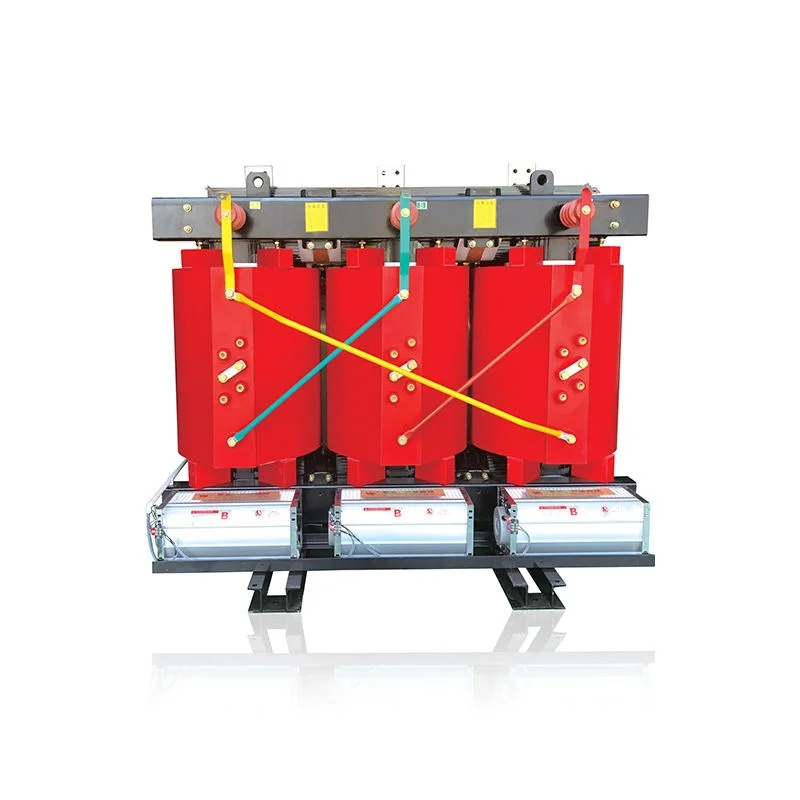
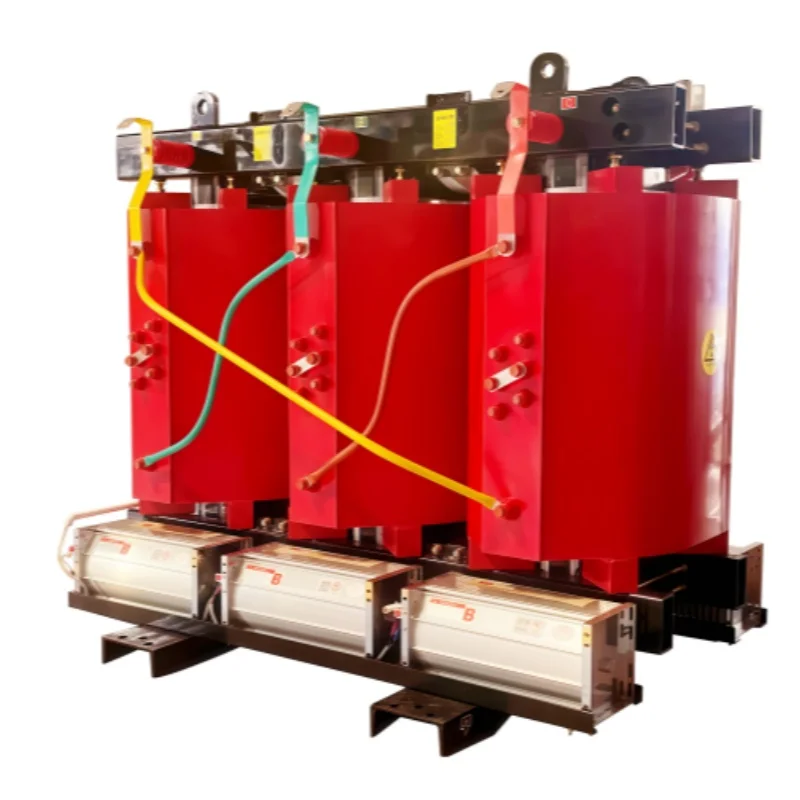
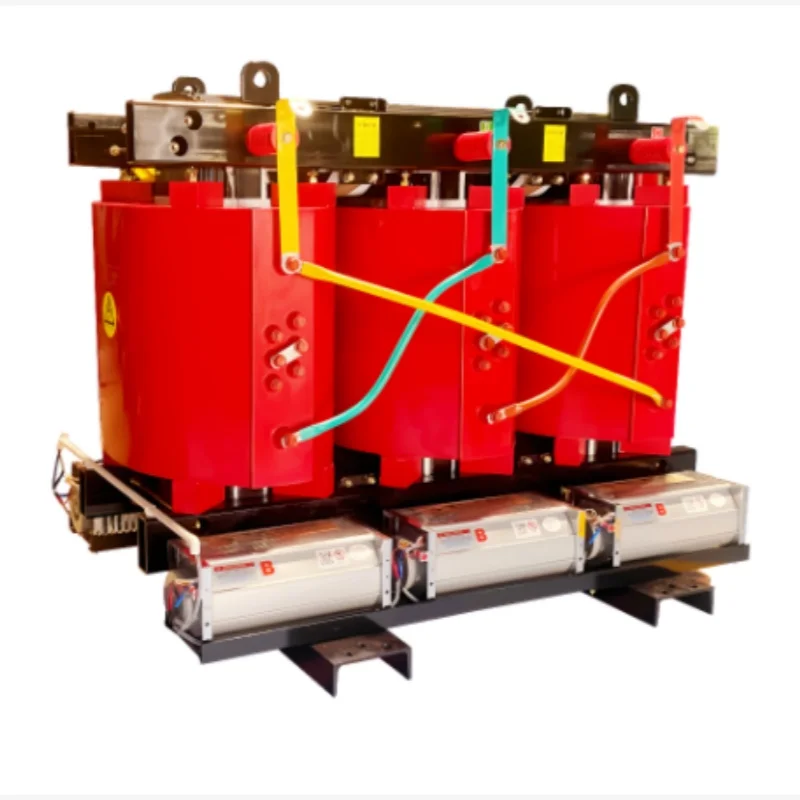
The SCB series 10kV dry type transformer is an epoxy-resin cast unit for indoor distribution, stepping 6 kV to 11 kV down to 0.4 kV at capacities from 30 kVA to 2,500 kVA. The high-voltage winding is vacuum cast and the low-voltage winding is copper foil, which is what gives the unit its short-circuit strength and its low partial discharge.
A 10kV dry type transformer is chosen where a fire load of insulating oil is not acceptable: inside occupied buildings, in basements, in tunnels, in hospitals and in data centres. The trade is cost per kVA, which is higher than an oil-immersed unit of the same rating.
Reading the SCB Designation
| Element | Meaning | What it decides |
|---|---|---|
| S | Three-phase (三相) | Three-phase unit, not single-phase |
| C | Cast-resin insulated (浇注) | Epoxy cast windings, no oil |
| B | Foil low-voltage winding (箔式) | Copper foil instead of wire on the LV side |
| 10 | Design / performance code | Loss level and design generation |
The number after SCB is a performance code rather than a voltage. A higher number in the same family generally means lower losses, which is why two units of identical capacity can differ in price and in efficiency.
Capacity, Losses and Impedance
The table below covers the published ratings from 30 kVA to 2,500 kVA. Loss figures are the published values for the standard design; the guaranteed values for your order are confirmed on the routine test report.
| Capacity (kVA) | No-load loss (W) | Load loss at 75 °C (W) | No-load current (%) | Short-circuit impedance (%) |
|---|---|---|---|---|
| 30 | 190 | 710 | 2.4 | 4 |
| 50 | 270 | 1,000 | 2.4 | 4 |
| 80 | 370 | 1,380 | 1.8 | 4 |
| 100 | 400 | 1,570 | 1.8 | 4 |
| 125 | 470 | 1,850 | 1.6 | 4 |
| 160 | 540 | 2,130 | 1.6 | 4 |
| 200 | 620 | 2,530 | 1.4 | 4 |
| 250 | 720 | 2,760 | 1.4 | 4 |
| 315 | 880 | 3,470 | 1.2 | 4 |
| 400 | 980 | 2,990 | 1.2 | 4 |
| 500 | 1,160 | 4,880 | 1.2 | 4 |
| 630 | 1,340 | 5,880 | 1.0 | 4 |
| 630 | 1,300 | 5,960 | 1.0 | 6 |
| 800 | 1,520 | 6,960 | 1.0 | 4 |
| 1,000 | 1,770 | 8,130 | 1.0 | 4 |
| 1,250 | 2,090 | 9,690 | 1.0 | 4 |
| 1,600 | 2,450 | 11,730 | 1.0 | 4 |
| 2,000 | 3,050 | 14,450 | 0.8 | 4 |
| 2,500 | 3,600 | 17,170 | 0.8 | 4 |
| 1,600 | 2,450 | 12,960 | 1.0 | 8 |
| 2,000 | 3,050 | 15,960 | 0.8 | 8 |
| 2,500 | 3,600 | 18,890 | 0.8 | 8 |
Three impedance levels appear in the table, and they change the load loss for the same capacity. A 2,500 kVA unit at 4 percent impedance has 17,170 W of load loss; the same capacity at 8 percent has 18,890 W. Higher impedance limits fault current, which matters when the downstream switchgear is rated below the prospective fault level at the transformer terminals.
Voltage Combinations and Tapping
- High voltage: 6 kV, 6.3 kV, 6.6 kV, 10 kV, 10.5 kV or 11 kV.
- Low voltage: 0.4 kV as standard.
- Tap range: ±5 percent, or ±2 × 2.5 percent for finer adjustment. Taps are off-circuit.
- Vector group: Dyn11 as standard.
The 6.6 kV and 11 kV options exist for systems where the nominal voltage differs from the IEC standard values, common in older industrial installations and in some export markets. If the existing board runs at an odd voltage, state it rather than rounding to 10 kV.
Winding Construction
On the SCB 10kV dry type transformer the high-voltage winding is vacuum cast in epoxy resin. Casting under vacuum removes air from the resin before it cures, which is what keeps partial discharge low: trapped voids are the main source of discharge in a cast winding, and they shorten life in a way that only shows up after years in service.
The low-voltage winding is copper foil rather than round wire. Foil gives a higher fill factor in the same window, which lowers the winding resistance and improves the ability to withstand short-circuit forces. It also conducts heat out of the winding more evenly, which is why a foil-wound unit runs cooler at the same load.
The core is built from high-grade silicon steel with a reinforced clamping structure, which reduces no-load loss and operating noise and keeps the assembly tight over years of thermal cycling.
Temperature Control
The 10kV dry type transformer is fitted with a temperature controller that monitors the winding temperature through PT100 sensors embedded in the cast body. The controller provides alarm and trip contacts, set at levels that reflect the insulation class of the winding.
Three things to settle at the order stage: the alarm and trip set points, whether the controller needs a communication output to the building management system, and whether the fans are controlled automatically or manually. A forced-cooled unit with manual fan control depends on an operator remembering to switch it on, which is rarely how it works out.
Cooling and Enclosure
| Option | Code | Effect |
|---|---|---|
| Natural air | AN | Rated capacity at natural convection |
| Forced air | AF | Higher capacity for the same frame, fans required |
| Open execution | — | No enclosure, suitable only in a dedicated electrical room |
| Protected enclosure | IP20 | Finger-safe, standard for indoor installation |
| Protected enclosure | IP23 | Higher protection against water spray and access |
Forced cooling raises the usable capacity of a given frame, but only while the fans run. If the load profile relies on the AF rating, the protection scheme should interlock with the fan supply, otherwise a fan failure becomes an overload.
Which Rating to Order
Three ratings account for most of the 10 kV dry type orders: 500 kVA, 1,000 kVA and 1,600 kVA. A 500 kVA unit covers a small plant board or a commercial building substation. 1,000 kVA covers an industrial line or a mid-size building. 1,600 kVA is the usual step where the board feeds a process line with motor load. All three are three-phase cast-resin builds with foil low-voltage windings, and all three appear in the table above.
Below 500 kVA the choice is usually driven by enclosure space rather than by losses, because the difference in efficiency between two adjacent ratings does not repay the extra cost. Above 1,600 kVA the question shifts to whether dry type is the right family at all: forced cooling buys another 40 percent of capacity on the same frame, and beyond that an oil unit is cheaper per kVA.
Where the voltage class is not fixed at 10 kV, the medium voltage dry type transformer series covers the same construction at 6 kV, 20 kV and 35 kV.
Where 10kV Dry Type Fits
Typical installations are indoor substations in industrial plants, commercial buildings, data centres, hospitals, rail facilities and packaged substations. The common thread is that the transformer sits inside or close to an occupied space, where an oil-filled unit would need a fire-rated enclosure and a containment arrangement.
Where the transformer can sit outdoors in a fenced compound, an oil-immersed unit is cheaper per kVA and carries better overload capability. Our 35kV oil-immersed distribution transformer range covers that side, and the medium voltage dry type transformer series page covers the insulation systems and manufacturing detail behind this frame. For the load side of the selection, our dry type transformer specification guide covers losses, impedance and enclosure choices in more depth.
Standards and Routine Tests
Routine tests on every unit cover winding resistance, ratio and polarity, no-load loss and current, load loss and impedance, applied voltage withstand and induced voltage withstand, and a partial-discharge measurement on the cast windings.
Type test reports covering temperature rise and lightning impulse are available for project documentation. Where the specification cites a loss level, the guaranteed figures are stated on the test report and form part of the acceptance criteria.
Manufacturer Supply, OEM and Wholesale
The SCB 10kV dry type transformer series is manufactured and supplied direct. Project buyers receive drawings and test reports for consultant approval before production; panel builders and EPC contractors order against a frozen capacity, voltage and loss specification; distributors hold a standing specification for repeat supply. Non-standard voltages, alternative vector groups and specific loss caps are quoted rather than declined.
Price, MOQ and Lead Time
- MOQ. One unit. Standard capacities carry no minimum quantity.
- Price drivers. Capacity, loss level required, impedance, copper or aluminium windings, enclosure rating, temperature controller and quantity.
- Lead time. Confirmed against the production schedule. Higher capacities and non-standard voltages take longer than standard ratings.
- Payment. Deposit with balance against the bill of lading copy; letter of credit for project quantities.
What to Send With Your Inquiry
- Capacity in kVA
- High voltage and low voltage, and the tap range
- Vector group and impedance
- Loss values your specification caps, if any
- AN or AF cooling, and the enclosure rating
- Temperature controller requirements, including communication
- Indoor installation conditions and ambient temperature
- Quantity, destination port and required delivery date
Send those through the quote form on this page, and the capacity, impedance and loss level come back confirmed together rather than as three separate questions.
FAQ
What capacity range is available?
Why do two 2,500 kVA ratings show different load loss?
What is F class insulation?
AN or AF cooling?
Can the vector group be changed?
What is the MOQ?
Request Quote
Tell us your specifications, quantity, or application scenario and we will reply with a tailored quote.