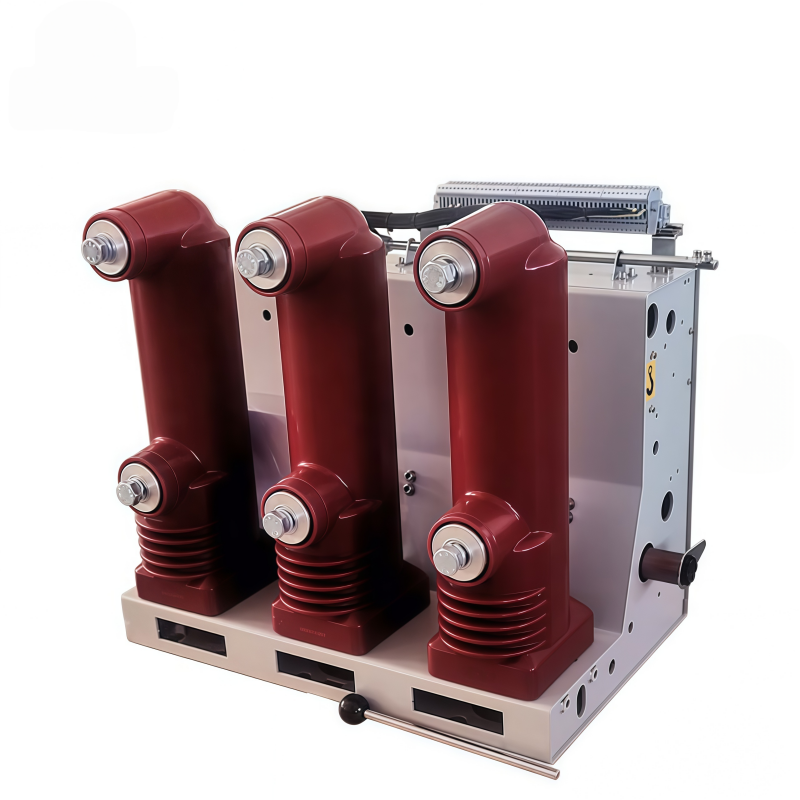
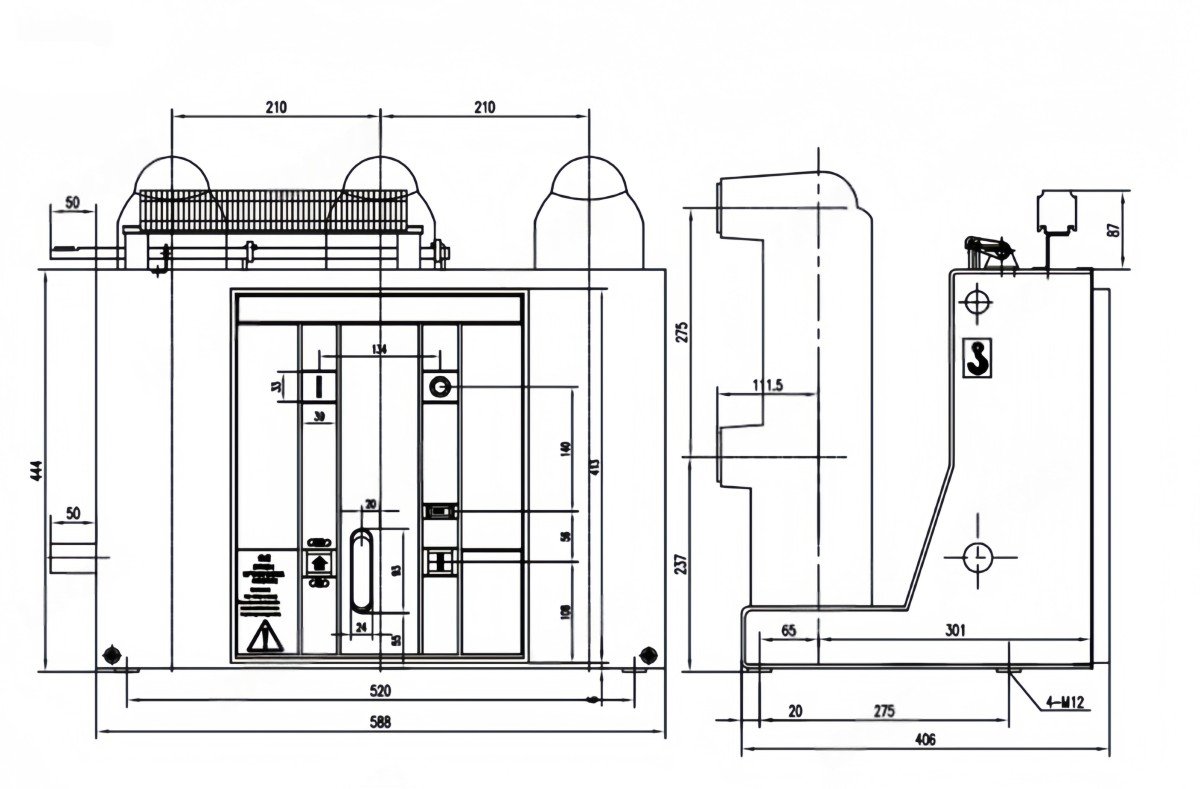
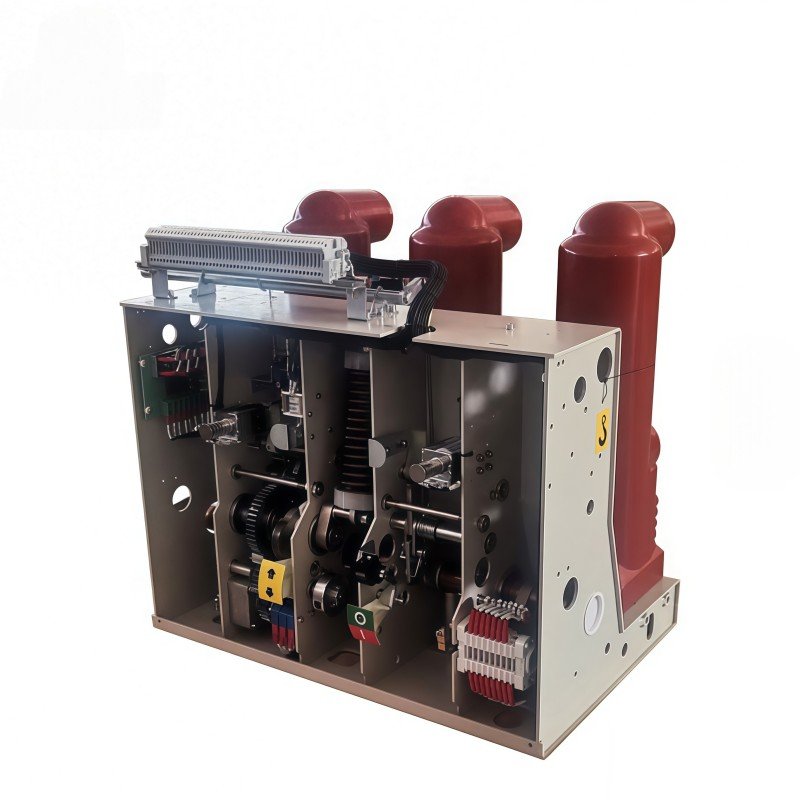
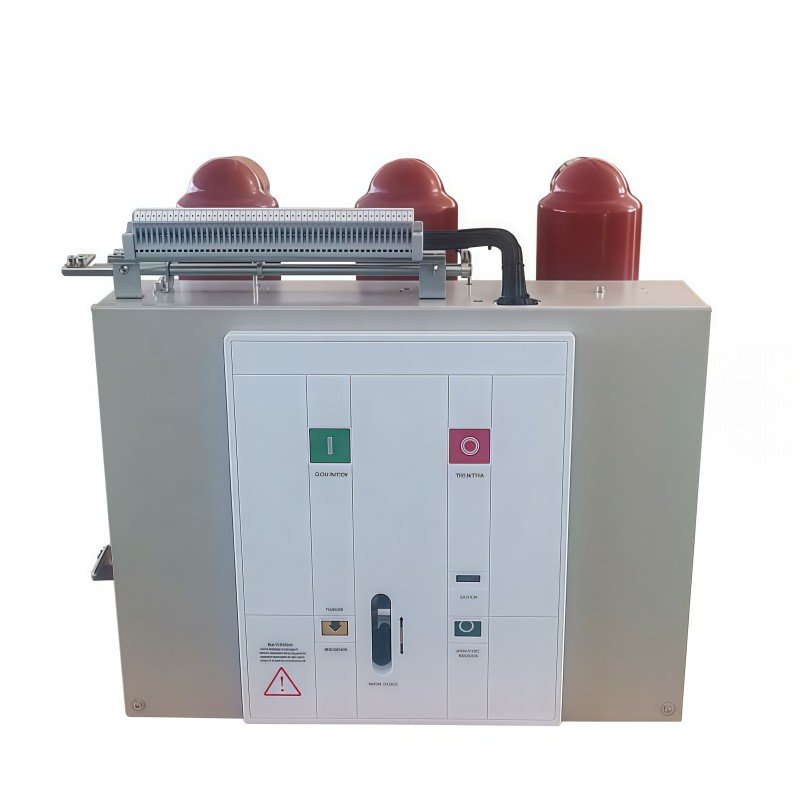
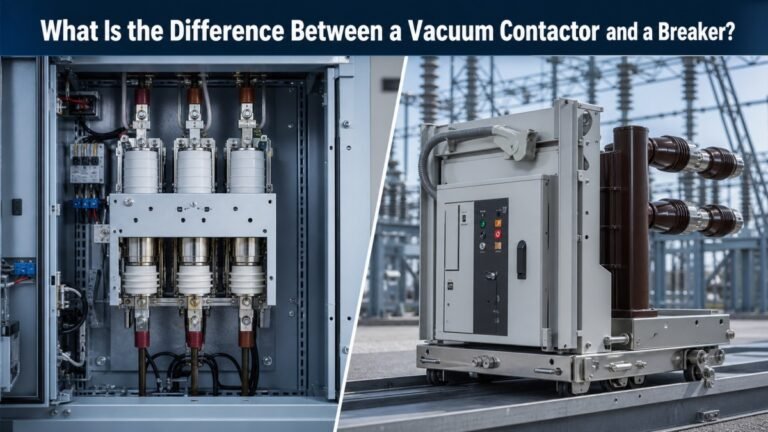
A vacuum contactor is an electrically operated switching device that uses a vacuum interrupter to make and break AC circuits, primarily designed for frequent load switching in medium-voltage applications. Unlike a circuit breaker, which must interrupt both load currents and fault currents, a vacuum contactor is engineered for high mechanical and electrical endurance—hundreds of thousands of operations over its service life—while fault protection is handled separately by fuses or an upstream breaker.
If you work with motor control centres, capacitor banks, or any industrial process that cycles on and off many times a day, understanding how a vacuum contactor works, which ratings matter, and how it fits into a protection scheme will help you specify the right equipment and avoid costly misapplications.
How a Vacuum Contactor Works
The core of every vacuum contactor is the vacuum interrupter—a sealed ceramic or glass envelope containing a fixed contact and a moving contact. When the operating coil is energized, an electromagnetic mechanism pulls the moving contact against the fixed contact, completing the circuit. When the coil is de-energized, a spring forces the contacts apart.
As the contacts separate, the current continues to flow momentarily through an arc. But because the contacts are inside a vacuum—with almost no gas molecules to ionize—the arc is extinguished within microseconds. The vacuum environment then provides rapid dielectric recovery, preventing re-ignition even if the contactor is closed again quickly. This makes vacuum contactors particularly suitable for repetitive duty cycles where other arc-quenching technologies would degrade quickly.
The operating mechanism comes in two main configurations:
Electrically held — the closing coil remains energized to keep the contacts closed. If control power is lost, the contactor opens automatically, providing a fail-safe behavior for many motor applications.
Mechanically latched — a latch holds the contacts in the closed position after the closing coil is de-energized. A separate opening coil releases the latch. This design saves energy and prevents unwanted opening during brief control voltage dips, making it ideal for continuous-process applications.
Key Components of a Vacuum Contactor
Component
Function
Vacuum interrupter
Sealed bottle containing contacts in a vacuum; extinguishes the arc and provides dielectric insulation
Main contacts
Carry and switch the load current; made of copper-based alloys for conductivity and arc resistance
Operating coil
Generates the electromagnetic force that closes the contacts when energized
Magnetic yoke / armature
Concentrates the magnetic flux from the coil to produce the required closing force
Opening spring
Provides the force to separate the contacts when the coil is de-energized
Auxiliary contacts
Low-current switch contacts that signal the contactor’s open/closed state to the control system
Insulating frame / housing
Provides mechanical support and phase-to-phase and phase-to-ground insulation
Common Voltage and Current Ratings
Vacuum contactors are standardized across several common voltage classes. The table below shows typical ratings for industrial and utility applications:
Rated Voltage
Typical Current Range
Common Applications
1.14 kV
160 A – 800 A
Low-voltage motor control, mining equipment, conveyors
3.6 kV – 7.2 kV
160 A – 630 A
Medium-voltage motor starters, pump stations, compressors
Kampa Electric offers a complete lineup across these voltage classes. The JCZ5 7.2 kV AC vacuum contactor covers motor and transformer switching in the 7.2 kV range, while the CKG3 12 kV AC vacuum contactor extends the range to 12 kV substation and industrial applications. For lower-voltage applications, the CKJ20 2 kV AC vacuum contactor is designed for mining and heavy industrial environments. Browse the full vacuum contactor series for detailed specifications.
Vacuum Contactor vs. Vacuum Circuit Breaker
This is the most common question from engineers evaluating switchgear components. The two devices look similar externally and both use vacuum interrupters, but their design philosophies are completely different. For a deeper comparison, read our dedicated guide on the difference between a vacuum contactor and a breaker. Here is a quick summary:
Aspect
Vacuum Contactor
Vacuum Circuit Breaker
Primary role
Frequent load switching
Load switching plus fault protection
Mechanical endurance
100,000 to 1,000,000 operations
10,000 to 30,000 operations
Breaking capacity
Load current only (~8x rated)
Full fault current (12.5–40 kA)
Protection
External fuses or upstream breaker
Integrated protection relay and CTs
Cost
Lower
3–5x higher
How a Contactor-Fuse Combination Works
In practice, vacuum contactors are almost never used alone for medium-voltage circuits. They are always combined with HRC (High Rupturing Capacity) fuses to form a coordinated switching and protection unit, defined under IEC 62271-106. The contactor handles the frequent switching duty; the fuses clear any short-circuit current beyond the contactor’s breaking capacity.
Proper coordination is critical. The fuse must clear a fault before the contactor attempts to open, otherwise the contactor will be forced to interrupt a current it was never designed to handle—with destructive results. A typical coordination scheme works as follows:
For currents up to the overload range (1.05–8x rated current), an overload relay detects the condition and commands the contactor to open. The contactor safely interrupts these moderate overcurrents.
For currents in the short-circuit range (above the contactor’s rated breaking capacity), the HRC fuse melts and clears the fault. A striker pin on the fuse triggers the contactor’s trip circuit, causing it to open on all three phases simultaneously to prevent single-phasing.
This contactor-fuse combination is the standard configuration for motor starters, capacitor bank controllers, and transformer feeders up to about 2,000 kVA at 12 kV.
Applications of Vacuum Contactors
Match the duty first, then the rating. The table below maps each application to the voltage class, the utilisation category that governs contactor sizing, and the Kampa series normally specified for it.
The most widespread application. Vacuum contactors start, stop, and reverse medium-voltage motors in pump stations, compressor houses, crushers, conveyor drives, and rolling mills. The contactor’s high mechanical endurance—250,000 to 500,000 operations—matches the daily cycling requirements of these processes.
Capacitor Bank Switching
Power-factor-correction capacitors are switched in and out of the circuit multiple times per day to maintain target power factor. Vacuum contactors handle the capacitive switching duty reliably, with inrush current managed by detuning reactors and fault protection provided by fuses.
Transformer Switching
For transformers up to approximately 2,000 kVA, a vacuum contactor-fuse combination provides a cost-effective switching and protection solution compared with a full vacuum circuit breaker panel. The contactor handles normal energizing and de-energizing, while the fuses protect against transformer internal faults.
Heating and Furnace Control
Industrial electric heaters and furnaces cycle on and off frequently to maintain process temperature. Vacuum contactors are well suited to this high-cycle resistive switching duty.
Pump Control and Water Treatment
Water and wastewater pump stations are a textbook case for vacuum contactors. Pumps start and stop far more often than most industrial loads — a booster set may cycle dozens of times a day — and the duty is essentially AC-3: a moderate starting current of roughly six times rated, followed by a long steady run. That is why the contactor, not the breaker, is the right device here: a vacuum contactor is rated for 250,000 to 500,000 mechanical operations, while a vacuum circuit breaker is built for 10,000 to 30,000. Specify an electrically held contactor where loss of control power should stop the pump, or a mechanically latched unit where a brief control-voltage dip must not interrupt a running set. The JCZ5 7.2 kV AC vacuum contactor covers most medium-voltage pump starters; fuses or an upstream breaker still provide short-circuit protection.
Crane, Hoist and Reversing Duty
Cranes and hoists are the hardest duty in the plant: frequent inching, plugging and reversal, with motor current repeatedly passing through the locked-rotor region. That is AC-4 duty, and it destroys air-break contacts quickly. Vacuum interrupters survive it far better because the arc is extinguished inside a sealed bottle, with no exposed contact surface eroding in oxygen. Two selection points matter. First, rate the contactor on reversals per hour, not on the motor’s full-load current alone. Second, a reversing starter needs both electrical and mechanical interlocking so the forward and reverse contactors can never close together. The GKJ5 1.14 kV vacuum contactor and JCZ5 7.2 kV AC vacuum contactor between them cover most crane and hoist applications in the 1.14–7.2 kV range.
Mining, Conveyors and Heavy Industry
Mining duty brings three things at once: a 1.14 kV or 2 kV system rather than a standard medium-voltage class, heavy shock loading from crusher and conveyor starts, and an environment full of conductive dust with constant vibration. Vacuum construction suits it because the interrupters are sealed — dust cannot reach the contacts, and there is no oil to contaminate or test. Specify the enclosure for the actual environment rather than relying on the standard IP rating, and check the terminal arrangement against the cable sizes used underground. The CKJ20 2 kV AC vacuum contactor is built for mining and heavy industrial environments in the 1.14–2 kV range.
Motor Circuits: Direct-On-Line and High-Cycle Duty
On a motor circuit the contactor sees the starting current, not the nameplate current. A direct-on-line start draws roughly six to eight times full-load current for the duration of the run-up, so the contactor must be selected on the utilisation category and the expected number of operations rather than on continuous current alone. AC-3 covers squirrel-cage motors started and stopped while running. AC-4 covers inching, plugging and reversal, and needs a noticeably larger contactor for the same motor. Where a motor starts more than a few times an hour, work out the total operations over the service life and compare that figure against both the mechanical and the electrical endurance ratings before ordering.
Mechanically Latched and Definite-Purpose Switching
A mechanically latched contactor holds its closed position with a latch instead of continuous coil current. The closing coil energises briefly, the latch takes over, and a separate opening coil releases it. That matters in two situations. Energy: an electrically held MV contactor keeps its coil energised permanently, with the heat and standing consumption that implies, while a latched unit does not. Continuity: if the control supply dips, an electrically held contactor drops out and stops a running process, whereas a latched unit rides through. Definite-purpose duty — capacitor banks, transformer feeders and continuous-process motor lines that must not trip on a control-voltage disturbance — is where latched designs get specified. Settle the fail-safe requirement first, because a latched contactor will not open on loss of control power.
Low Voltage Applications at 1.14 kV and 2 kV
Vacuum contactors are not only medium-voltage devices. In the 1.14 kV and 2 kV classes they compete with air-break contactors on exactly the applications where air-break life is the limiting factor: heavy conveyors, mine loaders, mill drives and repeated-duty pumping. At these voltages a vacuum contactor is smaller than the air-break equivalent for the same duty, needs no arc-chute maintenance, and produces no external arc — which matters in confined, dusty enclosures. The trade-off is cost: at low voltage an air-break contactor is cheaper, so vacuum is specified where switching frequency or the environment makes contact life the deciding factor. See the CKJ20 2 kV AC vacuum contactor and GKJ5 1.14 kV vacuum contactor.
Advantages of Vacuum Contactors
Long electrical life — typically 50,000 to 250,000 operations at rated current, far exceeding air-break contactors
Compact size — smaller and lighter than circuit breakers of equivalent voltage, fitting into tight panel layouts
Maintenance-friendly — the sealed vacuum interrupter requires no servicing; only the mechanism and auxiliary contacts need periodic inspection
Environmentally safe — no oil, no SF6 gas, no open arc; ideal for indoor installations where fire safety and environmental compliance matter
Fast operation — typical closing time of 50–100 ms and opening time of 30–80 ms, suitable for most industrial control sequences
Cost-effective — significantly lower purchase cost than a vacuum circuit breaker for switching-only applications
Limitations to Be Aware Of
No inherent short-circuit protection — fuses or an upstream breaker must be provided; a contactor alone cannot clear a fault
Coordination design required — the fuse and contactor must be matched so the fuse always clears before the contactor attempts to open
Limited to ~12 kV — above 12 kV, vacuum circuit breakers become the standard switching device for most applications
Not suitable for selective coordination — fuse-based protection cannot provide the adjustable time-current curves needed for complex protection schemes
How to Select a Vacuum Contactor
When specifying a vacuum contactor for your project, evaluate these parameters:
Rated operational voltage (Ue) — must match your system’s nominal voltage class (e.g., 7.2 kV or 12 kV).
Rated operational current (Ie) — select based on your maximum continuous load current, with an appropriate margin for ambient temperature and altitude derating.
Utilization category — defines the contactor’s intended duty. AC-3 is standard for motor starting; AC-6b is for capacitor switching. Make sure the contactor is type-tested for your specific duty.
Mechanical endurance class — match the contactor’s rated number of mechanical operations to your expected duty cycle over its service life.
Electrical endurance — expressed as the number of operations at rated current. Higher values mean longer service intervals before contact replacement.
Control voltage — the closing and opening coil voltage: typically 110 VDC, 220 VDC, or 220 VAC.
Latch type — electrically held or mechanically latched, depending on your fail-safe requirements and energy budget.
Auxiliary contacts — number and configuration (NO/NC) needed for your control and interlocking circuits.
If you are unsure about any of these parameters, Kampa Electric’s engineering team can review your single-line diagram and recommend the right contactor and fuse combination. Visit our vacuum contactor series page or contact us with your project details.
FAQ
What is the difference between a vacuum contactor and an air-break contactor?
Vacuum contactors are designed for medium-voltage applications (above 1 kV), where vacuum provides superior arc quenching and longer contact life. Air-break contactors dominate the low-voltage market (below 1 kV) where air is sufficient to extinguish the smaller arc and the cost advantage is significant.
Can a vacuum contactor replace a circuit breaker?
No. A vacuum contactor cannot replace a circuit breaker in circuits that require short-circuit fault interruption. The contactor lacks the breaking capacity and the integrated protection relay needed to clear faults. However, a contactor-fuse combination can replace a circuit breaker in many motor and transformer feeder applications where the fault level and coordination requirements are suitable.
How long does a vacuum contactor last?
The vacuum interrupter bottle is a sealed-for-life component and can last 20 years or more in normal service. The mechanical operating mechanism and contacts have a rated endurance—typically 250,000 to 500,000 operations—after which replacement or overhaul is recommended. With proper matching to the actual duty cycle, most contactors serve 15 to 25 years before major maintenance.
What is a contactor-fuse combination starter?
It is an assembly defined in IEC 62271-106 that combines a vacuum contactor with HRC fuses and an overload relay in one functional unit. The contactor handles the switching duty; the fuses clear short circuits; the overload relay protects against thermal overload. This is the standard configuration for medium-voltage motor starters and capacitor bank controllers.
Why are contactors not used above 12 kV?
Above 12 kV, the physical size of the vacuum interrupter needed to handle even load-current switching becomes large, and the arc-extinguishing requirements approach those of a circuit breaker. Additionally, at higher system voltages, fault levels tend to be higher and the need for selective coordination becomes more critical, making a vacuum circuit breaker with a protection relay the more appropriate choice.
Does a vacuum contactor need maintenance?
The vacuum interrupter itself requires no maintenance. However, the operating mechanism, auxiliary contacts, and control wiring should be inspected periodically—typically every 1 to 2 years depending on switching frequency and environment. Dust, humidity, and corrosive atmospheres accelerate wear on external components.
For continuous heavy-duty duty the same frame is supplied in a three-pole arrangement: the GKJ5 1000–1250 A three-pole vertical vacuum contactor is the version normally specified for rolling mills, arc furnaces and other AC-3 / AC-4 loads where all three phases switch together.
The core difference is simple: a vacuum contactor is designed for frequent switching of normal load currents, while a vacuum circuit breaker is designed to interrupt both normal and fault currents under short-circuit conditions.