Oil-Immersed Transformer How to Select the Right Type
Published: Author: Lisa
Choosing an oil-immersed transformer is not just a matter of finding the right kVA rating and asking for a price. It is a system decision. The transformer must match the voltage network, load profile, installation site, protection scheme, transport limits, and long-term maintenance plan.
I have seen projects where the transformer looked correct on paper but arrived with the wrong vector group, insufficient tap range, or accessories that did not match the substation layout. None of those errors look dramatic in a quotation spreadsheet. They become very dramatic when commissioning day arrives.
At Kampa Electric Home, we work with industrial, commercial, utility, and infrastructure buyers who need more than a generic transformer label. This guide explains how an oil-immersed power transformer works, how it differs from a dry type transformer, when a hermetically sealed transformer makes sense, and what technical information should be confirmed before you issue an RFQ.
What Is an Oil-Immersed Transformer?
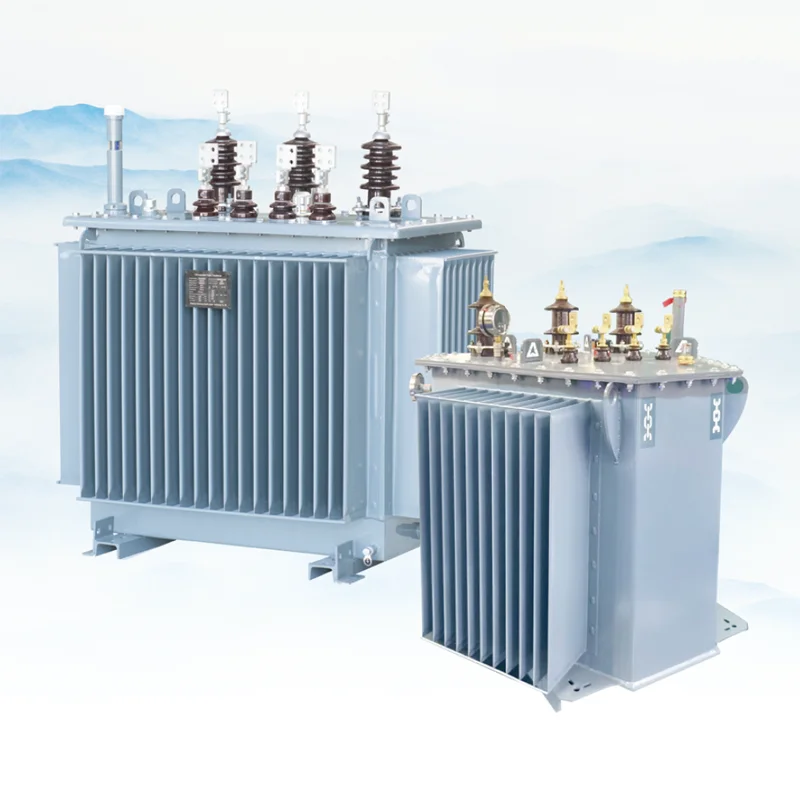
An oil-immersed transformer is a power transformer in which the active parts—including the magnetic core, high-voltage winding, low-voltage winding, and internal leads—are immersed in insulating liquid.
The oil has two essential jobs:
It provides electrical insulation between energized components.
It transfers heat away from the windings and core.
That second job is why oil remains a practical choice for many medium-voltage and high-voltage distribution systems. Transformer losses produce heat. If that heat is not removed efficiently, insulation ages faster, winding temperatures rise, and the unit’s useful service life can fall long before anyone planned a replacement budget.
A typical oil-immersed transformer includes:
Magnetic core made from electrical silicon steel
Primary and secondary windings, usually copper or aluminum
Insulating oil or another approved insulating liquid
Transformer tank and cooling surfaces
Radiators, cooling fins, or external cooling equipment
Bushings for high-voltage and low-voltage connections
Tap changer for voltage adjustment
Protection and monitoring accessories, depending on project requirements
Oil is not there for decoration. It is part of the transformer’s insulation system, cooling system, and operating-life strategy.
How Does an Oil Transformer Work?
The working principle is based on electromagnetic induction.
When alternating current flows through the primary winding, it creates a changing magnetic field in the transformer core. That changing field induces voltage in the secondary winding. The voltage level changes according to the turns ratio between the windings.
For example, a distribution transformer may reduce a 35kV or 30kV medium-voltage supply to a lower voltage suitable for industrial equipment, commercial facilities, local distribution boards, or utility customers.
Inside the tank, the oil absorbs heat generated by the windings and core. As the oil warms, it rises toward the top of the tank or radiators. Cooler oil then circulates downward to continue the cooling cycle.
In natural oil cooling designs, this circulation happens through convection. In larger units or demanding duty conditions, pumps and fans may be added to improve cooling performance.
The main point is simple: the transformer does not only need enough insulation for voltage. It also needs enough thermal capacity for the load pattern. A transformer that runs lightly during the day and a transformer that supports repeated peak loads are not living the same life, even when the nameplate kVA is identical.
What Are the Four Types of Transformers?
This question needs a small clarification. There is no single universal list of only four transformer types because transformers can be classified by function, insulation method, voltage level, cooling method, installation location, or application.
By electrical function, the four common transformer types are:
Transformer Type
Main Function
Typical Use
Step-Up Transformer
Increases voltage
Power generation and transmission systems
Step-Down Transformer
Reduces voltage
Distribution substations and industrial facilities
Isolation Transformer
Separates circuits electrically
Sensitive equipment and safety isolation
Autotransformer
Uses a shared winding for voltage adjustment
Voltage regulation and motor starting applications
By construction and cooling method, the most common comparison is between an oil-immersed transformer and a dry type transformer.
That distinction matters more for project procurement because it affects installation conditions, fire protection, cooling capability, maintenance planning, and equipment cost.
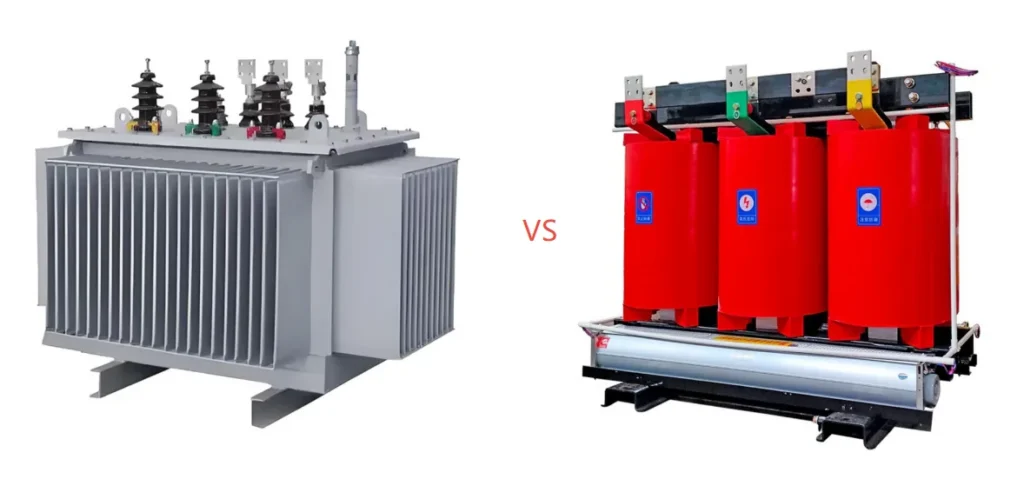
Oil-Immersed Transformer vs Dry Type Transformer
The dry type transformer vs oil-immersed transformer decision should not be made by habit. “We used dry type last time” is not a technical specification.
Here is the practical comparison.
Selection Factor
Oil-Immersed Transformer
Dry Type Transformer
Insulation and Cooling
Uses insulating liquid for both insulation and heat transfer
Uses air, cast resin, or solid insulation systems
Outdoor Installation
Often selected for outdoor substations and utility distribution
Can be installed outdoors with suitable enclosure, but indoor use is more common
Fire Considerations
Requires proper oil containment, fire-risk assessment, and installation compliance
Often preferred where fire-risk restrictions are strict
Capacity and Thermal Duty
Strong heat dissipation for larger capacities and demanding load cycles
Better suited to many indoor and moderate-capacity applications
Maintenance Focus
Oil condition, seals, cooling surfaces, and accessories require attention
Less oil-related maintenance, but ventilation and insulation cleanliness matter
Cost Structure
Can offer attractive equipment cost for outdoor and higher-capacity projects
May require a higher equipment budget, although installation requirements can change the total-cost comparison
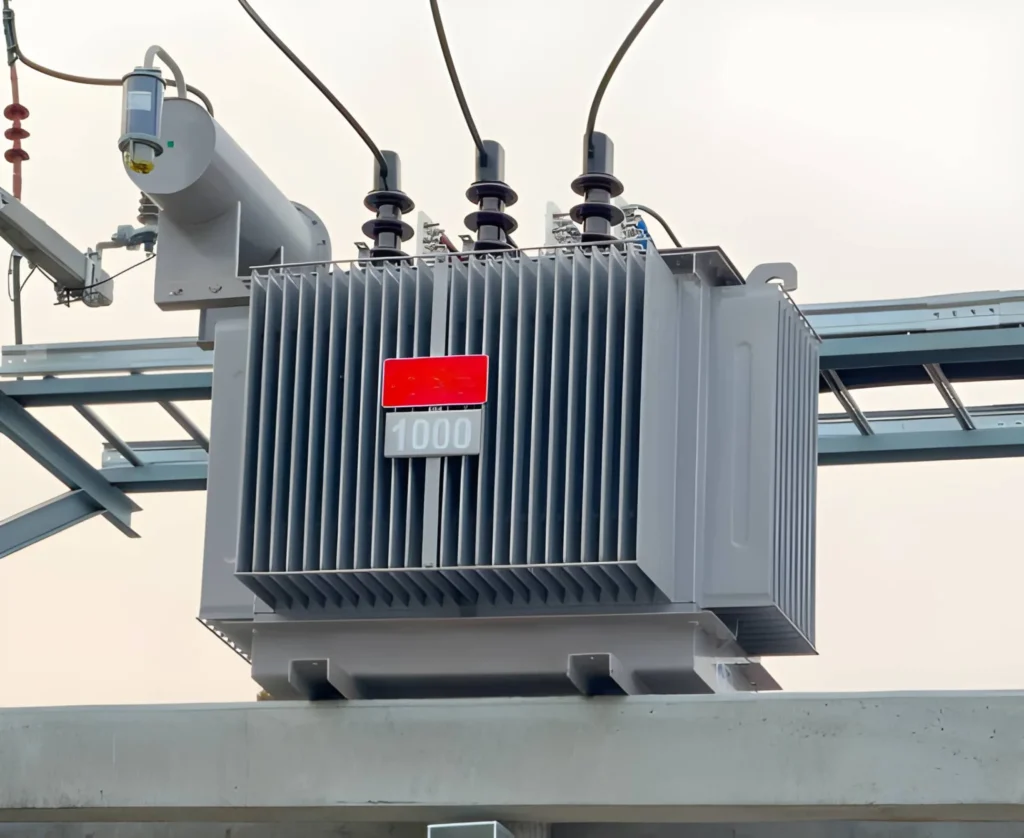
An oil-immersed power transformer is often a strong choice for outdoor substations, industrial parks, mining sites, renewable-energy collection systems, utility distribution networks, and infrastructure projects.
A dry type transformer is often preferred inside buildings, commercial facilities, transport hubs, data rooms, and locations where oil containment or fire-safety design would be difficult.
However, do not oversimplify the decision. An indoor project does not automatically require dry type, and an outdoor project does not automatically require oil type. The local electrical code, fire regulations, containment design, operating environment, and owner’s maintenance strategy must all be considered.
Hermetically Sealed Transformer vs Conservator Type Transformer
A hermetically sealed transformer is designed so that the insulating oil does not directly contact outside air during normal operation.
This matters because oxygen and moisture can accelerate oil degradation and insulation ageing. In a sealed design, the tank structure or internal expansion arrangement accommodates changes in oil volume as temperature rises and falls.
A conservator type transformer uses an expansion tank, often with a breather or protective arrangement, to manage oil expansion. The conservator provides additional oil volume and supports the transformer’s breathing process as operating temperature changes.
Neither design is automatically better in every project.
A hermetically sealed transformer may be a good option when:
The installation environment has high humidity, dust, salt spray, or pollution
Reduced exposure to air and moisture is important
Maintenance access is limited
The buyer wants a compact, sealed construction approach
A conservator type transformer may be appropriate when:
The project specification requires it
The transformer has a larger or more complex cooling arrangement
The asset owner follows an established oil-monitoring and maintenance routine
Long-term field inspection procedures are already defined
The correct question is not “Which one is better?” It is “Which one matches the operating environment, utility specification, and maintenance resources?”
How to Select an Oil-Immersed Power Transformer
A professional RFQ should contain more than “Please quote 1000kVA transformer.” That is not enough information to engineer, test, package, or deliver the correct unit.
Use the following checklist before contacting an oil-immersed transformer manufacturer or supplier.
Information to Confirm
Why It Matters
Rated Capacity
Determines thermal capability and load margin
Primary Voltage
Must match the incoming utility or substation voltage
Secondary Voltage
Must match the downstream distribution system
Frequency
Usually 50Hz or 60Hz, depending on the destination market
Phase
Three-phase is common for industrial and utility projects
Vector Group
Affects neutral arrangement, phase displacement, and system compatibility
Tap Range and Tap Changer
Supports voltage adjustment under site operating conditions
Impedance Voltage
Influences fault current and parallel transformer operation
No-Load and Load Losses
Directly affect operating cost over the transformer’s life
Cooling Method
Must match duty cycle, ambient temperature, and installation conditions
Installation Environment
Outdoor, indoor, coastal, high-altitude, dusty, humid, or corrosive sites need different designs
Accessories
May include temperature indicators, pressure-relief devices, Buchholz relay, oil level gauge, surge arresters, and monitoring systems
Standards and Test Documents
Necessary for project approval, import documentation, and commissioning confidence
For industrial buyers, one of the most useful selection habits is to calculate life-cycle cost instead of comparing only purchase price.
A lower quotation is not always a lower-cost transformer. Higher no-load loss runs every hour the transformer is energized. Higher load loss increases with current. Over years of operation, a small difference in loss values can become a large operating expense.
Also confirm whether the transformer will operate in parallel with another unit. Parallel operation requires compatible voltage ratio, vector group, impedance, and tap position. A transformer does not care that the purchase order says “similar model.” It cares whether the electrical conditions actually match.
Where Is an Oil-Immersed Transformer Used?
Oil-immersed transformers are commonly specified where medium-voltage distribution, outdoor installation, heat dissipation, and continuous operation are central project requirements.
Industrial Plants
Factories with motors, furnaces, compressors, pumps, welding systems, production lines, and large distribution boards often require stable voltage conversion and predictable thermal performance.
A transformer selection for a cement plant, steel plant, chemical facility, or machinery manufacturer should consider load fluctuation, harmonic conditions, ambient temperature, dust, and maintenance access.
Utility and Substation Projects
Distribution substations need transformers that match utility voltage class, protection coordination, fault-current level, and local grid standards.
For a substation upgrade, the transformer must also fit the site layout, transport route, cable termination arrangement, and future expansion plan.
Renewable Energy and Infrastructure
Solar plants, wind farms, battery-energy storage systems, water-treatment facilities, rail projects, ports, airports, and logistics parks often need medium-voltage transformers designed around project-specific voltage ratios and installation conditions.
For 30kV and 35kV distribution projects, Kampa can configure oil-immersed transformer solutions around voltage level, capacity, impedance, winding material, tap arrangement, accessories, enclosure requirements, and OEM/ODM project needs.
For broader system coordination—including substations, switchgear, protection devices, and medium-voltage distribution equipment—review Kampa Electric Solutions.
Oil Immersed Transformer HS Code: What Buyers Should Know
The oil immersed transformer HS code is normally determined by the liquid dielectric transformer category and rated power-handling capacity.
At the six-digit HS level, the common classification structure is:
HS Code
Liquid Dielectric Transformer Capacity Range
8504.21
Not exceeding 650 kVA
8504.22
Exceeding 650 kVA but not exceeding 10,000 kVA
8504.23
Exceeding 10,000 kVA
For many distribution-transformer projects, 8504.21 or 8504.22 may be relevant. Large power transformers may fall under 8504.23.
However, do not copy an HS Code from an old invoice and assume it applies to every shipment. Countries may use additional digits, country-specific duty treatment, documentation rules, or distinctions within the same six-digit code.
Before finalizing shipping documents, confirm:
Rated capacity in kVA or MVA
Transformer insulation medium
Product description on the commercial invoice
Destination-country tariff extension
Import duty, certification, and customs requirements
Whether accessories are shipped mounted or separately
The customs broker should validate the final classification. A transformer factory can provide product data, but the importer remains responsible for destination-market customs compliance.
Common Oil-Immersed Transformer Selection Mistakes
Here are the mistakes I see most often during technical communication.
Choosing only by kVA. Capacity matters, but voltage ratio, tap range, vector group, impedance, loss level, and installation environment matter too.
Ignoring no-load and load losses. The transformer may be inexpensive at purchase but expensive every day it operates.
Treating a hermetically sealed transformer as maintenance-free. Sealed does not mean invisible. Operators should still inspect accessories, temperature, seals, external corrosion, and abnormal operating conditions.
Forgetting transport dimensions and weight. A transformer can meet every electrical requirement and still become a logistics problem at the site entrance.
Not confirming the neutral and vector group. This can create serious compatibility issues with protection systems, downstream loads, and parallel transformer operation.
Requesting “standard accessories” without defining them. Standard for one supplier may not be standard for another. List each required device in the technical specification.
How to Evaluate an Oil-Immersed Transformer Manufacturer
A qualified oil-immersed transformer supplier should be able to discuss the project, not just send a price list.
Before placing an order, request:
Technical data sheet and general arrangement drawing
Rated voltage, capacity, impedance, and vector group confirmation
Loss values and applicable standards
Routine-test documentation and quality-control process
Accessory list and brand requirements
Packaging method and delivery terms
Warranty scope and technical-support process
OEM/ODM capability where branding or special configuration is required
Kampa has focused on high-voltage transformers and related electrical equipment since 2009, with OEM/ODM support and project-oriented technical communication for global power-distribution buyers. Before starting a project discussion, you can review About Us to understand the company’s manufacturing and support direction.
A useful CTA for procurement teams is simple: send the voltage ratio, rated capacity, frequency, vector group, impedance, installation environment, accessory list, quantity, and destination country. That gives the engineering team enough information to recommend a technically matched configuration instead of guessing from a one-line inquiry.
The right oil-immersed transformer is not simply the one with the lowest price or the largest kVA number. It is the unit that matches your network voltage, load profile, installation environment, cooling needs, protection system, compliance requirements, and operating-cost target.
Use dry type when indoor installation and fire-risk conditions justify it. Use an oil-immersed transformer when outdoor service, thermal capacity, project economics, and medium-voltage distribution requirements point in that direction.
Then make the supplier prove the configuration with complete technical documents. That is the difference between buying a transformer and buying a transformer that will actually fit the project.
FAQ
What is an oil immersed transformer?
An oil-immersed transformer is a transformer that uses insulating liquid to provide electrical insulation and transfer heat away from the core and windings. It is commonly selected for outdoor, industrial, utility, and medium-voltage distribution applications.
What is the difference between a dry type and oil immersed transformer?
A dry type transformer uses air or solid insulation systems, while an oil-immersed transformer uses insulating liquid for cooling and insulation. Dry type units are often selected for indoor locations with stricter fire-safety requirements, while oil-filled units are frequently selected for outdoor and higher-capacity distribution systems.
What are the four types of transformers?
By electrical function, the four common transformer types are step-up transformers, step-down transformers, isolation transformers, and autotransformers. By construction, transformers are also commonly classified as oil-immersed or dry type.
How does an oil transformer work?
An oil transformer transfers electrical energy between windings through electromagnetic induction. The insulating oil separates energized components electrically and carries heat from the core and windings to the tank, radiators, or cooling system.
What is the oil immersed transformer HS code?
Oil-immersed transformers are generally classified under HS heading 8504 for liquid dielectric transformers. Common six-digit categories include 8504.21 for units up to 650kVA, 8504.22 for units above 650kVA and up to 10,000kVA, and 8504.23 for units above 10,000kVA.