How to Evaluate an Oil Immersed Transformer Manufacturer
Published: Author: Lisa
Table of Contents
Choosing an oil immersed transformer manufacturer is not just about finding a unit with the right kVA rating and the lowest quotation. A transformer may look like a quiet metal box sitting behind a fence, but it is expected to work through heat, overloads, weather, voltage fluctuations, and years of continuous operation.
That is why a weak supplier decision can become expensive long after the purchase order is signed. A lower initial price may hide higher no-load losses, incomplete testing documents, limited customization, or a design that does not match the actual grid conditions. In transformer procurement, the cheapest quote can occasionally become the most expensive spreadsheet in the project.
This guide explains how to evaluate an oil immersed transformer manufacturer, compare quotations correctly, and prepare a clearer RFQ for distribution, industrial, utility, and 35kV projects.
Why the Manufacturer Matters More Than the Nameplate
A transformer nameplate tells you what the unit is supposed to do. The manufacturer determines whether it can keep doing that job after years of real-world operation.
For project buyers, the supplier affects much more than the product price. A capable factory should be able to support the full process:
Technical parameter confirmation before production
Core, winding, insulation, and tank material control
Loss calculation and temperature-rise design
Standard or project-specific voltage combinations
Routine test documentation
Export packing and delivery coordination
OEM/ODM labeling and customized accessories
Technical communication during installation and commissioning
This matters especially for international projects. A transformer ordered for a dry inland industrial zone may need a different corrosion-protection solution than one installed near a coastal port, a mining site, or a humid tropical substation.
When evaluating a supplier, start by reviewing the wider product capability of the manufacturer, not only one product page. Kampa Electric supplies transformers, instrument transformers, and medium- to high-voltage equipment for power distribution projects, which is useful when your transformer must work together with switchgear, protection devices, metering equipment, or substation components.
Start with a Complete Technical Requirement Sheet
Before comparing manufacturers, make sure every supplier is quoting the same technical basis.
An incomplete RFQ produces incomplete quotations. One factory may quote aluminum windings, another may quote copper. One may include a tap changer and protection accessories, while another may leave them out. Both quotations can look attractive until the technical review begins.
Here are the essential details to provide.
Item
What You Should Confirm
Why It Matters
Rated capacity
kVA or MVA requirement
Determines transformer size, losses, and thermal design
HV/LV voltage ratio
For example, 35kV/0.4kV
Must match the actual grid and load-side system
Frequency
50Hz or 60Hz
Affects magnetic design and operating compatibility
Phase configuration
Three-phase or single-phase
Must match the local distribution network
Vector group
Such as Dyn11 or Yyn0
Affects neutral arrangement and phase relationship
Determines enclosure, coating, and accessory requirements
Applicable standard
IEC, ANSI, local utility requirement, or tender specification
Prevents compliance problems later
Do not send a one-line inquiry that says, “Please quote 500kVA oil transformer.” That is the electrical-equipment version of ordering a vehicle without mentioning whether it needs to drive in snow, carry cargo, or cross a desert.
Different projects need different oil immersed transformer structures. Choosing the wrong configuration first and then searching for a low price is like choosing the wrong shoe size because the discount looked good.
Transformer Type
Typical Use
Main Selection Consideration
Three phase oil immersed transformer
Factories, substations, industrial parks, utility distribution
Best for three-phase medium-voltage distribution networks
Single phase oil immersed transformer
Rural networks, special utility applications, localized loads
Suitable where the grid or load structure requires single-phase supply
Pad mounted oil immersed transformer
North American-style underground distribution systems
Requires compatibility with local standards, dead-front interfaces, and pad-mounted installation practices
Requires careful review of insulation level, tap range, losses, impedance, and protection requirements
Distribution transformer
Final voltage step-down close to end users
Usually selected for local distribution and load supply
Power transformer
Transmission or larger substation applications
Often handles larger capacity, higher voltage, and more complex operational requirements
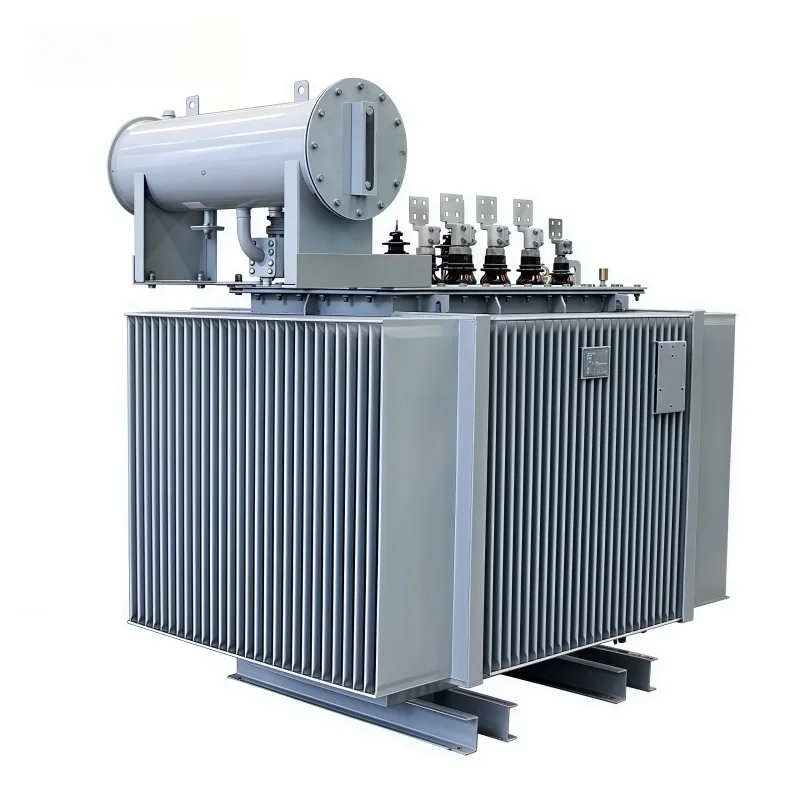
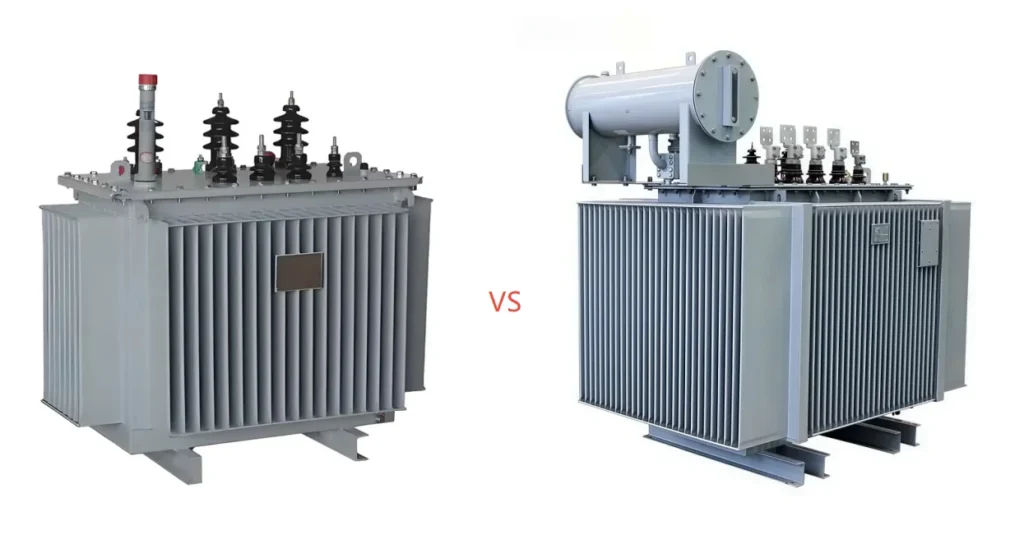
A three phase oil immersed transformer is the usual choice for manufacturing plants, utility substations, commercial parks, and renewable-energy projects where three-phase loads dominate.
A single phase oil immersed transformer can be suitable for certain utility networks, rural applications, and special loads. It should not be selected merely because the initial unit price seems lower. The surrounding network architecture matters more than the individual transformer price.
A pad mounted oil immersed transformer is typically chosen for underground distribution systems where appearance, public safety, compact installation, and front-access cable connections are important. It is not simply a regular transformer placed on a concrete pad. Buyers must confirm the required regional standards, bushing configuration, enclosure design, and protection arrangement.
Distribution Transformer vs Power Transformer
The terms “distribution transformer” and “power transformer” are sometimes used loosely in procurement conversations. That can cause trouble because they usually serve different parts of the electrical system.
A distribution transformer generally steps medium voltage down to a level suitable for local loads, such as commercial buildings, factories, communities, or branch distribution networks.
Power transformers are usually associated with higher-capacity transmission or substation applications, where voltage transformation, grid stability, system expansion, and more demanding operating requirements need to be considered.
Comparison Point
Distribution Transformer
Power Transformer
Typical system role
Final or local voltage step-down
Transmission or major substation transformation
Typical installation
Distribution stations, plants, commercial sites
Main substations, generation facilities, grid projects
Load pattern
Often continuous but closer to end-user demand
Often linked to network-level power transfer
Capacity range
Usually lower to medium capacity
Often medium to large capacity
Design priorities
Losses, compact sizing, local installation conditions
Grid performance, system reliability, high-voltage duty
For a 35kV project, do not assume the label “distribution transformer” automatically means the unit is too small. The correct choice depends on the voltage ratio, capacity, grid architecture, and project specification.
What a Reliable Oil Immersed Transformer Manufacturer Should Prove
A good factory should provide evidence, not only confident marketing language.
Here is what buyers should verify before placing an order.
1. Engineering and Customization Capability
A manufacturer should be able to discuss technical details clearly, including voltage ratio, capacity, vector group, impedance, loss values, cooling method, tap settings, accessories, and installation environment.
For OEM/ODM projects, the supplier should also confirm whether it can support custom nameplates, branding, packaging, terminal arrangements, paint colors, and documentation.
This is particularly important for distributors and wholesalers building private-label transformer programs. A supplier that only repeats standard catalog data may be acceptable for stock models, but less useful for tender-based or project-specific procurement.
2. Material and Process Control
The basic materials matter because they influence losses, heat dissipation, insulation performance, and service life.
Ask about:
Core material and core-loss design
Copper or aluminum winding options
Insulation system
Transformer oil type and filling process
Tank sealing design
Radiator configuration
Surface treatment and anti-corrosion coating
Bushings, gauges, valves, and protection accessories
An oil immersed transformer catalogue is useful for reviewing standard models, but it should be the beginning of the conversation, not the end. Real projects often need adjustments for voltage combinations, temperature conditions, altitude, installation layout, or local regulations.
3. Testing and Documentation
A responsible oil immersed transformer manufacturer should be able to provide relevant routine test documents and clarify what additional tests are available for your project.
Depending on the transformer type and applicable standard, buyers may request documentation related to:
Voltage ratio and vector-group verification
Winding resistance
No-load loss and load loss
Impedance voltage
Insulation resistance
Applied-voltage testing
Induced-voltage testing
Oil-related tests
Temperature-rise testing when required
Dimensional drawings and nameplate drawings
Packing list and export documentation
For higher-value projects, it is sensible to discuss witness testing, third-party inspection, or factory acceptance testing before production is finished.
4. Project Communication and Export Support
A transformer is rarely a standalone purchase. It may need to match switchgear, cable systems, protection relays, metering equipment, or a complete substation layout.
That is why supplier communication matters. Review the manufacturer’s technical response speed, drawing quality, revision control, quotation clarity, and willingness to flag missing information.
For broader project planning, you can also review Kampa’s medium- and high-voltage power solutions to understand how transformers fit into industrial distribution, substation, and power-network applications.
For a closer look at the company’s manufacturing positioning, OEM/ODM support, and technical background, see About Kampa Electric.
How to Compare Oil Immersed Transformer Price Correctly
Searching for an oil immersed transformer price is normal. Comparing prices without comparing the configuration behind them is where procurement mistakes begin.
The price can change significantly based on:
Rated capacity
HV/LV voltage ratio
Copper or aluminum winding
Core-loss target
Tap changer type
Cooling method
Tank and radiator design
Protection accessories
Applicable standard
Export packing requirements
Quantity and delivery destination
Testing scope and inspection requirements
For example, a lower quotation may exclude accessories such as temperature indicators, pressure-relief devices, Buchholz relay arrangements, surge arresters, or special bushings. Another quotation may use a different loss target or winding material. Comparing those two quotations as though they are identical is not a fair price comparison.
Use a technical comparison sheet. List every parameter side by side before choosing a supplier.
Price Comparison Item
What to Check
Capacity and voltage ratio
Are both suppliers quoting the same electrical rating?
Winding material
Copper and aluminum quotations should not be treated as identical
Losses
Compare no-load loss and load loss values
Accessories
Confirm included gauges, relays, valves, bushings, and protection devices
Standard and tests
Check what documents and inspections are included
Delivery scope
Confirm packing, shipping terms, and destination requirements
Warranty and support
Clarify responsibility after shipment and commissioning
A Practical RFQ Checklist for 35kV Projects
For a 35kV oil immersed transformer project, the RFQ should contain more than a capacity request.
Send suppliers the following information:
Required rated capacity
High-voltage and low-voltage ratings
Frequency and phase arrangement
Vector group requirement
Tap range and tap-changer type
Required impedance voltage
No-load and load-loss requirements
Installation location: indoor, outdoor, coastal, high-altitude, desert, or industrial area
Ambient temperature range
Required cooling method
Winding material preference
Protection and monitoring accessories
Applicable standards and required test documents
Quantity, destination country, and requested delivery schedule
For projects that require a medium-voltage step-down configuration, Kampa’s 35kV oil immersed power distribution transformer can be used as a practical reference point when reviewing voltage combinations, tap settings, winding options, installation conditions, and project-specific customization.
A clear RFQ helps a manufacturer give you a technically useful answer. It also makes it much easier to compare multiple suppliers without guessing what has been included.
The right oil immersed transformer manufacturer should help you reduce engineering uncertainty, not add more of it.
A good supplier provides a clear technical response, confirms your application conditions, explains the quotation scope, supports testing and documentation, and can adapt the design when the project demands it.
Before choosing a factory, compare specifications before prices, compare documentation before promises, and compare project compatibility before catalog photos. That approach may take a little more time at the beginning, but it can protect your equipment budget for many years after installation.
FAQ
What should I check before choosing an oil immersed transformer manufacturer?
Check the factory’s technical response capability, product range, customization support, routine test documentation, quality-control process, applicable standards, export experience, and after-sales communication. Do not choose only by price or catalog appearance.
Is a three phase oil immersed transformer better than a single phase model?
Neither is automatically better. A three-phase oil immersed transformer is normally selected for industrial, commercial, and utility three-phase networks. A single-phase model is more suitable where the local distribution network or load configuration requires it.
What affects oil immersed transformer price the most?
The main cost factors include capacity, voltage ratio, winding material, core-loss target, cooling method, tap changer, accessories, testing requirements, standards, order quantity, and shipping destination.
What is the difference between a distribution transformer and a power transformer?
A distribution transformer usually supplies local loads after stepping voltage down near the end-user side of the network. A power transformer is generally used in larger transmission or major substation applications where system-level voltage transformation is required.
Can an oil immersed transformer manufacturer provide OEM or ODM service?
Yes, many transformer factories support OEM/ODM projects. Customization may include voltage ratio, capacity, vector group, tap settings, accessories, enclosure details, nameplates, branding, export packaging, and documentation.
Is a pad mounted oil immersed transformer suitable for every market?
No. Pad-mounted transformers are commonly associated with underground distribution systems and often need country-specific standards, bushing interfaces, cable connection arrangements, and enclosure requirements. Confirm the local electrical code before ordering.
A step down power transformer is a static electrical device that converts a higher input voltage into a lower output voltage for safe distribution and use.
A power transformer is a static electrical device that transfers alternating-current power between two or more circuits at different voltage levels through electromagnetic induction.
Every component serves a specific electrical, magnetic, or thermal function. Together they transfer thousands of kilovolt-amperes from one voltage level to another, silently and continuously, often for decades.