
Description
ZW7 40.5kV at a Glance
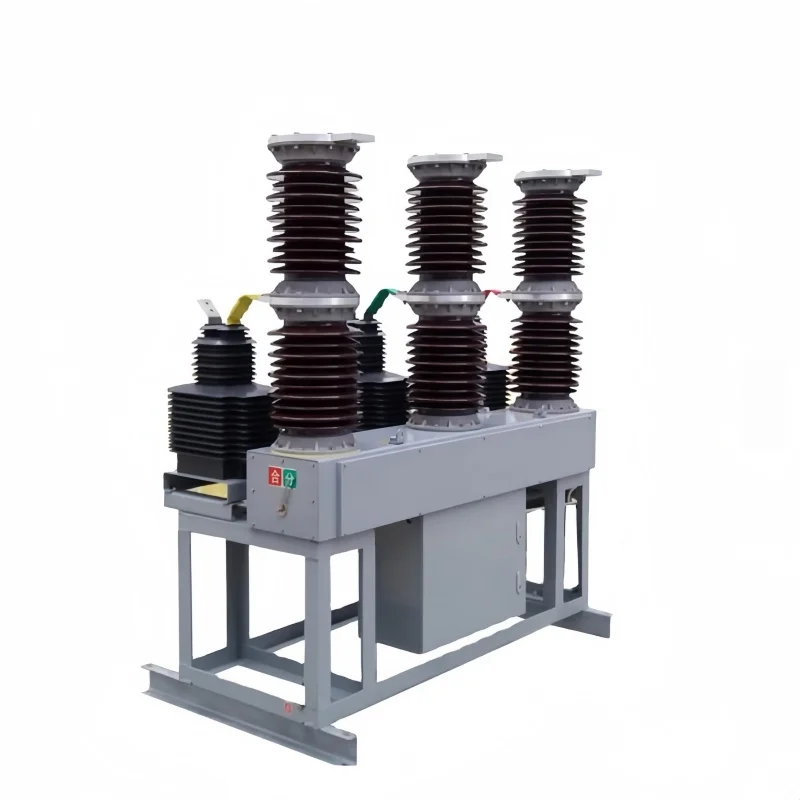
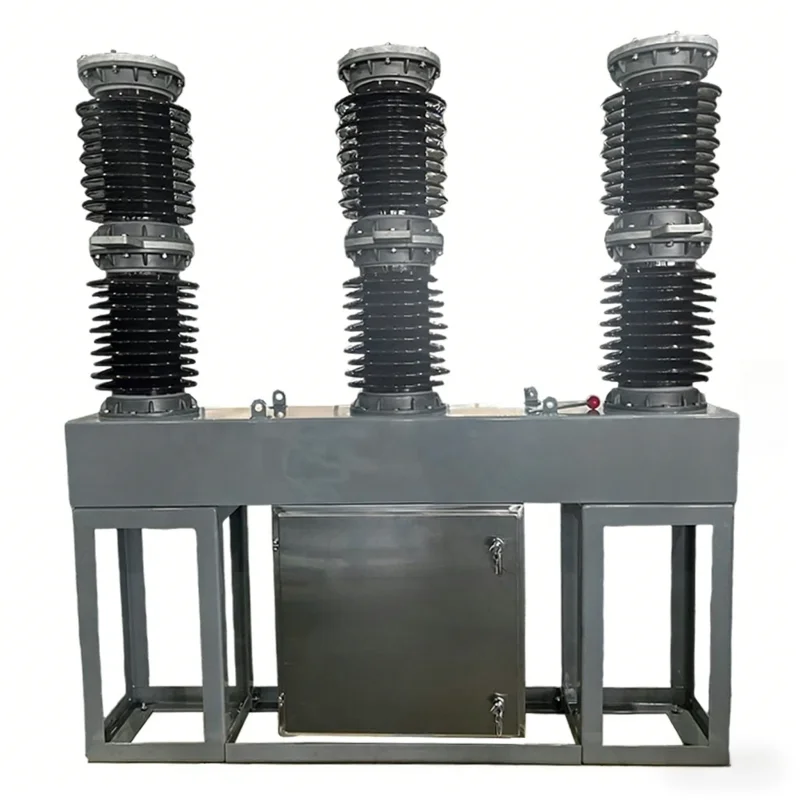
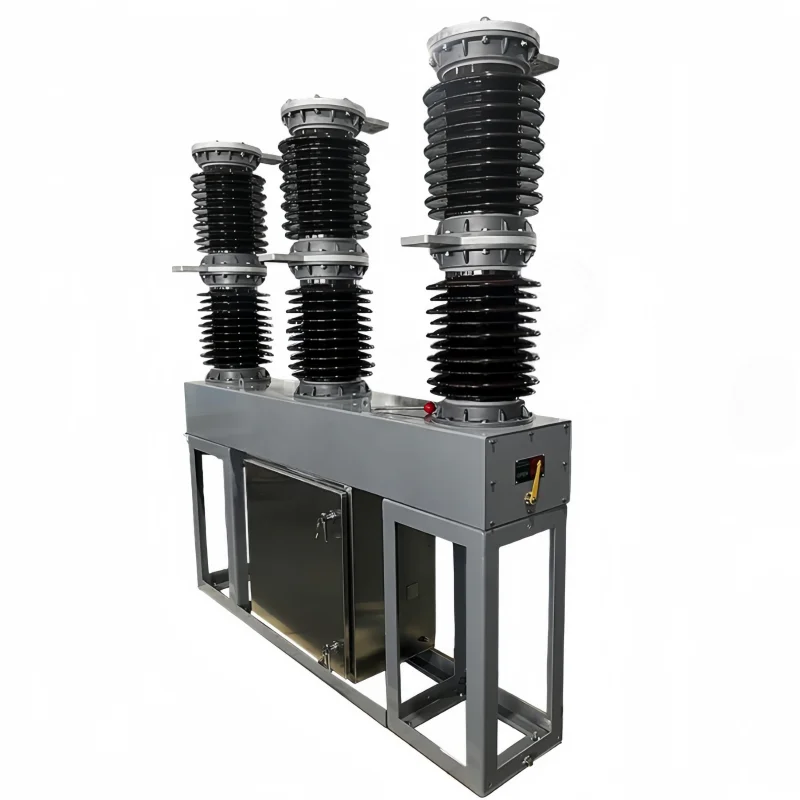
The ZW7 40.5kV outdoor vacuum circuit breaker is a heavy outdoor frame for 40.5 kV distribution, covering 1,250 A and 1,600 A with 21 kA or 31.5 kA short-circuit breaking. The pole, the current transformers, the operating mechanism and the enclosure are built as one integrated assembly rather than as separate components mounted on a frame.
Its published ambient range reaches +60 °C at the top end and -30 °C at the bottom, and it holds pollution class IV. That combination puts it in high-temperature industrial and coastal service, where a lighter outdoor breaker rated to 40 °C would need derating.
Reading the ZW7 40.5 Designation
| Element | Meaning | What it decides |
|---|---|---|
| Z | Vacuum (真空) | Vacuum interrupter |
| W | Outdoor (户外) | Weatherproof enclosure, outdoor installation |
| 7 | Design sequence | Heavy outdoor frame, earlier generation than ZW32 |
| 40.5 | Voltage class in kV | 40.5 kV highest voltage for equipment |
The design sequence 7 and 32 refer to different generations of outdoor frame. The ZW7 is the heavier and more integrated design; the ZW32 is the later pole-mounted family. They are not interchangeable in mounting or in current rating.
Ratings
| Parameter | Published value |
|---|---|
| Rated voltage | 40.5 kV |
| Rated current | 1,250 A / 1,600 A |
| Rated frequency | 50 / 60 Hz |
| Power-frequency withstand, wet / dry, 1 minute | 80 / 95 kV |
| Lightning impulse withstand, peak | 185 kV |
| Rated short-circuit breaking current | 21 kA / 31.5 kA |
| Rated short-circuit making current, peak | 63 kA / 80 kA |
| Rated peak withstand current | 63 kA / 80 kA |
| 4-second short-time withstand current | 21 kA / 31.5 kA |
| Short-circuit breaking operations | 30 |
| Mechanical life | 10,000 operations |
| Mechanism control voltage | AC / DC 220 V |
| Secondary-circuit withstand, 1 minute | 2 kV |
Two Breaking Options: 21 kA and 31.5 kA
The ZW7 40.5kV outdoor vacuum circuit breaker is offered at two breaking levels, and the difference is not just an interrupter swap: it changes the pole assembly, the peak making current and the panel it suits.
- 21 kA with 63 kA peak making handles a modest 40.5 kV board, typically a plant distribution substation where the source impedance is high.
- 31.5 kA with 80 kA peak is the utility-grade option, used where the board is fed close to a bulk supply point.
Choosing between them is a calculation, not a preference. Take the fault level at the point of installation and add the margin your standard requires. Note that a breaker rated above the board’s fault level buys nothing except cost, while one rated below it is a safety case failure rather than a performance problem.
The +60 °C Upper Limit
Most outdoor breakers in this class are published to +40 °C. The ZW7’s upper limit of +60 °C is the figure that matters in hot climates and in plant yards where radiated heat from adjacent equipment pushes the local ambient well above the meteorological reading.
For the ZW7 40.5kV outdoor vacuum circuit breaker, two consequences follow from the rating. At 60 °C the current carrying path has to be sized with less thermal margin, which is why the lowest current option is 1,250 A rather than a smaller frame. And the control and auxiliary components inside the enclosure must be rated for the internal temperature, which in direct sun runs above ambient.
The lower limit of -30 °C is 10 degrees narrower than a cold-climate outdoor frame. For sites that see -40 °C, a frame rated to that level is the correct specification rather than relying on this one.
Integrated Construction
On this frame the pole, current transformer, mechanism and enclosure form one assembly. That has three practical effects on a project.
- Fewer site interfaces. There is no separate CT to mount and wire on site, and no alignment between a pole and a mechanism bought from different sources.
- Factory-set CT ratios. The current transformers are built into the assembly, so the ratios and the winding allocation are fixed at order rather than at commissioning.
- Higher unit mass. The integrated assembly is heavier than a component-built breaker, which changes the lifting and the support structure requirement.
Confirm the CT ratio and winding allocation with the inquiry. Once the unit is built, they cannot be changed without returning it.
Local and Remote Operation
The ZW7 40.5kV outdoor vacuum circuit breaker supports local opening and closing, and an intelligent-control combination is available for remote operation and status transmission.
Where the intelligent control is specified, three items belong in the technical annex rather than in the accessories list: the protection functions implemented in the controller, the communication protocol and the point list for status transmission, and the auxiliary supply with its backup. A breaker supplied with remote capability but no defined point list arrives capable but not integrated.
The mechanism control voltage is AC or DC 220 V, which means the panel supply can be either. That flexibility matters on retrofit projects where the existing station battery is DC but the new panel is fed from an AC source.
35 kV Substation Duty: Why ZW7 Instead of ZW32
At 35 kV outdoor substations the choice between ZW7 and the ZW32-40.5 frame comes down to construction and ambient, not to ratings. ZW7 is an integrated outdoor vacuum circuit breaker: the mechanism, the current transformers and the interrupter sit inside one tank, with 21 kA or 31.5 kA breaking and a +60 °C upper ambient. That combination suits a 35 kV substation where the breaker is fixed, the busbar is close, and the site runs hot.
ZW32-40.5 is the pole mounted alternative, better where the breaker hangs on a structure and the CTs and controller need to be accessible separately. Where a specification asks for a 35 kV outdoor unit inside a substation compound rather than on a pole, ZW7 is the correct answer; where it asks for a pole mounted recloser, it is not.
The 40.5 kV equipment maximum voltage covers 33 kV, 34.5 kV, 35 kV and 36 kV systems on both frames, so the voltage class never decides between them. Ambient temperature, mounting, and whether the CTs must be separable do.
When the ZW32 Fits Better
The two families overlap at 40.5 kV, and the choice usually turns on mounting and on current rating.
- Pole-mounted duty. The ZW32 40.5 kV outdoor breaker is the pole-mounted family, with up to four CT windings per phase and a 20,000 operation mechanical life.
- Lower current at 40.5 kV. The ZW32 offers a 630 A option; the ZW7 starts at 1,250 A.
- Cold-climate sites. Where the winter minimum goes below -30 °C, a frame rated to -40 °C is the correct choice.
All outdoor frames sit under the vacuum circuit breaker category.
Service Conditions
Outdoor installation with ambient from -30 °C to +60 °C, storage from -40 °C to +85 °C, altitudes up to 2,000 m, wind speed up to 34 m/s, and pollution class IV. External vibration and ground motion are assumed to be negligible.
The storage range is worth noting: it is wider than the operating range, which matters for units that sit in a yard or a container before installation. A unit stored within that range does not need to be re-conditioned before energising.
Standards and Tests
Routine tests cover power-frequency withstand at 95 kV dry, secondary-circuit withstand at 2 kV, main-circuit resistance, contact travel and a mechanical operation sequence. Type test reports covering temperature rise, short-circuit making and breaking, and wet withstand are available for project documentation.
Ask for the type test report behind the +60 °C rating if the site depends on it. That figure is what distinguishes this frame from a standard 40 °C outdoor breaker, and it should be in the documentation pack rather than assumed from the datasheet.
Manufacturer Supply, OEM and Wholesale
The ZW7 40.5kV outdoor vacuum circuit breaker is supplied direct, with CT ratio and controller configuration fixed per order. Utility and EPC buyers receive drawings, CT allocation and test reports for approval; distributors hold a standing specification for repeat supply; OEM arrangements cover private-label marking and controller configuration to your scheme.
Price, MOQ and Lead Time
- MOQ. Single units. Custom CT allocation and controller configuration carry a higher minimum.
- Price drivers. Rated current, breaking level, CT winding count, controller type and quantity.
- Lead time. Confirmed against the production schedule. Controller configuration extends it beyond a bare breaker.
- Payment. Deposit with balance against the bill of lading copy; letter of credit for utility quantities.
What to Send With Your Inquiry
- System voltage and prospective fault current
- Required continuous current
- Site ambient range, particularly the summer maximum and winter minimum
- Altitude, pollution class and wind loading
- CT ratio and winding allocation
- Controller functions and communication protocol required
- Auxiliary supply: AC or DC 220 V
- Mounting arrangement and support structure
- Quantity, destination port and required delivery date
Send those through the quote form on this page. The CT allocation and the controller functions are fixed at manufacture, so both belong in the first message.
FAQ
Why is the +60 °C rating significant?
21 kA or 31.5 kA?
What does integrated construction change?
Can the CT ratio be changed after delivery?
Is the low-temperature limit -40 °C?
What is the MOQ?
Request Quote
Tell us your specifications, quantity, or application scenario and we will reply with a tailored quote.