What Is a Power Transformer? Working, Types, and Selection
Published: Author: Lisa
A power transformer is the quiet workhorse of every electrical network. It steps voltage up for efficient transmission and back down for safe distribution, moving energy from the generating plant to the factories, buildings, and homes that use it. This guide from Kampa Electric explains what a power transformer is, how it works, the main types you will meet, and how to choose the right one for a project.
What Is a Power Transformer?
A power transformer is a static electrical device that transfers alternating-current
power between two or more circuits at different voltage levels through electromagnetic
induction. It has no moving parts, which is why it can run for decades with little
more than routine maintenance. In distribution networks, a power transformer steps
medium voltage down to a usable low voltage; in transmission networks, it steps
generation voltage up to reduce losses over long distances.
How a Power Transformer Works
A power transformer works on Faraday’s law of electromagnetic induction. An
alternating current in the primary winding produces a changing magnetic flux in the
laminated core. That flux links the secondary winding and induces a voltage in it.
The ratio between the primary and secondary voltages is set by the ratio of their
turns, so the same device can step voltage up or down depending on which side is
connected to the source.
Because the windings are magnetically coupled rather than electrically connected, a
power transformer also provides isolation between the primary and secondary circuits.
This is a core part of why transformers are central to grid safety and reliability.
Main Types of Power Transformers
Power transformers are grouped by their insulation and cooling method, and by where
they sit in the network. The table below summarizes the common categories.
Type
Cooling / insulation
Typical use
Oil-immersed transformer
Insulating oil
Outdoor substations, utilities, high-capacity distribution
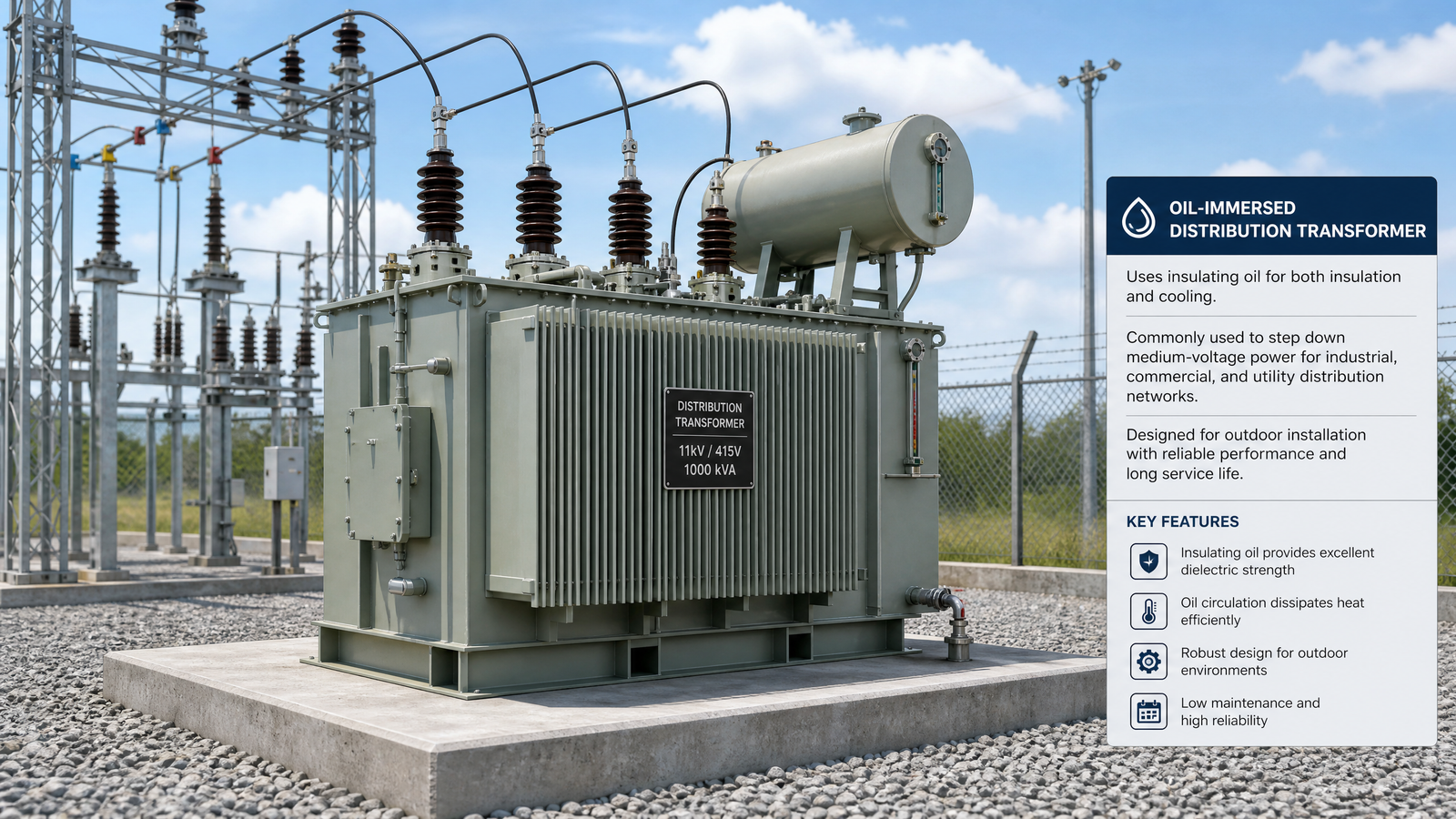
For most industrial, commercial, and utility distribution projects, the
Oil Immersed Distribution Transformer
is the dependable default. It uses insulating oil for both insulation and cooling,
giving it strong overload capacity, stable heat dissipation, and long service life
in outdoor installations.
Key Selection Factors
Choosing the right power transformer comes down to a handful of parameters that must
match the project:
Rated capacity (kVA) — the load the transformer must carry continuously.
Primary and secondary voltage — the voltage levels to convert between.
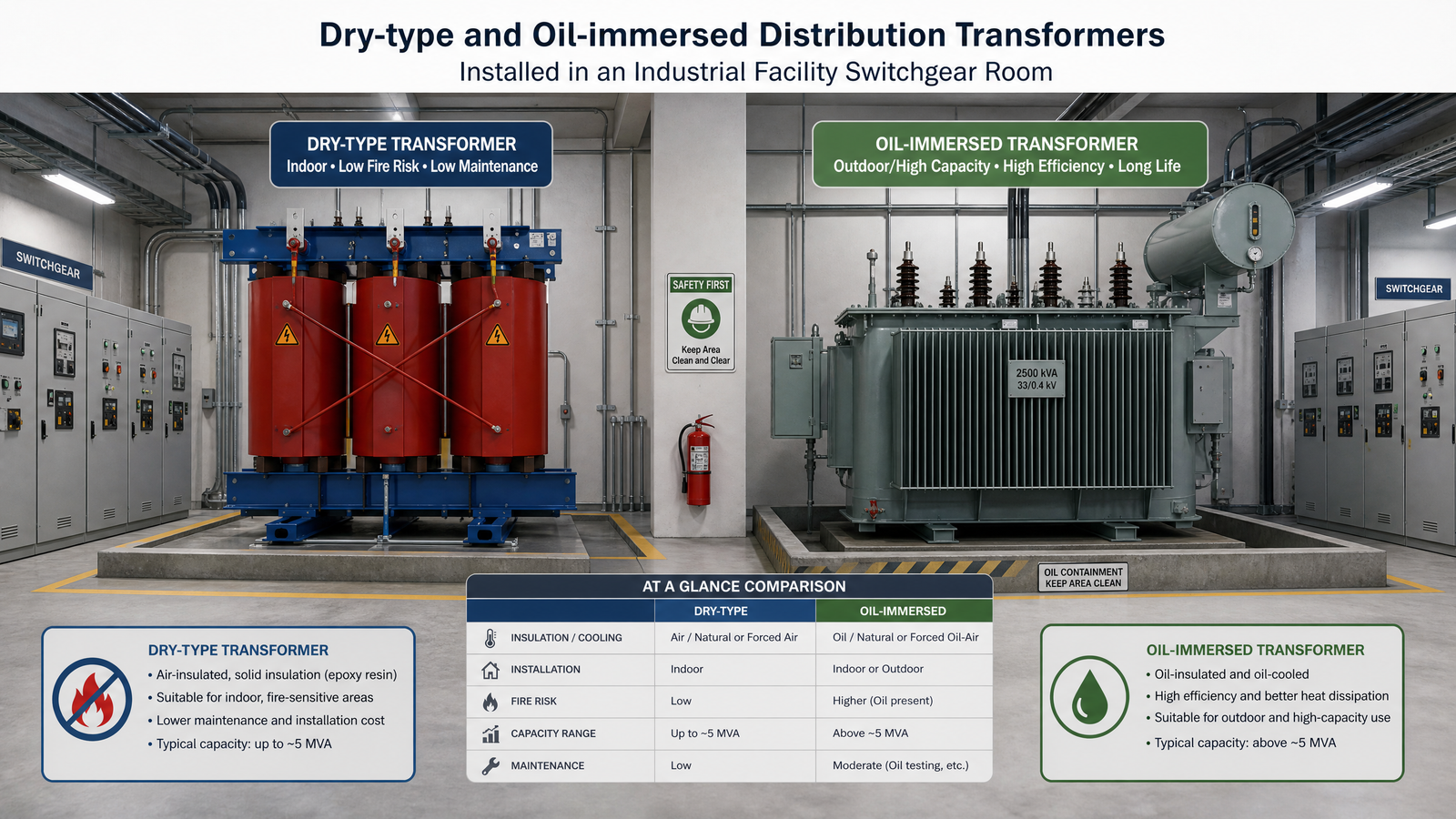
Cooling and insulation — oil-immersed for outdoor and high capacity, dry-type for indoor and fire-sensitive sites.
Connection group and impedance — set by the grid and the protection scheme.
Efficiency and loss level — low-loss designs reduce long-term operating cost.
Power transformers appear wherever voltage must change level in a power system:
Factory and manufacturing-plant distribution systems
Utility distribution networks and substations
Commercial buildings, hospitals, and data centers
Solar, wind, and energy-storage grid connection
Rail transit, ports, and industrial parks
Common Mistakes to Avoid
Sizing by peak load without a margin, leaving the transformer running hot.
Choosing a dry-type unit for an outdoor, high-capacity site better served by oil.
Ignoring the connection group, which can conflict with the protection scheme.
Overlooking loss level, which quietly drives up operating cost over decades.
Skipping the installation environment — coastal or dusty sites need the right enclosure.
Frequently Asked Questions
What is a power transformer?
A power transformer is a static device that transfers AC power between circuits at
different voltage levels through electromagnetic induction, used to step voltage up
or down in transmission and distribution networks.
What is the difference between a power transformer and a distribution transformer?
A power transformer is used at higher transmission voltages for bulk transfer, while
a distribution transformer performs the final step-down to the voltage the end user
actually uses.
What is the difference between oil-immersed and dry-type transformers?
Oil-immersed transformers use insulating oil for cooling and insulation and suit
outdoor and high-capacity use; dry-type transformers use air or solid insulation and
suit indoor, fire-sensitive locations.
How is a power transformer rated?
It is rated in kVA (or MVA for large units) because the apparent power it carries
includes reactive load, which watts alone do not capture.
What information is needed to quote a power transformer?
Rated capacity, primary and secondary voltage, frequency, phase, connection group,
impedance, cooling method, installation environment, and order quantity.
Conclusion
A power transformer does one essential job — change voltage safely and efficiently —
and the right choice depends on matching capacity, voltage, cooling, and application.
For more about the manufacturer behind this range, see our
about us page, or
contact us to discuss specifications
and request a quotation for your project.
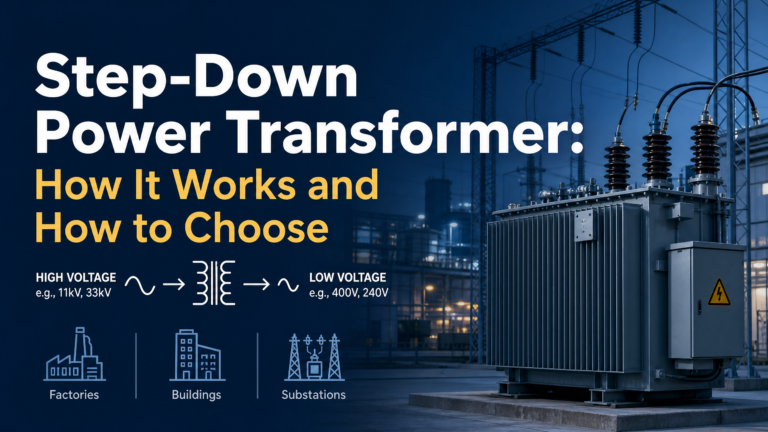
A step down power transformer is a static electrical device that converts a higher input voltage into a lower output voltage for safe distribution and use.
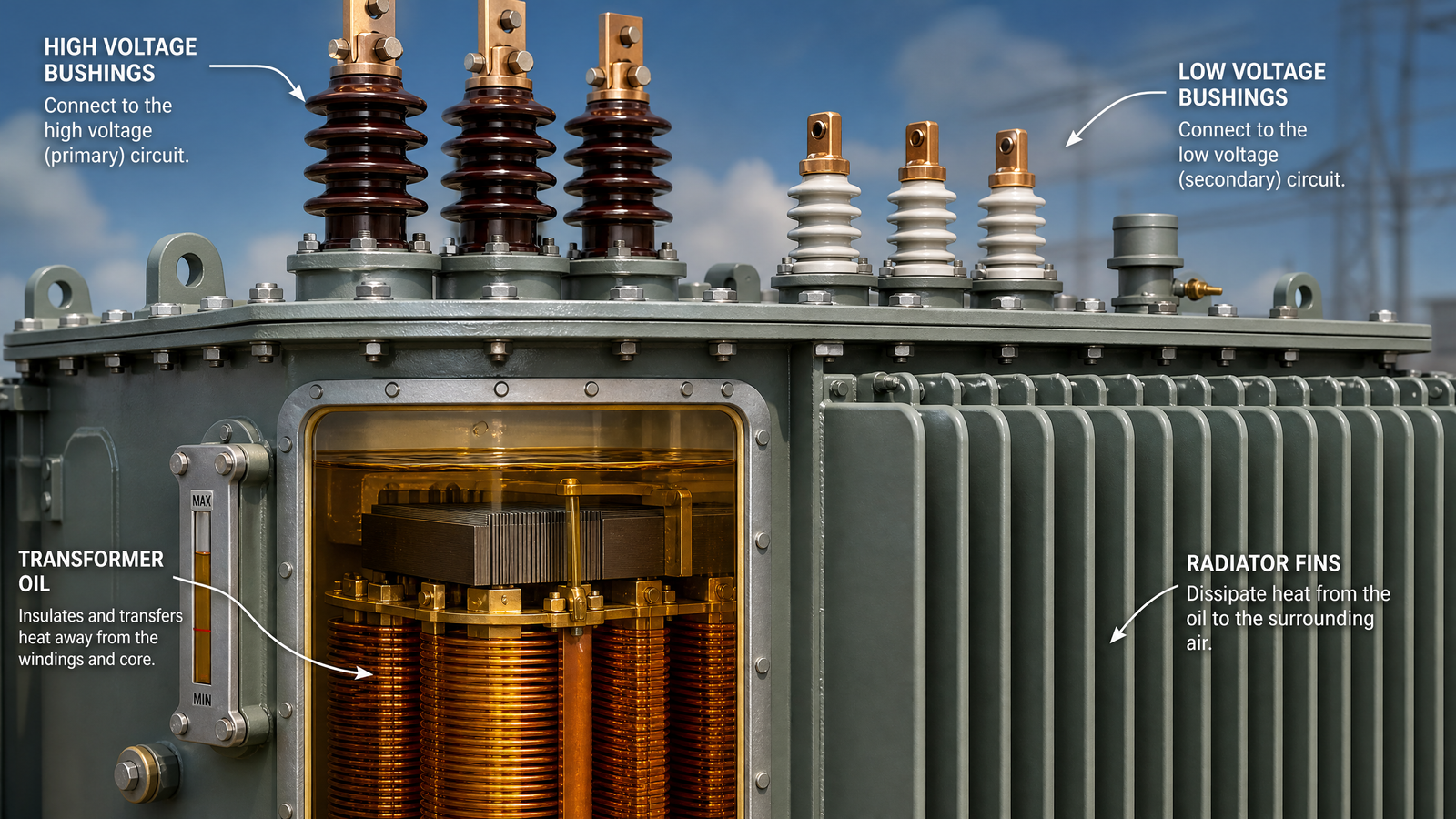
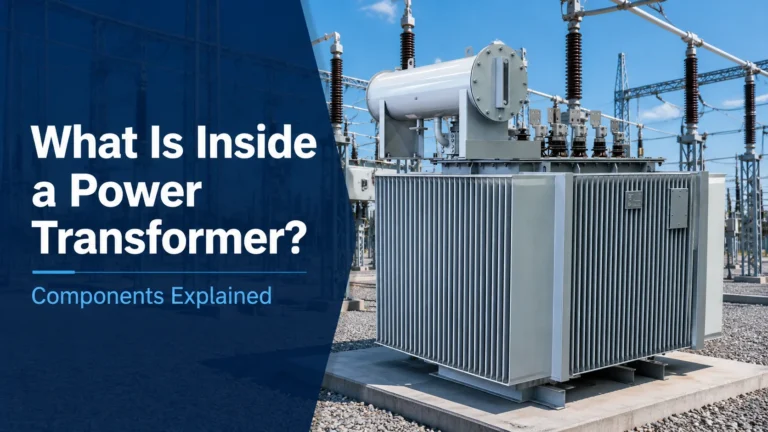
Every component serves a specific electrical, magnetic, or thermal function. Together they transfer thousands of kilovolt-amperes from one voltage level to another, silently and continuously, often for decades.
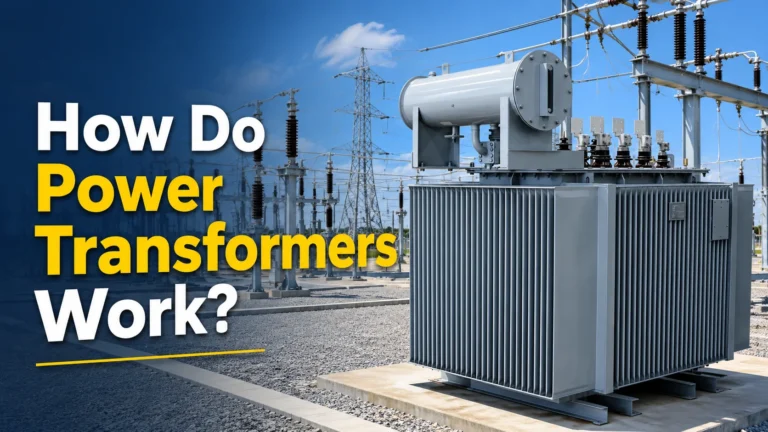
A power transformer takes electrical energy at one voltage and transfers it to another circuit at a different voltage, using a magnetic field instead of a direct electrical connection.