
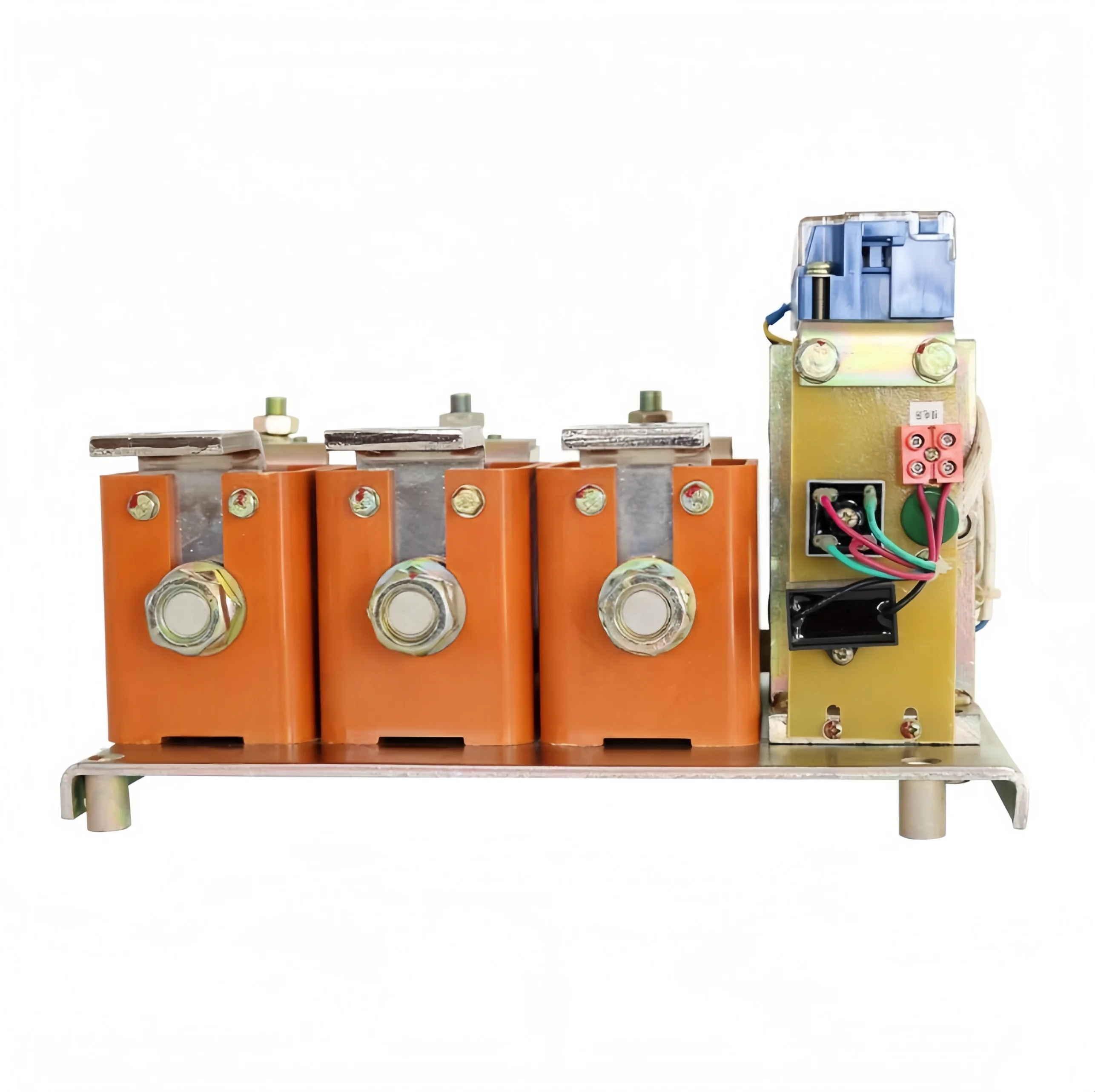
Description
CKJ5 Horizontal at a Glance
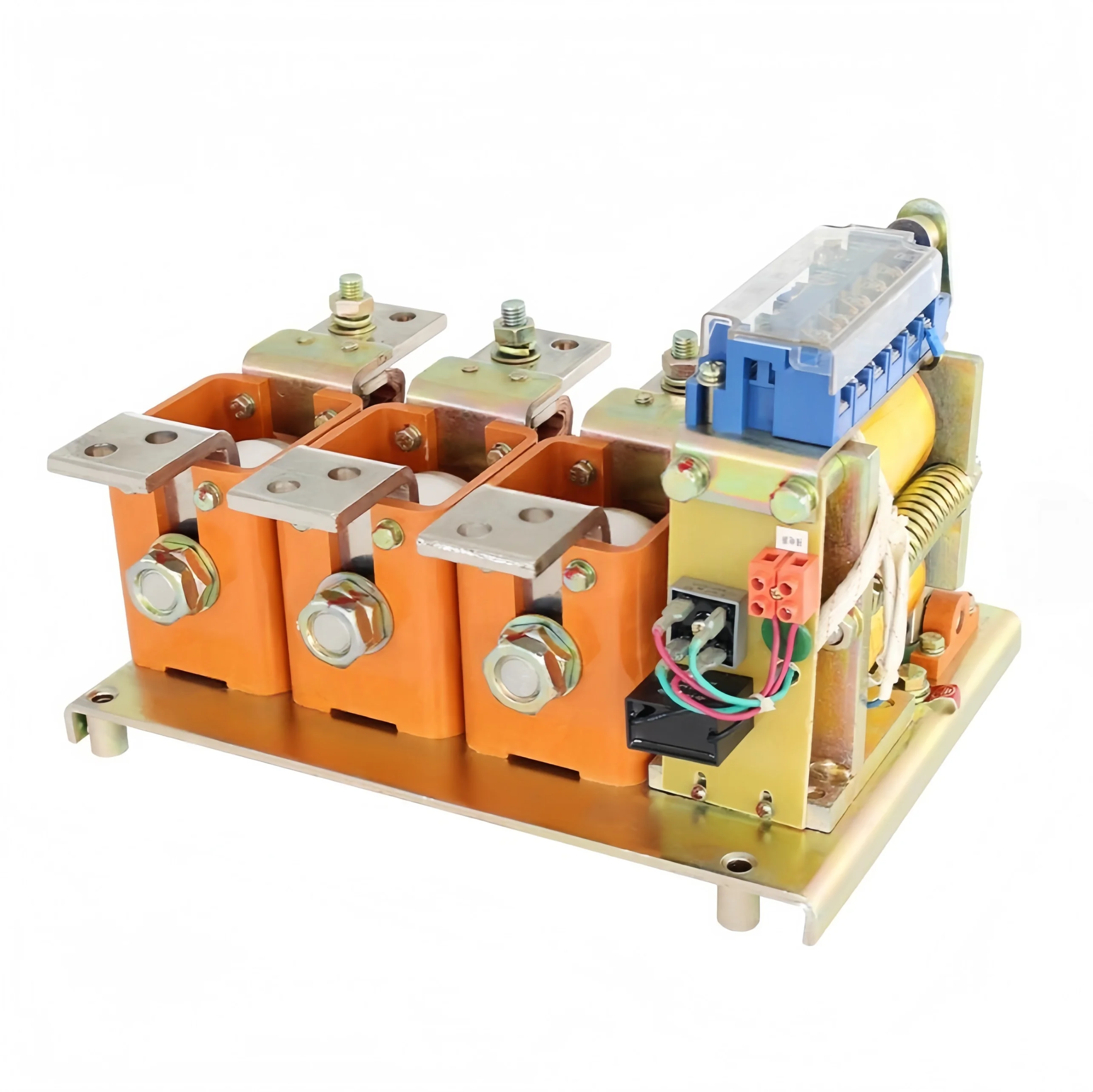
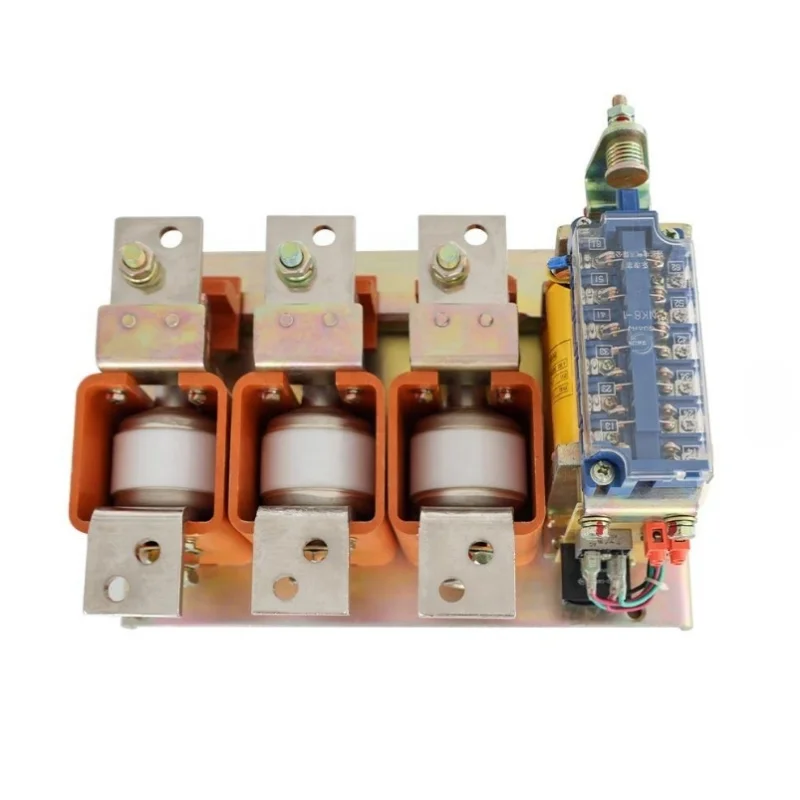
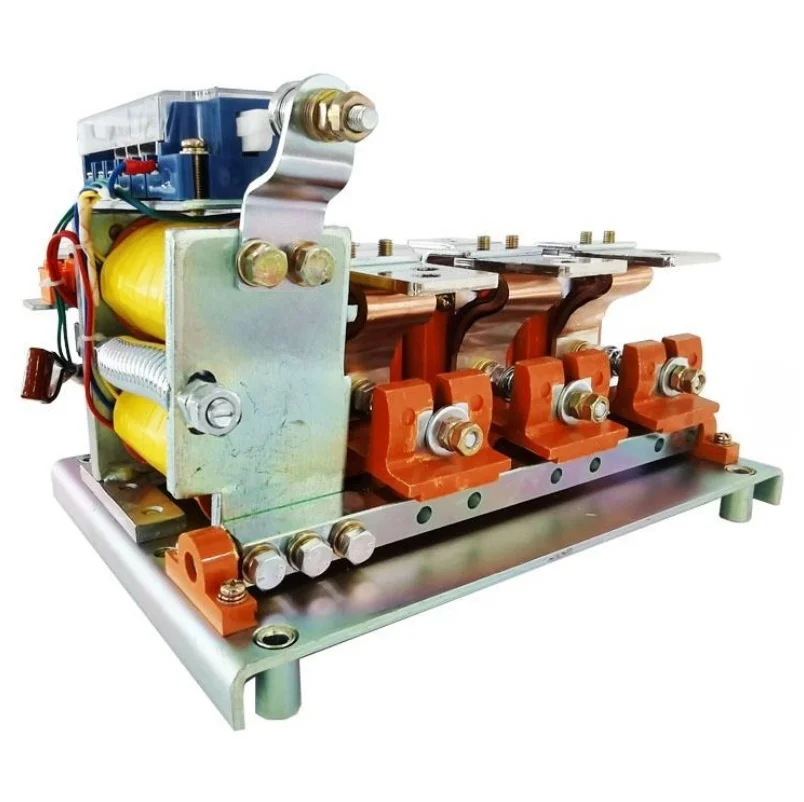
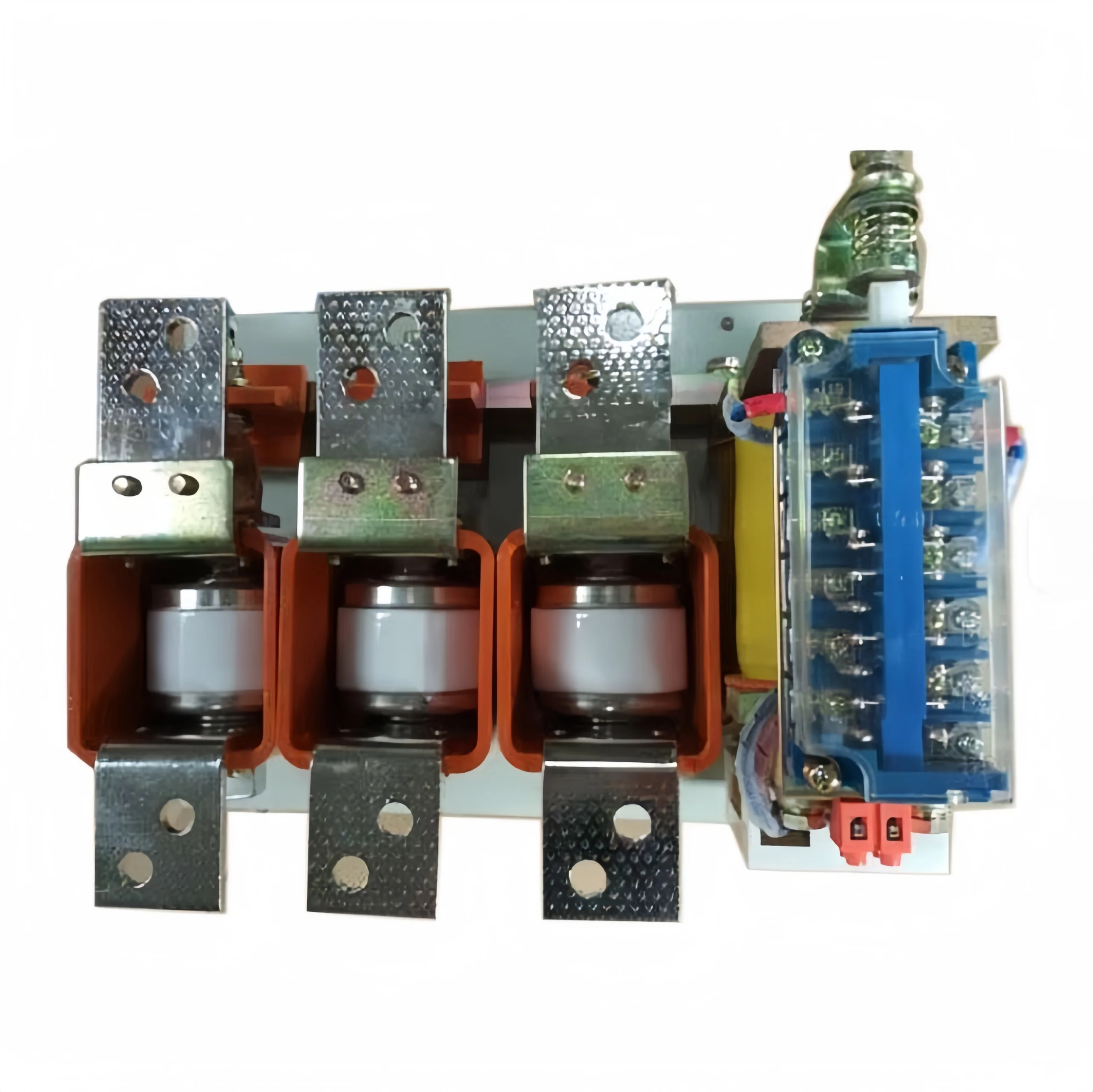
The CKJ5 horizontal AC vacuum contactor is a low-voltage switching unit for 380 V, 660 V and 1,140 V AC circuits, covering 250 A, 400 A and 600 A. The horizontal mounting arrangement lays the interrupter axis sideways rather than vertically, which is what allows it to fit into shallow drawers and low-profile starters where a vertical frame will not go.
It is used for motor starting and frequent load switching in mining, mill and plant distribution. A separate control-circuit voltage is chosen from 36 V, 127 V, 220 V or 380 V AC, and the main-circuit rating and control voltage are specified together.
Reading the CKJ5 Designation
| Element | Meaning | What it decides |
|---|---|---|
| C | Contactor (接触器) | Frequent switching device |
| K | Vacuum arc-quenching | Sealed vacuum interrupter |
| J | Improved design | Later frame than the original CK series |
| 5 | Design sequence | Frame family |
| Horizontal | Mounting orientation | Interrupter axis horizontal, not vertical |
Main-Circuit and Control Data
| Parameter | Published value |
|---|---|
| Rated operating frequency | 50 Hz |
| Rated operating voltage | 380 V / 660 V / 1,140 V AC |
| Rated operating current | 250 A / 400 A / 600 A |
| Conventional thermal current, main circuit | 250 A / 400 A / 600 A |
| Control-circuit rated voltage | 36 V / 127 V / 220 V / 380 V AC, 50 Hz |
| Auxiliary contacts | 3 normally open + 3 normally closed |
The 600 A entry carries a voltage condition in the published data, so confirm that configuration against the system voltage before ordering. The 250 A and 400 A frames are published without that condition and apply across the full voltage range.
Switching Duty
| Parameter | Published value |
|---|---|
| Operating frequency, AC-3 | 300 operations/hour |
| Operating frequency, AC-4 | 120 operations/hour |
| Making and breaking capacity | Making 10 Ie; breaking 8 Ie |
| Limited breaking capacity | 4,500 A for 250 A and 400 A; 6,000 A for 600 A |
| Electrical life, AC-3 | 600,000 operations |
| Mechanical life | 3,000,000 operations |
The making and breaking figures are stated as multiples of rated current, not as absolute amperes. At 250 A that means a making capacity of 2,500 A and a breaking capacity of 2,000 A; at 600 A it means 6,000 A and 4,800 A. The limited breaking capacity column gives the absolute ceiling for a short-time event, which is a different figure again.
Reading the three numbers correctly matters because they are used for different checks. The making figure is what a direct-online motor start draws against, the breaking figure is what the contactor interrupts in normal duty, and the limited figure is the one-off ceiling.
Horizontal Mounting and What It Solves
On the CKJ5 horizontal AC vacuum contactor, the arrangement exists for panel geometry rather than for electrical reasons. In a vertical frame the interrupter column stands up, which requires a cubicle tall enough to clear it and leaves dead space above the terminals.
A horizontal frame lies along the depth of the drawer. That matters in three situations:
- Drawer-type starters. The shallow drawer height leaves no room for a vertical column, but the depth is available.
- Low-profile distribution boards where the cable entries come from the top and the vertical space is taken by the busbar.
- Retrofit into existing panels built around an older horizontal frame, where the mounting holes and terminal positions are already set.
The trade is mechanical. On the CKJ5 horizontal AC vacuum contactor the moving mass is supported differently from a vertical frame, so it is worth confirming that the mounting surface is flat and that the specified inclination limits are respected.
Control Voltage Selection
Four control voltages are listed: 36 V, 127 V, 220 V and 380 V AC. The choice is set by the control supply available at the panel, not by the contactor.
Two practical notes. First, 36 V is a safety voltage used where operators may come into contact with control wiring, common in mining; it requires a transformer in the panel. Second, 380 V control is used where the control circuit is taken directly from the main supply without a step-down transformer, which saves panel space but puts the full system voltage on the control wiring and on the push buttons.
The coil is matched to the control voltage at manufacture. Changing it later means replacing the coil, so state the control voltage with the order rather than at commissioning.
Auxiliary Contacts
The CKJ5 horizontal AC vacuum contactor carries three normally open and three normally closed auxiliary contacts as standard. That is enough for a typical starter scheme: one for the holding circuit, one for the run indication, one for the interlock, and the corresponding normally closed contacts for the fault and ready signals.
Where a scheme needs more, an external auxiliary block is the usual answer. Confirm the count with the panel design rather than assuming the standard six will cover it.
Where CKJ5 Horizontal Is Used
Typical installations are motor control centres in mining and mineral processing, cement and steel plants, and water treatment works, where a large number of small and medium motors are started frequently.
For a three-phase motor starting at 480 A and running at 80 A, the 250 A frame covers the continuous current and its 2,500 A making capacity covers the start. The 600 A frame would only be needed where the start current or the site margin policy pushes it up.

When a Vertical or Higher-Rated Frame Fits Better
- Standard cubicle with full height available. The vertical frame is the normal choice and usually cheaper; horizontal is specified only when the geometry demands it.
- 1,140 V mining duty at higher current. The GKJ5 vertical three-phase contactor covers the vertical arrangement in that class.
- Single-phase loads. The GKJ5 single-phase contactor covers single-phase duty.
All frames sit under vacuum contactor series.
Service Conditions and Tests
Indoor installation in a dust-tight enclosure. Routine tests on every unit cover power-frequency withstand, main-circuit resistance, contact travel and a mechanical operation check.
In mining applications the enclosure rating governs the environment rather than the contactor itself, so the panel IP rating should be confirmed with the starter supplier.
Manufacturer Supply, OEM and Wholesale
The CKJ5 horizontal AC vacuum contactor is supplied direct. Panel builders order against a frozen current, voltage and control-coil specification under OEM or private-label marking; distributors hold a standing specification for repeat supply; project buyers receive test reports and outline drawings for approval.
Price, MOQ and Lead Time
- MOQ. Single units for standard configurations. Custom coil voltages and private-label marking carry a higher minimum.
- Price drivers. Current rating, control voltage, auxiliary contact count and quantity.
- Lead time. Confirmed against the production schedule at order.
- Payment. Deposit with balance against the bill of lading copy; letter of credit for project quantities.
What to Send With Your Inquiry
- System voltage: 380 V, 660 V or 1,140 V
- Continuous current and the largest motor rating
- Duty category: AC-3, or AC-4 for inching and reversing
- Expected operations per hour
- Control-circuit voltage
- Auxiliary contact requirement
- Drawer or fixed mounting, and the available depth
- Quantity, destination port and required delivery date
Send those through the quote form on this page. The main-circuit rating and the control voltage are quoted as a pair, so stating both avoids a revised quotation.
FAQ
Why choose horizontal instead of vertical?
Is the 600 A rating available at all voltages?
What does 10 Ie making mean at 250 A?
Which control voltage should I choose?
How many auxiliary contacts are included?
What is the MOQ?
Request Quote
Tell us your specifications, quantity, or application scenario and we will reply with a tailored quote.