
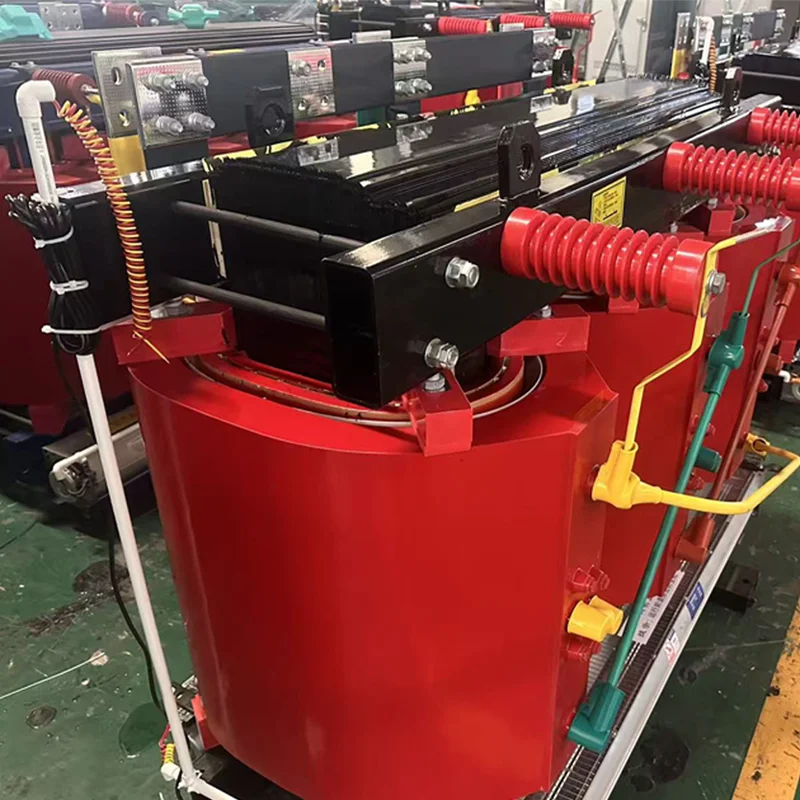
Description
What This Series Covers
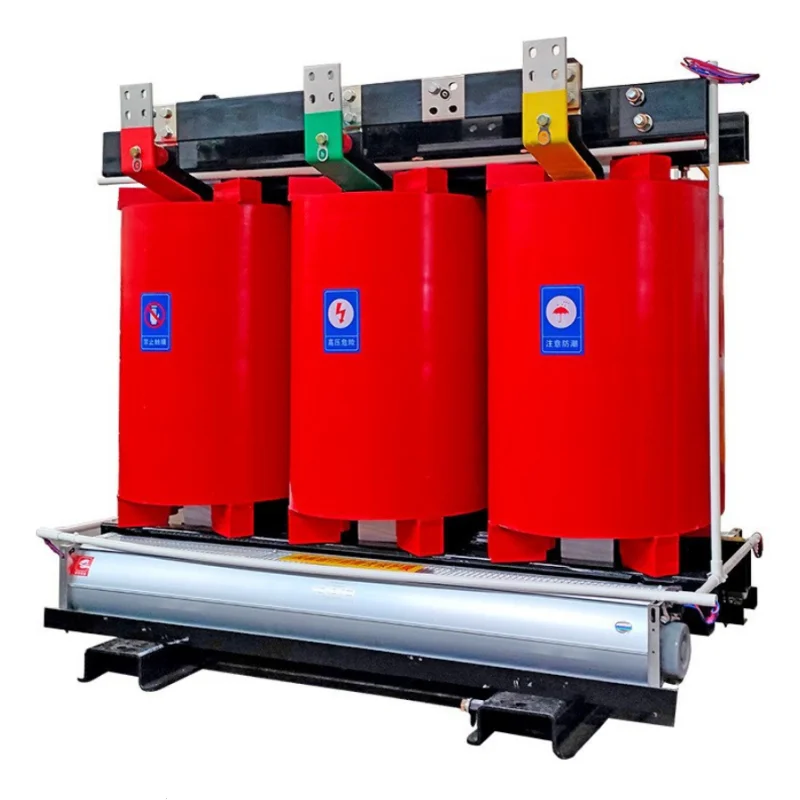
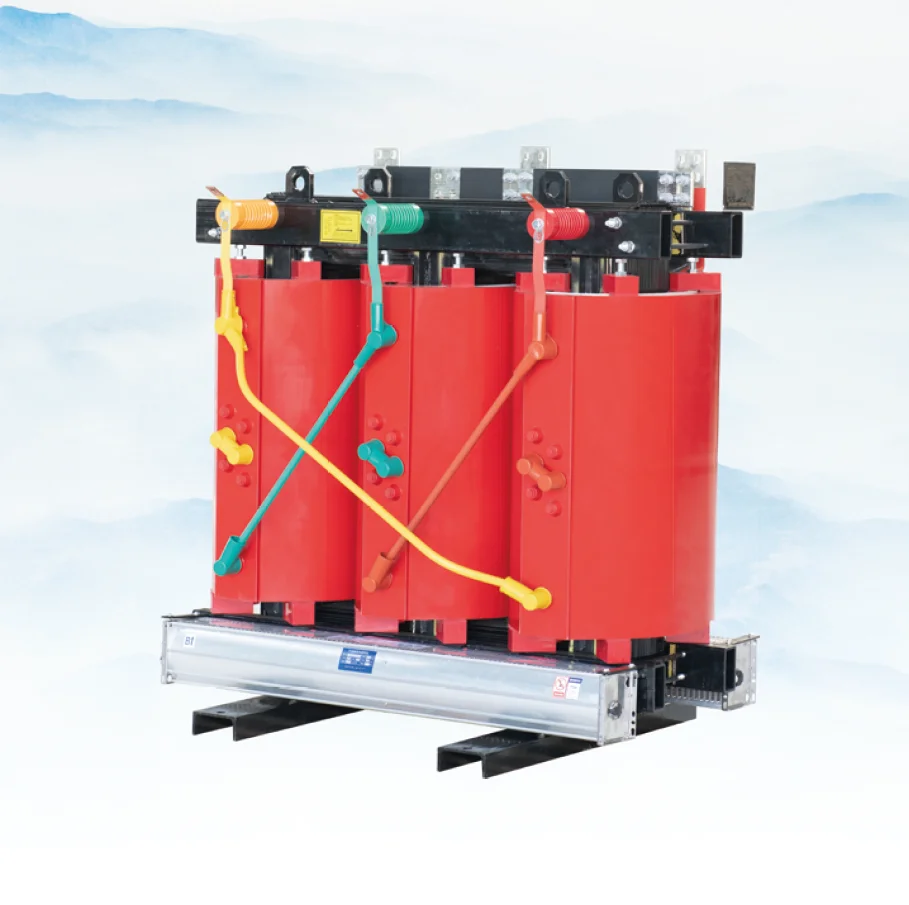
This is the insulation and construction series behind every medium voltage dry type transformer we build: the core line, the winding process, the insulation classes and the cooling options that any cast-resin unit is built from. Individual capacities and losses are listed on the SCB series page; this page covers how the unit is made and what the specification choices actually change.
Every unit is configured against the project rather than picked from stock. Voltage, capacity, impedance, vector group, winding material, enclosure and installation conditions are all set at order, which is why two transformers of the same kVA can differ in size, noise and price.
Insulation Classes: B, F and H
On a medium voltage dry type transformer, insulation class is the temperature the winding insulation can survive for its design life, and it decides how much the transformer can be loaded and how hot it may run.
| Class | Max winding temperature | Typical allowable rise | Where it is used |
|---|---|---|---|
| B | 130 °C | 80 K | Older designs, low-cost units |
| F | 155 °C | 100 K | Common standard for cast-resin distribution units |
| H | 180 °C | 125 K | High ambient, high overload, harsh duty |
The practical effect is overload margin. A class F unit at 100 K rise reaches its limit sooner under sustained overload than a class H unit at 125 K rise, which is why a specification that allows for future load growth often moves up a class rather than up a frame size.
Insulation class is not the same as the temperature the unit runs at in service. A class H unit running at class F temperatures lasts longer than a class F unit running at its limit, and the temperature controller set points should reflect which of those you intend.
Core Manufacturing
The core is where a medium voltage dry type transformer has its no-load loss and noise decided, and the process matters more than the grade of steel alone.
- GEORG automatic cutting line. Silicon steel is cut on a German GEORG line to a burr limit below 0.02 mm and an angle error within ±0.005 degrees. Burr at the cut edge creates a short circuit between laminations, which raises eddy-current loss; the tolerance is tighter than most cutting methods achieve.
- Baogang grain-oriented steel. High magnetic permeability sheet from Baogang keeps no-load loss and noise low at the same flux density.
- Five-stage stepped core. The core is assembled in five steps rather than a simple rectangle, which brings the circular winding closer to the core and shortens the mean turn length. That reduces copper and lowers load loss for the same capacity.
- H-class insulation duct and H-glue. Insulation ducts inside the core and structural adhesive on the limbs hold the assembly tight through thermal cycling, which is what keeps noise from rising after a few years in service.
Winding Manufacturing
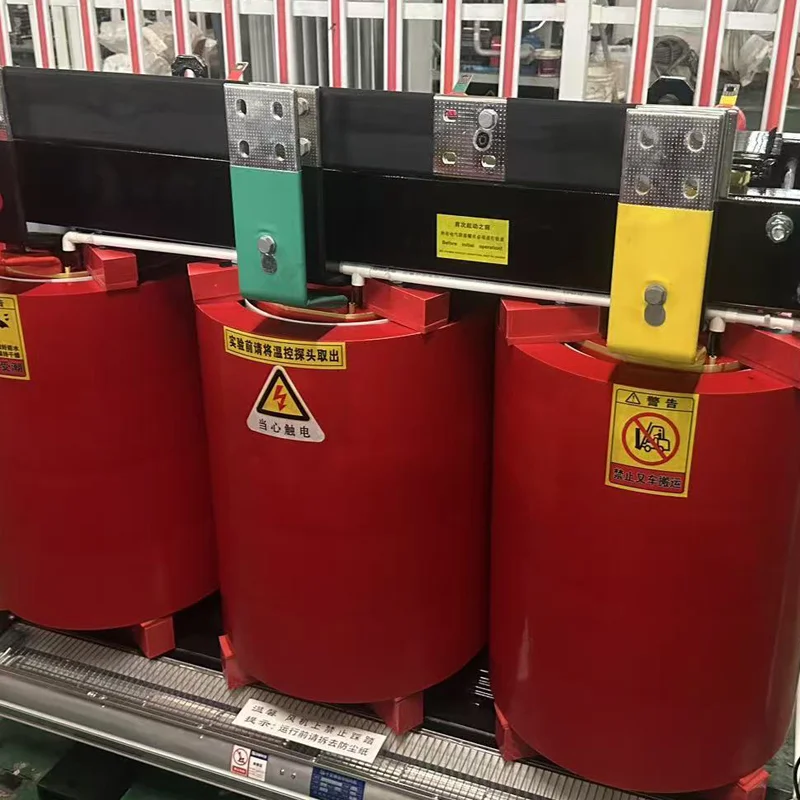
The high-voltage winding is vacuum cast in epoxy resin. Casting under vacuum removes air before the resin cures, so the finished winding has no voids to initiate partial discharge. This is the single most important process step in a cast-resin transformer, because voids are invisible after casting and their effect only appears as discharge activity after months in service.
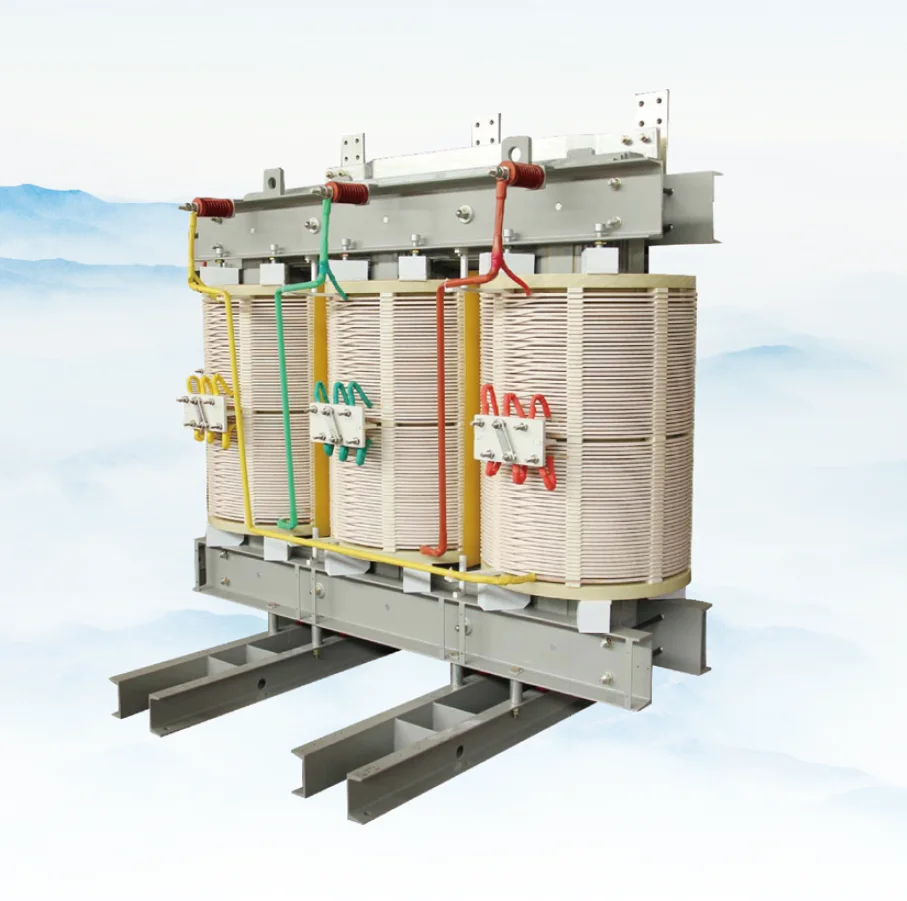
The low-voltage winding is copper foil. Foil fills the winding window more completely than round wire, which lowers resistance, improves short-circuit strength because the winding behaves as a solid block, and conducts heat out of the winding more evenly along its height.
Cooling: AN and AF
AN means natural air cooling: the unit runs at its nameplate rating with convection only. AF means forced air, with fans that raise the usable capacity of the same frame.
AF ratings are conditional. They apply only while the fans run, so a unit specified to rely on them needs fan-failure protection interlocked with the load, or the transformer quietly becomes overloaded when a fan stops. If the load profile spends most of its time below the AN rating and only peaks occasionally, AF is a reasonable economy; if it runs near the AF rating continuously, a larger AN frame is the safer purchase.
Enclosure Options
- Open execution. No enclosure, for a dedicated electrical room with restricted access and adequate clearance.
- IP20. Finger-safe against contact with live parts, the standard choice for indoor installation in accessible areas.
- IP23. Adds protection against water spray at up to 60 degrees from vertical, used where the room is washed down or where there is exposure to drips.
The enclosure changes the temperature rise, not just the protection. A closed IP23 enclosure traps heat, so the same core and winding deliver slightly less capacity than in open execution. State the enclosure before the capacity is fixed, not after.
Voltage Classes This Series Covers
The same construction is built at 6 kV, 10 kV, 20 kV and 35 kV. The voltage class changes the insulation distance, the winding build and the enclosure size, not the manufacturing process, which is why one series page can describe all four.
At 6 kV the clearances are short enough that a compact enclosure still leaves room for cable termination, and 6 kV units are common in mining and plant-level distribution. At 10 kV the design is the volume build, and the SCB series 10 kV page carries the capacity and loss tables. At 20 kV the winding insulation is thicker and the unit grows in height before it grows in footprint. At 35 kV the class sits at the top of what cast resin handles comfortably; above that the choice usually moves to oil.
The pages are separated by voltage because the specification work is separated by voltage. A 10 kV tender and a 35 kV tender do not share insulation levels, impulse figures or clearance requirements even when the kVA is identical, and a quotation built for one will not satisfy the other.
How a Unit Is Configured
| Input | What it decides |
|---|---|
| Capacity in kVA | Core and winding size |
| High and low voltage | Turns ratio and insulation level |
| Impedance | Fault current at the terminals, and load loss |
| Vector group | Phase displacement and harmonic behaviour |
| Winding material | Copper or aluminium, which changes loss and price |
| Cooling and enclosure | Usable capacity and temperature rise |
| Terminal and accessory options | Cable box type, temperature control, monitoring |
These seven inputs are what turn a catalogue frame into a project unit. Sending them together is faster than answering seven separate questions.
Capacity and loss figures for the 10 kV range are listed on the SCB series 10kV dry type transformer page, and the loss and impedance relationships are covered in our dry type transformer specification guide. Where the installation is outdoors and oil is acceptable, the 35kV oil-immersed range is the lower-cost option.
Where Dry Type Is the Right Answer
A medium voltage dry type transformer is chosen where an oil-filled unit would create a fire risk or require a fire-rated enclosure: inside occupied buildings, basements, tunnels, hospitals, data centres and packaged substations.
The trade-off is cost per kVA and overload capability. An oil-immersed unit of the same rating costs less and tolerates sustained overload better, which is why outdoor installations in fenced compounds almost always use oil. The decision is about where the unit sits, not about which technology is better.
Standards and Tests
Units are built and tested to the dry-type transformer standards for this class, covering routine tests on every unit and type tests on the design. Routine tests include winding resistance, ratio and polarity, no-load and load loss, impedance, applied and induced voltage withstand, and partial-discharge measurement on the cast windings.
Where a specification caps the loss values, the guaranteed figures are stated on the test report and become part of acceptance. Ask for the guaranteed values at quotation, not the typical ones.
Manufacturer Supply, OEM and Wholesale
The medium voltage dry type transformer series is manufactured and supplied direct, which covers project supply with drawings and test reports for approval, OEM and private-label builds against a frozen specification, and repeat supply for distributors holding a standing specification.
Non-standard voltages, alternative vector groups, specific loss caps and custom terminal arrangements are quoted rather than declined, because the unit is built to order in the first place.
Price, MOQ and Lead Time
- MOQ. One unit. Standard capacities carry no minimum quantity.
- Price drivers. Capacity, insulation class, loss level, impedance, winding material, cooling, enclosure and quantity.
- Lead time. Confirmed against the production schedule. Higher capacities and non-standard voltages take longer.
- Payment. Deposit with balance against the bill of lading copy; letter of credit for project quantities.
What to Send With Your Inquiry
- Capacity, high voltage and low voltage
- Impedance and vector group
- Insulation class: F or H
- Loss values your specification caps
- Cooling: AN, or AF with fan-failure protection
- Enclosure: open, IP20 or IP23
- Installation environment and ambient temperature
- Quantity, destination port and required delivery date
Send those through the quote form on this page. If the capacity and the loss cap are both specified, the frame size is determined rather than chosen, and the quotation comes back firm.
FAQ
What does the insulation class change?
Why does core cutting tolerance matter?
What is a five-stage stepped core?
Is AF cooling a free capacity increase?
Does the enclosure affect capacity?
What is the MOQ?
Request Quote
Tell us your specifications, quantity, or application scenario and we will reply with a tailored quote.